Electric Hoists: The "Muscle Fibres" of Modern Industry
On the elevated tracks of factory workshops, between steel beams on construction sites, and beside containers at port terminals, a mechanical device silently and steadfastly undertakes the task of moving hundreds or thousands of tons of materials—this is the electric hoist, an indispensable lifting device in the modern industrial system. This seemingly simple lifting device is actually a sophisticated product combining human mechanical wisdom and electrical control technology; it is an indispensable "muscle fibre" in the industrial body.
I. A Fusion of Power and Precision
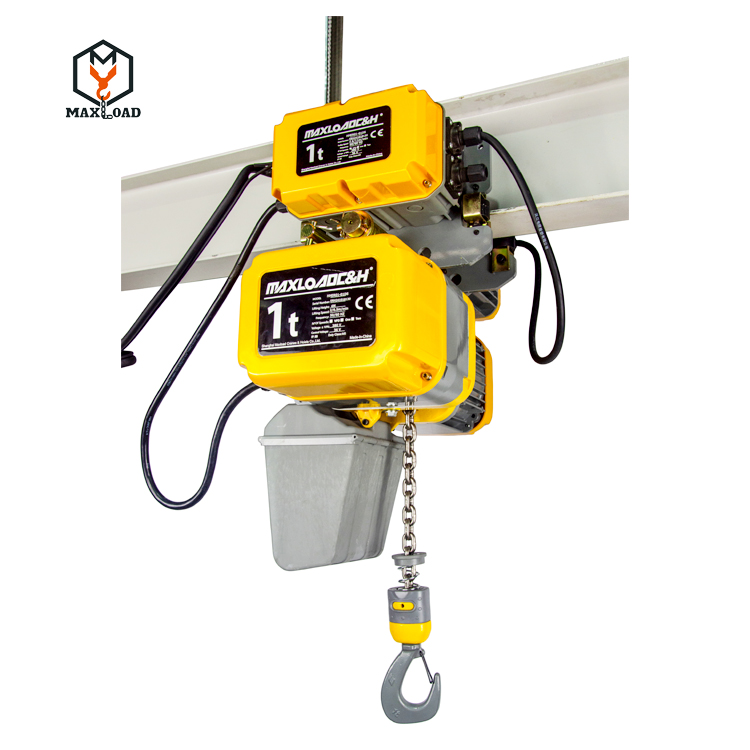
The core value of the electric hoist lies in its conversion of raw electricity into controllable mechanical energy, achieving a perfect unity of power and precision. Structurally, a typical electric hoist consists of a motor, reducer, drum or sprocket, hook, and control system. When the motor starts, a multi-stage gear reduction system converts high-speed, low-torque rotation into low-speed, high-torque output, which ultimately drives the lifting chain or wire rope through the drum or sprocket to complete the lifting operation.
This power transmission system, seemingly simple, contains a delicate balance of mechanics. Each gear in the reducer must undergo precise calculations and heat treatment to maintain stability while transmitting enormous torque; the braking system must reliably lock the load the instant the motor stops supplying power to prevent the heavy object from slipping; the overload protection device acts like a vigilant sentinel, promptly cutting off power when the load exceeds the rated capacity to ensure safety.
II. Technological Evolution and Working Principle
The technological evolution of electric hoists reflects the trend of industrial equipment towards higher efficiency and intelligence. Early electric hoists mostly used conical rotor motors, relying on a brake disc on the motor shaft to automatically brake when power was cut off. With technological advancements, planetary gear reduction mechanisms have been widely adopted due to their compact structure and high efficiency; the introduction of frequency conversion control technology has made lifting operations smoother and achieved precise positioning; the application of wireless remote control technology has greatly improved the safety and convenience of operation.
The working cycle of an electric hoist is a finely coordinated process: after the operator issues a command, the motor starts, and the brake is released simultaneously; power is transmitted to the drum after being reduced in speed and increased in torque by the reduction mechanism, winding the wire rope or lifting chain; after reaching the designated height, the motor stops running, and the brake immediately resets under the action of the spring. The entire process is smooth and precise, like a meticulously choreographed mechanical ballet.
III. Diverse Industrial Applications
Electric hoists have extremely wide applications, covering almost all industrial scenarios requiring vertical material handling. In manufacturing plants, they are suspended from I-beam tracks above workshops, becoming flexible production line auxiliary equipment; in warehouse logistics centres, they work with racking systems to achieve efficient stacking and retrieval of goods; in auto repair shops, they easily lift heavy components such as engines and transmissions; on construction sites, they undertake the vertical transportation of building materials.
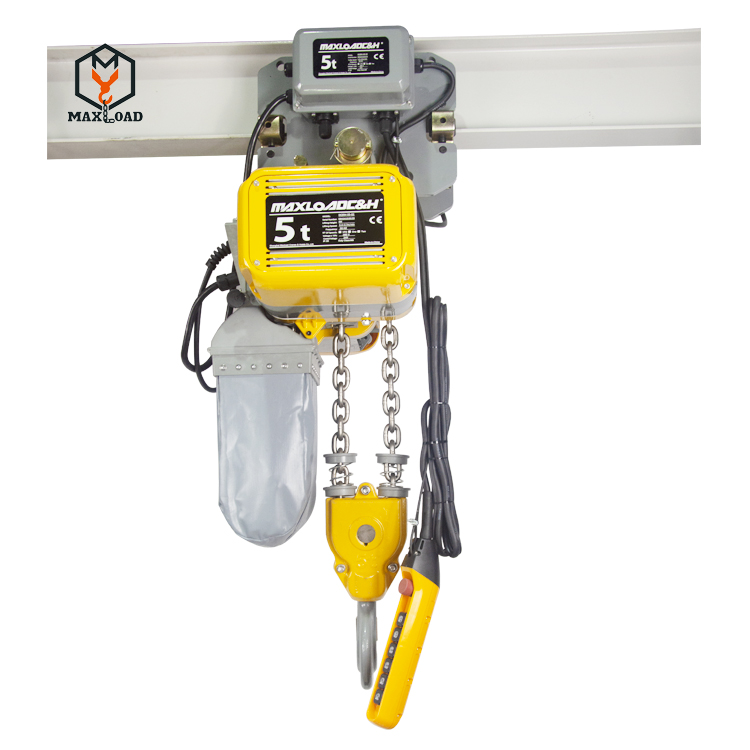
Different types of electric hoists are specifically optimized for particular working conditions: wire rope hoists have a large lifting height and stable operation, suitable for lifting operations at great heights; chain hoists have a compact structure, suitable for space-constrained situations; explosion-proof hoists use special designs and materials, suitable for flammable and explosive environments such as petroleum and chemical plants; low-headroom hoists are optimized for limited spaces, maximizing the use of factory height.
IV. Safety – An Uncompromising Design Principle
In the field of lifting equipment, safety is always the top priority. Electric hoists incorporate multiple safety mechanisms: upper and lower limit switches prevent excessive hook lifting or lowering; overload protection devices automatically cut off power in case of overload; emergency stop buttons ensure rapid response in abnormal situations; dual braking systems provide redundancy; and for wire rope hoists, there are specialised rope guides to prevent rope tangling.
These safety designs are not simply a combination of functions, but a collaborative system engineering approach. For example, the triggering of limit switches must be precise to the millimeter level, preventing the hook from colliding with the drum while fully utilizing the effective lifting height; the braking system must have sufficient braking torque while ensuring smooth braking to avoid load swaying caused by sudden stops.
V. Professional Considerations for Selection and Maintenance
Choosing the right electric hoist is a technical decision that requires careful consideration of multiple factors. Lifting capacity, lifting height, duty cycle, operating speed, and operating environment are all parameters that must be carefully evaluated. The duty cycle is particularly critical, reflecting the frequency and intensity of the load on the equipment and directly determining the durability and service life of the electric hoist.
"A skilled craftsman must first sharpen his tools." Regular inspection and maintenance are fundamental to ensuring the long-term reliable operation of electric hoists. Routine inspections should include checking the wear of the wire rope or chain, testing braking performance, and verifying the effectiveness of limit switches. Regular maintenance requires checking gearbox oil levels, electrical connection reliability, and the integrity of structural components. Professional maintenance not only prevents malfunctions but also significantly extends the equipment's lifespan.
VI. Future Development Trends
With the deepening of the Industry 4.0 concept, electric hoists are also developing towards intelligence and integration. The application of sensor technology enables electric hoists to monitor parameters such as load, temperature, and running time in real time; data bus interfaces allow for easy integration into factory IoT systems; predictive maintenance functions analyze operating data to provide early warnings of potential faults.
Human-centered design has also become a highlight of the new generation of electric hoists: low-noise design improves the working environment; ergonomic handles enhance operating comfort; and modular design simplifies the maintenance process. These advancements collectively drive the transformation of electric hoists from simple lifting tools to intelligent material handling solutions.
Electric hoists, these suspended power carriers, with their robust and precise operation, support the logistics lifeline of modern industry. It may not be as eye-catching as a robot, nor as precise and complex as a CNC machine tool, but with its unique value, it occupies an irreplaceable place in the industrial ecosystem. Understanding the technical essence of the electric hoist is not only about recognizing a piece of equipment, but also about gaining insight into the operating logic of modern industry.
 0086 156 1824 5535
 0086 156 1824 5535
 kimliu@chnhoist.com