Electric Hoist Selection – Precisely Matching Working Conditions
When faced with equipment to be lifted in the workshop or goods to be organised in the warehouse, choosing the right electric hoist is not only about efficiency but also directly impacts operational safety.
Electric hoists, as a type of light, small lifting equipment, are mainly composed of an electric motor, a transmission mechanism, and a drum or sprocket. Due to their compact structure, light weight, and simple operation, they are widely used in industrial and mining enterprises, warehouses, and docks.
I. Core Selection Parameters
Lifting capacity is the most basic and important parameter in selection. Electric hoists have a wide range of lifting capacities. However, when choosing, you shouldn't only consider the maximum load, but also the safety margin.
Most experts recommend that the safety margin should exceed the actual working weight by at least 25%. For example, if you need to lift 600 kg of goods, you should choose a hoist with a rated lifting capacity of at least 750 kg.
Closely related to the lifting capacity is the working class, which reflects the equipment's frequency of use and load characteristics. According to national standards, the working class of electric hoists is divided into multiple levels from M1 to M8, suitable for different intensity working environments.
An electric hoist with a medium-duty working system can be converted to a heavy-duty working system when the lifting capacity is reduced by 30%. This conversion relationship is particularly important in actual selection.
The lifting height determines the maximum vertical travel that the hook can reach. Standard heights range from 3 meters to 30 meters. When selecting, you need to consider not only the height the goods need to be lifted to, but also leave a safety distance – when the hook is raised to its limit position, the distance from the hook casing to the drum casing should be greater than 50 mm.
The lifting speed directly affects operational efficiency, with a common range of 4-12 meters/minute. For operations requiring high precision, such as equipment installation, a dual-speed hoist may be needed, with the ratio of slow speed to normal speed usually being 1/2 to 1/4.
II. In-depth Comparison of Two Main Types
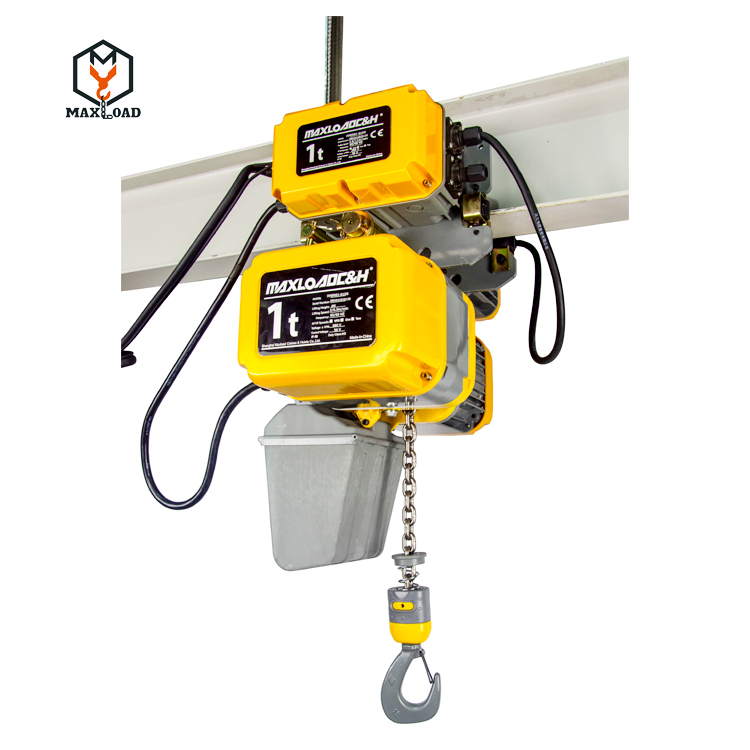
Electric hoists are mainly divided into two categories: wire rope type and chain type. Wire rope electric hoists commonly use tapered rotor motors with built-in brakes, offering a wide range of lifting capacities and excellent operational stability.
Chain electric hoists, on the other hand, are lighter and more compact, usually incorporating a friction clutch to prevent overload, but their operational stability is slightly inferior to wire rope hoists.
In recent years, dual-speed hoists have gained popularity due to their flexibility. These hoists have both high and low speed settings, like a combination of "automatic and manual transmission" in a car, allowing for high-speed lifting for efficiency during regular handling and switching to low speed for precise positioning.
Some high-end models also feature a double-flange design, adding flanges to both ends of the hook seat and drum, acting like "protective armour" for the core components, significantly enhancing structural strength and impact resistance.
III. Operating Conditions Affecting Selection
Environmental conditions directly impact electric hoist selection. Standard electric hoists operate within a temperature range of -20℃ to +40℃. For environments with corrosive gases or relative humidity exceeding 85%, special protective products are required.
In clean rooms, food processing, or pharmaceutical environments, cleanroom chain electric hoists are the ideal choice. These hoists are usually equipped with nylon or rubber-coated wheels to meet dust-free production requirements.
Power supply configuration is another often overlooked but crucial factor. The common power supply in China is 380V/50Hz, but special workshops may have different configurations, such as 440V/60Hz, 380V/60Hz, or 400V/50Hz.
It is essential to confirm the on-site power supply before selection to avoid equipment incompatibility upon arrival.
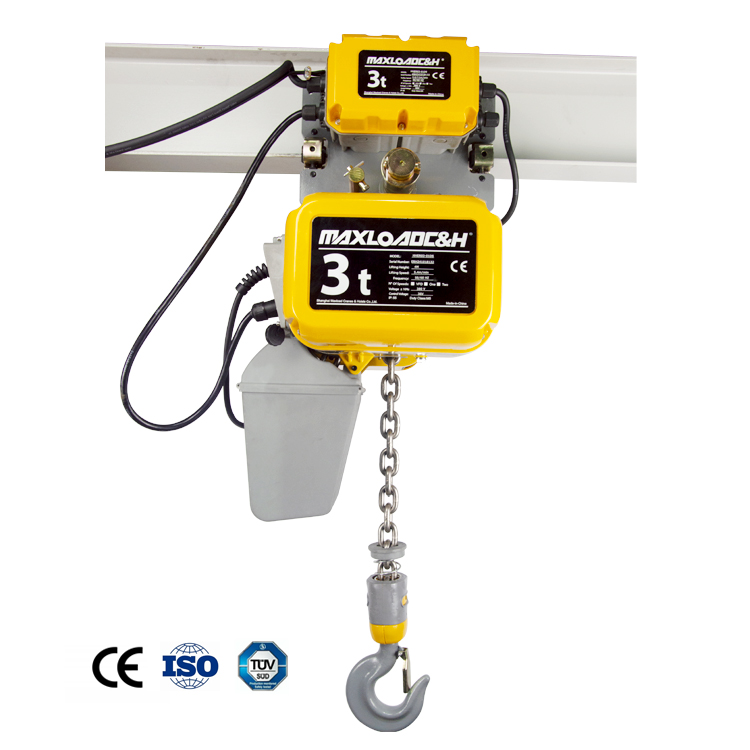
Space limitations are also a crucial factor. When factory height is limited, low-headroom hoists can be selected. These hoists have optimised their height (H value), which is the distance from the bottom of the I-beam to the lower hook of the hoist, maximising the use of vertical space.
IV. Systematic Selection Process
Faced with numerous parameters and types, a systematic selection process can help you make the best decision. First, clarify your basic needs: determine the maximum lifting capacity, required lifting height, operating frequency, and characteristics of the working environment. Next, select the type based on the application scenario: wire rope hoists are suitable for general industrial environments; chain hoists are more appropriate when space is limited or lightweight equipment is required; and specialised cleanroom hoists are needed for clean environments.
Then, match the technical parameters: ensure that the lifting speed and working class match the operating rhythm; check that the power supply configuration is compatible; and confirm that the installation method (fixed or mobile) meets the site conditions.
Finally, pay attention to safety features: a reliable braking system, upper and lower limit switches, and overload protection devices are essential. According to the "Electric Hoist Quality Classification Standard" released in December 2023, high-quality products should meet higher safety and performance standards.
Regular maintenance is also important. Newly installed electric hoists or those installed after disassembly and inspection should undergo a no-load test run; before formal use, a static load test should be performed at 125% of the rated load, approximately 100 mm above the ground, for 10 minutes.
With the development of Industry 4.0, modern electric hoists are no longer just simple lifting tools. Some high-end products are equipped with standard control systems and safety operation cycle monitoring, allowing for real-time monitoring of equipment usage and enabling preventive maintenance.
 0086 156 1824 5535
 0086 156 1824 5535
 kimliu@chnhoist.com