The "Golden Duo" of Modern Industrial Material Handling
In the vast arena of modern industrial production, material handling is like blood flowing through arteries, sustaining the vitality and efficiency of the entire production system. From the assembly lines of automobile manufacturers to the loading and unloading of goods at port terminals, from busy construction sites to intelligent sorting centers in warehousing and logistics, efficient material handling is not only a necessary link in the production process but also an important benchmark for measuring the level of industrial modernization of an enterprise or even a country. In this field, electric hoists and overhead cranes, with their excellent performance and flexibility, constitute the indispensable "golden duo" in modern industrial material handling systems, jointly supporting the efficient, safe, and precise movement of materials.
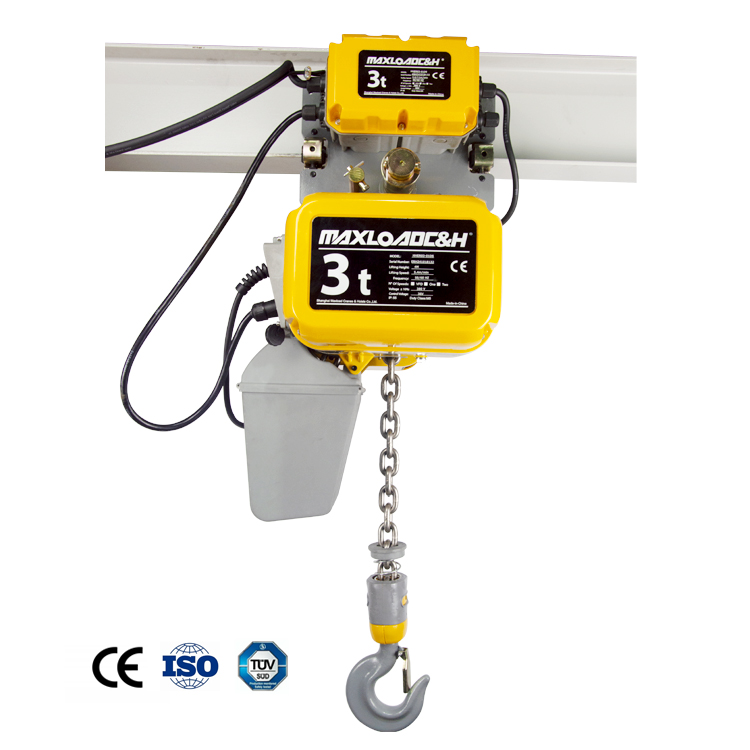
To understand how this duo collaborates, we must first clarify their basic concepts and inherent connections. Simply put, an electric hoist is a compact, single-function, light-duty lifting device. It typically consists of core components, including a motor, reduction gear, drum (or sprocket), and hook (or lifting device). Powered by electricity, it achieves vertical lifting of heavy objects and can sometimes perform limited horizontal movement along a simple track. Its design essence lies in its "specialization" and "precision," focusing on providing a stable and reliable vertical lifting force. An overhead crane, more formally known as a bridge crane, resembles a "steel bridge" spanning the tracks on both sides of the workshop, capable of longitudinal movement. This "bridge" (main beam) carries a trolley that can move laterally, and the electric hoist is the core lifting mechanism installed on this trolley. In essence, the overhead crane provides the electric hoist with a vast three-dimensional movement space, while the electric hoist gives the crane the "hands" and "strength" to grasp and lift heavy objects. Combined, they form a complete lifting machinery system capable of precise three-dimensional positioning and handling of heavy objects within a specific rectangular or square working area.
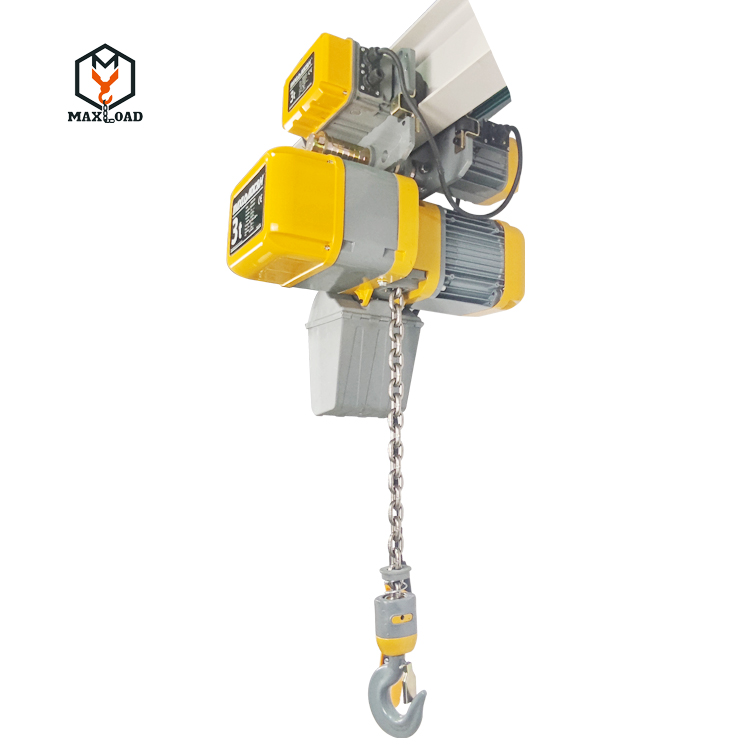
Although small, the electric hoist is a marvel of engineering, and its design and performance directly determine the "basic skills" of lifting operations. Based on the different internal core transmission methods, electric hoists are mainly divided into two categories: wire rope electric hoists and chain electric hoists. The former uses steel wire rope as the load-bearing and winding medium. Its drum design allows for a large lifting height, high speed, and relatively light weight, making it suitable for medium- to large-sized workshops and warehouses that require high lifting heights and fast speeds. The latter uses high-strength alloy chain links, resulting in an extremely compact structure and light weight. Due to the flexibility of the chain, it is relatively tolerant of installation errors and requirements, making it particularly suitable for workstations with limited space, requiring frequent jogging or precise control, such as assembly lines and repair workshops. Regardless of the type, a typical electric hoist integrates power (motor), transmission (reducer), execution (drum/sprocket, hook), braking, and safety protection systems into a single unit, achieving high reliability through modular design.
If the electric hoist is the powerful "executor," then the overhead crane is the strategic "scheduling platform." Overhead cranes come in various structural forms to suit different industrial scenarios. The most common is the general-purpose bridge crane, which spans the factory floor on supporting beams on either side, covering the entire workshop area and is a standard feature in manufacturing plants. For locations requiring extremely large spans, such as large warehouses, logistics centers, or open-air storage yards, gantry cranes are a better choice. Their massive gantry structure can travel along ground tracks, spanning railways and freight yards, like a mobile "aerial port." In addition, there are more agile jib cranes, which provide a range of rotation and movement through a jib fixed to a column or wall, suitable for intensive lifting operations in specific sectors of docks or workshops. Modern overhead crane control systems are becoming increasingly intelligent, from traditional ground-based wired control and remote control to advanced cab control and integration into factory automation management systems. Operating methods are becoming more user-friendly and integrated, greatly improving operational safety and efficiency.
The combination of electric hoists and overhead cranes is not simply a mechanical addition, but rather a synergistic effect of "1+1>2," jointly expanding the dimensions and precision of industrial material handling. In the vertical dimension, electric hoists provide smooth, controlled lifting power. Whether slowly lowering several tons of precision instruments into their bases or lifting raw materials from the ground to processing platforms several meters high, their precise lifting and braking performance is crucial. In the horizontal dimension, the longitudinal movement of the crane's main carriage and the lateral movement of the trolley create a high-speed, precise two-dimensional planar movement network covering the entire work area. This allows heavy objects to be quickly and accurately delivered to any required position, like pieces on a chessboard. Together, they achieve complete three-dimensional spatial path planning and execution from point A to point B, upgrading traditional planar logistics to three-dimensional logistics, significantly saving ground space and optimizing process flows.
When choosing this "golden duo," careful consideration must be given to the specific application scenario. The primary consideration is the lifting capacity, which determines the core capability of the equipment. Secondly, the lifting height and span define the working space. In addition, the work class, operating speed, and the specific characteristics of the workshop environment are also key factors. For example, in clean rooms or food processing plants, stainless steel or specially coated equipment may be required, while on assembly lines, extremely high demands are placed on lifting smoothness and positioning accuracy.
Safety is always the inviolable bottom line in lifting operations. Both electric hoists and cranes are typical special equipment, and their design, manufacturing, installation, use, inspection, and maintenance throughout their entire life cycle must strictly comply with relevant national regulations and safety technical specifications. During daily use, routine inspections and regular maintenance of critical components such as wire ropes/chains, brakes, limit devices, and steel structures must be carried out. Operators must be professionally trained and certified, strictly adhere to safety operating procedures, and avoid dangerous behaviors such as overloading and oblique lifting, ensuring that every lifting operation is safe and secure.
Looking ahead, this classic combination of electric hoists and cranes has not stopped evolving. With the wave of Industry 4.0 and intelligent manufacturing, they are being endowed with new intelligence. The trend towards intelligent systems is becoming increasingly evident. By installing various sensors, real-time monitoring of load, vibration, temperature, and other parameters is achieved, enabling predictive maintenance. The degree of automation integration is also deepening; through linkage with higher-level management systems, these devices can receive instructions to automatically complete path planning and material transfer, becoming automatic execution units in intelligent factory logistics systems. At the same time, the equipment itself is continuously developing towards lighter weight, higher efficiency, energy saving, and greater user-friendliness.
In short, the perfect combination of electric hoists and cranes—a "point" and a "plane"—constructs an aerial corridor for the efficient flow of materials in modern industry. They are not only symbols of power but also embodiments of precision and efficiency. In the journey from a manufacturing giant to a manufacturing powerhouse, a deep understanding and proper selection and maintenance of these critical handling equipment, along with continuous technological upgrades and safe application, are of profound and practical significance for improving my country's overall industrial capabilities, ensuring the safety and stability of the industrial chain and supply chain, and achieving high-quality development. Every precise arc they trace in the air adds a solid and dynamic stroke to the grand blueprint of modern industry.
 0086 156 1824 5535
 0086 156 1824 5535
 kimliu@chnhoist.com