Electric Hoists and Jib Cranes: "Special Forces" in Industrial Material Handling
In modern industrial production, logistics, warehousing, construction, and even equipment maintenance, the safe and efficient lifting of materials and workpieces is crucial for ensuring smooth operations. Electric hoists and jib cranes, as two widely used and distinctive lifting devices, play an irreplaceable role in improving work efficiency and reducing labor intensity due to their unique advantages. This article will delve into the core characteristics, applicable scenarios, and selection points of these two types of equipment to provide a reference for your practical applications.
I. Electric Hoists: The "Powerful Experts" of Vertical Lifting
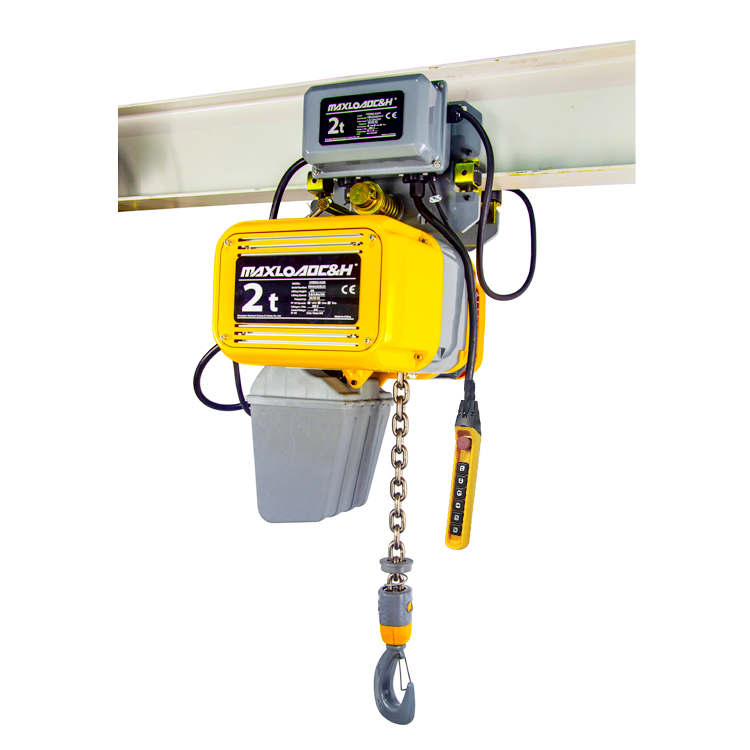
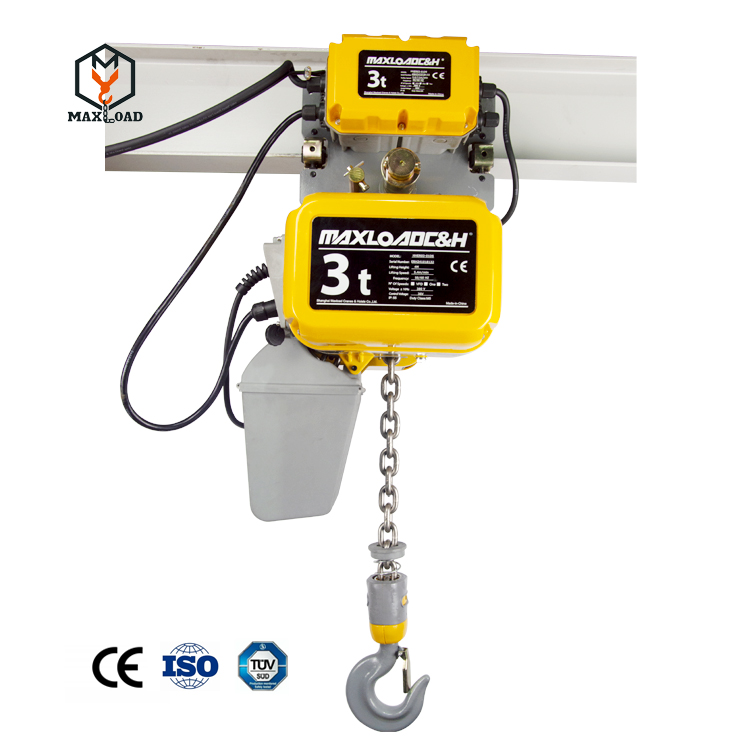
Electric hoists are compact, easy-to-operate, lightweight lifting devices. Their core function is to achieve vertical lifting and limited horizontal movement of materials. They typically consist of a motor, transmission mechanism, drum (or sprocket), hook (or lifting device), and safety devices.
Compact Structure and Light Weight: Electric hoists are ingeniously designed and occupy little space. They can be used as independent lifting tools or easily installed on supporting structures such as I-beam rails, single beams, or gantry cranes, enabling linear movement along the rails and expanding the working range.
Adjustable Lifting Speed and Precise Positioning: Most models have multi-speed adjustment functions, meeting the needs of rapid material handling while also allowing for slow, precise positioning during delicate operations such as assembly and installation. Precise millimeter-level positioning for flexible operation.
Comprehensive safety protection: Standard features include overload protection, limit switches, and phase sequence protection. Some models also offer a dual braking system, greatly ensuring operational safety.
High adaptability: Depending on the environment and medium, two main types are available: wire rope or chain conveyor. Special designs, such as explosion-proof and corrosion-resistant versions, are also available to meet the needs of special environments such as chemical plants and ports.
Typical application scenarios:
Production line assembly station: For precise assembly of parts, engines, etc.
Warehouse shelving area: Assists in storing and retrieving heavy boxes and bundled materials.
Maintenance workshop: Used for lifting equipment parts, motors, etc., for convenient maintenance.
Construction site: Assists in the installation of pipes, small prefabricated components, etc.
II. Cantilever Cranes: The "Highly Efficient Coverage Provider" of Fixed Areas
A cantilever crane, as the name suggests, is a type of crane with a rotatable cantilever structure. It typically consists of a column, a rotating mechanism, a cantilever beam, and lifting devices mounted on the cantilever. Its core advantage lies in its ability to provide efficient service coverage within a fan-shaped or circular area.
Key Features:
Flexible Working Range: The cantilever can rotate 360 degrees or a limited angle around the column. Combined with the movement of the electric hoist on the cantilever, it can easily cover a wide circular or fan-shaped working area centered on the column and with the cantilever length as the radius, leaving virtually no blind spots.
Space-Saving and Highly Independent: Column-mounted installation requires only one fixed point on the ground, independent of overhead crane beams in the workshop, making it particularly suitable for… Designed for wall mounting or serving specific machine tools and workbenches, effectively freeing up overhead space.
Efficiency Multiplier: Within its coverage area, operators can quickly and directly hoist materials to any location, eliminating the time required for long-distance back-and-forth movement required by traditional bridge cranes. This is particularly suitable for frequent fixed-point handling and loading/unloading.
Typical Applications:
Machine Tool Side: Serving multiple adjacent machines such as lathes, milling machines, and machining centers with frequent loading and unloading.
Assembly Workstation: Hoisting various components and tools around fixed assembly tables.
Logistics Loading/Unloading Points: Loading and unloading trucks and containers at fixed locations in docks and warehouses.
Equipment Repair Area: Hoisting large components requiring repair above repair pits or fixed workstations.
III. Comparison and Synergy between Electric Hoists and Jib Cranes
Understanding the fundamental differences between the two helps in making the right choice:
Function and Movement: The core function of an electric hoist is "lifting," while horizontal movement relies on an external track. A jib crane, on the other hand, integrates both "rotation" and "horizontal movement" capabilities, forming a localized, efficient planar coverage network, with the lifting function typically performed by the integrated electric hoist.
Applicable Scenarios: When the work path is primarily straight, or only single-point vertical lifting is required, electric hoists, either independently or mounted on straight tracks, are more economical and efficient. When the work area is a circular... For fixed circular or fan-shaped surfaces with dense and random lifting points, cantilever cranes offer unparalleled advantages.
Space utilization: Electric hoists utilize overhead space in workshops. Cantilever cranes are more flexible and can serve areas with dense ground equipment, limited overhead space, or where extensive coverage is not required.
In actual production, the two often work together. For example, in a large workshop, bridge cranes may be used for macroscopic material flow across areas, while cantilever cranes are used for efficient microscopic material delivery at specific processing units or assembly lines, forming a highly efficient, three-dimensional material handling system.
IV. Selection and Application Considerations
Choosing the right equipment is crucial for safety and efficiency. Consider the following aspects:
Rated Load: Determine based on the maximum weight of the single item to be lifted, with a safety margin. Overloading is strictly prohibited.
Working Frequency: For frequent use, choose a product with a higher working class, as its motor, brake, and structural components will have better durability.
Coverage Range: For electric hoists, determine the required lifting height and horizontal travel distance.
For jib cranes, determine the maximum slewing radius and angle, as well as the effective travel distance of the hook on the jib.
Installation Conditions and Environment: Assess the load-bearing capacity of the installation location and ensure a stable foundation.
Environmental Factors to Consider: Indoor environment, temperature, humidity, presence of dust, corrosive gases, or flammable and explosive materials to select the appropriate protection level or special model (e.g., explosion-proof, corrosion-resistant, tropical type).
Control Method: Based on… Based on usage habits and efficiency requirements, choose ground-based wired handle control, wireless remote control, or cab control.
Safety and Compliance: Ensure equipment complies with local safety regulations and standards and possesses complete safety devices. Regular maintenance and inspection, and operation by qualified personnel, are essential for long-term safe operation.
Conclusion:
Electric hoists and jib cranes, one specializing in vertical lifting and linear movement, and the other excelling in rotating coverage of fixed areas, are like "special forces" and "area managers" in the field of industrial material handling. Accurately grasping their technical characteristics and applicable boundaries, and scientifically selecting and configuring them in conjunction with actual process flows and spatial layout, can not only significantly improve operational efficiency and ensure personnel safety, but also optimize workshop logistics, laying a solid equipment foundation for the lean and intelligent development of modern manufacturing and logistics. On the road to pursuing production efficiency and safety, choosing the right lifting solution is always the first step towards success.
 0086 156 1824 5535
 0086 156 1824 5535
 kimliu@chnhoist.com