Electric Chain Hoists: The Silent Force of Modern Industry
In the workshops of modern factories, in the busy operating areas of port terminals, and at large-scale infrastructure construction sites, a seemingly simple yet crucial piece of equipment is silently undertaking heavy material handling tasks – the electric chain hoist. This lifting equipment, which combines safety, efficiency, and reliability, has become an indispensable basic piece of equipment in modern industrial production. Its development history and application practices bear witness to the progress and innovation of industrial technology.
I. The Perfect Balance of Efficiency and Safety
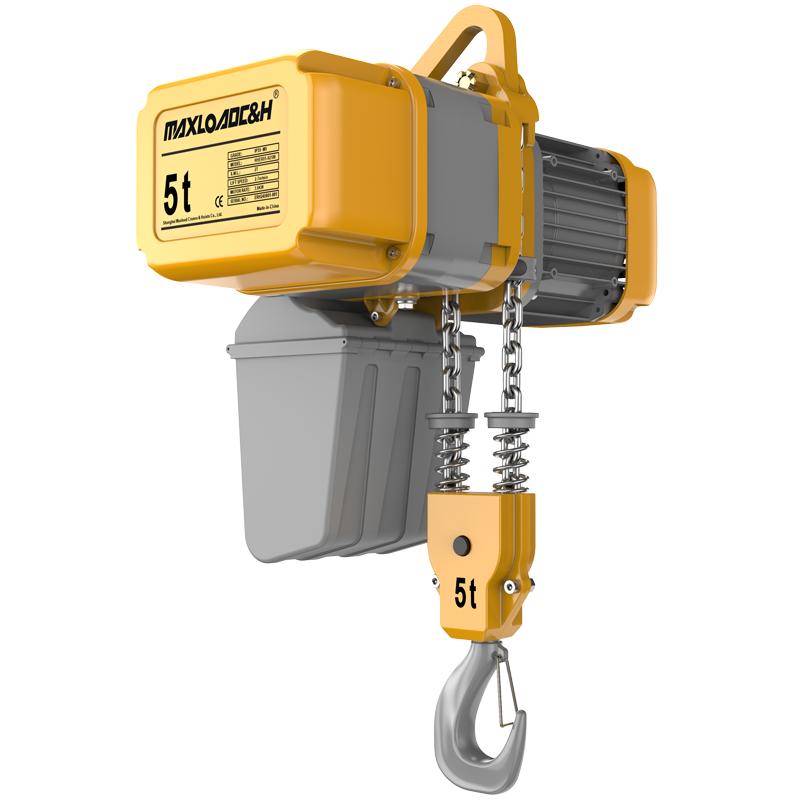
Modern electric chain hoists integrate multiple technological innovations, resulting in outstanding functional performance. Firstly, in terms of efficiency, advanced motor design and optimized transmission systems give the hoist high starting torque and stable operating characteristics, maintaining smooth lifting and lowering speeds under various working conditions. Many models are also equipped with dual-speed or multi-speed control functions to meet the different needs of precision installation and rapid handling.
Safety is a top priority in the design of electric chain hoists. In addition to basic upper and lower limit switches, modern products are usually equipped with multiple safety features such as overload protection devices, phase sequence protection, and emergency stop buttons. Particularly noteworthy is the safety of the chain itself – high-strength alloy steel chains are specially treated, making them not only wear-resistant and corrosion-resistant, but also ensuring that even in the event of extreme damage, they will usually only slowly unravel rather than suddenly break, greatly reducing the risk of accidents.
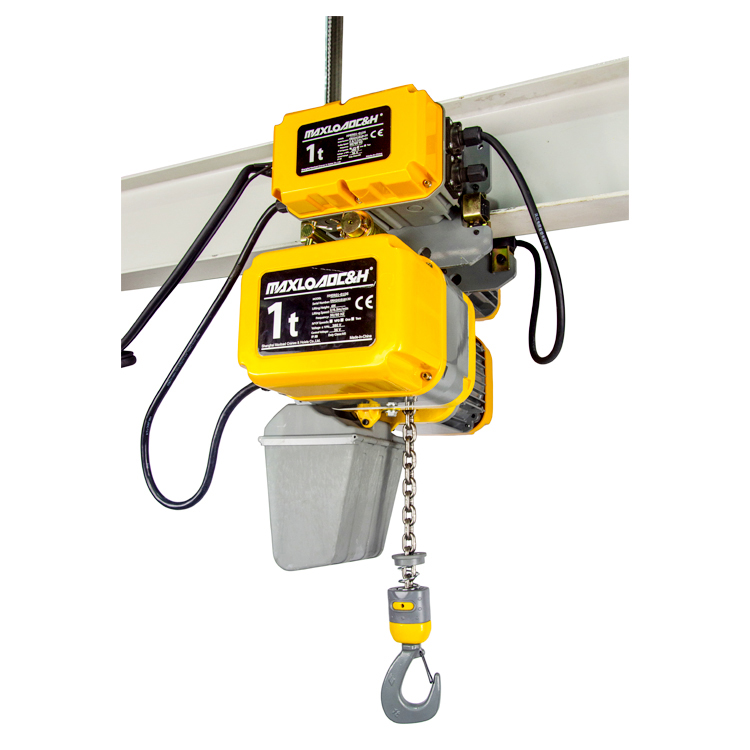
In terms of adaptability and reliability, electric chain hoists demonstrate significant advantages. The compact structural design allows for installation and use in confined spaces; the well-sealed casing protects the internal mechanisms from dust, moisture, and other environmental influences; low maintenance requirements reduce equipment downtime; and the modular design makes troubleshooting and component replacement more convenient.
II. From Mechanical Control to Intelligent Management
The innovation of motor technology is one of the key factors driving the improvement of hoist performance. Traditional asynchronous motors are gradually being replaced by more efficient and compact conical rotor motors or fully enclosed self-cooling motors. Some advanced models even use variable frequency control technology, achieving precise adjustment of starting, stopping, and operating speeds, greatly reducing load swing and improving operational accuracy.
The intelligence of the control system is another significant trend. Modern electric chain hoists are increasingly equipped with programmable controllers and intelligent interfaces, allowing for seamless integration with factory automation systems. Operating methods have also evolved from simple button control to various modes such as remote control and smart terminal control, significantly improving convenience and safety.
Advances in materials science are equally important. The application of high-strength alloy steel has significantly increased the load capacity of the chains while maintaining a small diameter; special surface treatment technologies have extended the service life of critical components; and the introduction of lightweight composite materials has further optimized the power-to-weight ratio of the equipment.
III. The Lifeline of Modern Industry
Electric chain hoists are used in almost all industrial sectors that require material handling. In manufacturing, they precisely move heavy components on assembly lines, efficiently stack goods in warehouses, and safely lift equipment in repair workshops. On every automobile production line, dozens or even hundreds of chain hoists work together to complete the entire material handling process, from body welding to final assembly.
In the construction industry, chain hoists are ubiquitous. From steel structure installation to curtain wall lifting, from equipment positioning to formwork removal, these reliable lifting devices ensure project progress while greatly improving operational safety. The compact advantage of chain hoists is fully utilized, especially in confined spaces for interior decoration and equipment installation.
The energy industry is also a significant application area for electric chain hoists. In power plant equipment maintenance, oil and gas platform component installation, and wind turbine lifting, hoist equipment needs to withstand harsh environments while maintaining extremely high reliability. Explosion-proof and corrosion-resistant special chain hoists designed for these specific conditions meet these demanding requirements.
Furthermore, in industries with strict requirements for lifting equipment, such as ports and docks, railway transportation, and aerospace, electric chain hoists play an indispensable role. They not only perform routine loading and unloading tasks but also frequently participate in the installation and commissioning of precision equipment, demonstrating exceptional adaptability and reliability.
IV. Key to Extending Equipment Life
Correct operation and proper maintenance are fundamental to ensuring the safe operation and extending the service life of electric chain hoists. Operators must receive professional training, be familiar with equipment performance, master operating procedures, and understand emergency handling methods. During daily operation, load limits should be strictly adhered to to avoid overloading; the equipment's operating status should be carefully observed, and any abnormalities should be immediately investigated and corrected; and critical components such as hooks and chains should be regularly inspected for wear.
Maintenance should be carried out systematically according to the manufacturer's recommendations. Daily maintenance includes cleaning the equipment surface, checking the condition of fasteners, and testing the function of safety devices; regular maintenance involves more in-depth inspections, such as replacing gearbox lubricant, adjusting the braking system, and checking electrical connections. Establishing a complete equipment file, recording each inspection, maintenance, and repair, helps in the timely identification of problems and the prediction of potential failures.
Special attention should be paid to chain maintenance – as a direct load-bearing component, the condition of the chain directly affects equipment safety. The chain should be cleaned regularly and checked for deformation, cracks, or excessive wear; it should be stored properly to prevent corrosion; and a reasonable replacement cycle should be determined based on usage frequency and environmental conditions. If any suspicious damage is found on the chain, its use should be immediately stopped and assessed by a professional.
Conclusion
The electric chain hoist, as a basic lifting equipment, reflects the relentless pursuit of efficiency, safety, and reliability in modern industry. From a simple lifting tool to a key node in intelligent material handling systems, the evolution of the chain hoist is not only an improvement in technical parameters but also an innovation in design concepts and system thinking.
In future industrial development, with the continuous breakthroughs in new materials, new processes, and intelligent control technologies, electric chain hoists will undoubtedly continue to be optimized and upgraded, playing an even more important role in a wider range of fields. For users, a thorough understanding of equipment characteristics, correct selection of applicable models, and standardized operation and maintenance are essential to maximize the value of this silent force in modern industry, providing solid and reliable support for production and construction activities.
In today's increasingly complex industrial production and ever-higher safety requirements, the electric chain hoist, with its unique technical characteristics and wide range of applications, proves that simple yet focused technological innovation can also have a profound impact. It is not only a piece of equipment on the production line but also a technological field in modern industrial civilization that deserves in-depth research and continuous optimization.
In the workshops of modern factories, in the busy operating areas of port terminals, and at large-scale infrastructure construction sites, a seemingly simple yet crucial piece of equipment is silently undertaking heavy material handling tasks – the electric chain hoist. This lifting equipment, which combines safety, efficiency, and reliability, has become an indispensable basic piece of equipment in modern industrial production. Its development history and application practices bear witness to the progress and innovation of industrial technology.
I. The Perfect Balance of Efficiency and Safety
Modern electric chain hoists integrate multiple technological innovations, resulting in outstanding functional performance. Firstly, in terms of efficiency, advanced motor design and optimized transmission systems give the hoist high starting torque and stable operating characteristics, maintaining smooth lifting and lowering speeds under various working conditions. Many models are also equipped with dual-speed or multi-speed control functions to meet the different needs of precision installation and rapid handling.
Safety is a top priority in the design of electric chain hoists. In addition to basic upper and lower limit switches, modern products are usually equipped with multiple safety features such as overload protection devices, phase sequence protection, and emergency stop buttons. Particularly noteworthy is the safety of the chain itself – high-strength alloy steel chains are specially treated, making them not only wear-resistant and corrosion-resistant, but also ensuring that even in the event of extreme damage, they will usually only slowly unravel rather than suddenly break, greatly reducing the risk of accidents.
In terms of adaptability and reliability, electric chain hoists demonstrate significant advantages. The compact structural design allows for installation and use in confined spaces; the well-sealed casing protects the internal mechanisms from dust, moisture, and other environmental influences; low maintenance requirements reduce equipment downtime; and the modular design makes troubleshooting and component replacement more convenient.
II. From Mechanical Control to Intelligent Management
The innovation of motor technology is one of the key factors driving the improvement of hoist performance. Traditional asynchronous motors are gradually being replaced by more efficient and compact conical rotor motors or fully enclosed self-cooling motors. Some advanced models even use variable frequency control technology, achieving precise adjustment of starting, stopping, and operating speeds, greatly reducing load swing and improving operational accuracy.
The intelligence of the control system is another significant trend. Modern electric chain hoists are increasingly equipped with programmable controllers and intelligent interfaces, allowing for seamless integration with factory automation systems. Operating methods have also evolved from simple button control to various modes such as remote control and smart terminal control, significantly improving convenience and safety.
Advances in materials science are equally important. The application of high-strength alloy steel has significantly increased the load capacity of the chains while maintaining a small diameter; special surface treatment technologies have extended the service life of critical components; and the introduction of lightweight composite materials has further optimized the power-to-weight ratio of the equipment.
III. The Lifeline of Modern Industry
Electric chain hoists are used in almost all industrial sectors that require material handling. In manufacturing, they precisely move heavy components on assembly lines, efficiently stack goods in warehouses, and safely lift equipment in repair workshops. On every automobile production line, dozens or even hundreds of chain hoists work together to complete the entire material handling process, from body welding to final assembly.
In the construction industry, chain hoists are ubiquitous. From steel structure installation to curtain wall lifting, from equipment positioning to formwork removal, these reliable lifting devices ensure project progress while greatly improving operational safety. The compact advantage of chain hoists is fully utilized, especially in confined spaces for interior decoration and equipment installation.
The energy industry is also a significant application area for electric chain hoists. In power plant equipment maintenance, oil and gas platform component installation, and wind turbine lifting, hoist equipment needs to withstand harsh environments while maintaining extremely high reliability. Explosion-proof and corrosion-resistant special chain hoists designed for these specific conditions meet these demanding requirements.
Furthermore, in industries with strict requirements for lifting equipment, such as ports and docks, railway transportation, and aerospace, electric chain hoists play an indispensable role. They not only perform routine loading and unloading tasks but also frequently participate in the installation and commissioning of precision equipment, demonstrating exceptional adaptability and reliability.
IV. Key to Extending Equipment Life
Correct operation and proper maintenance are fundamental to ensuring the safe operation and extending the service life of electric chain hoists. Operators must receive professional training, be familiar with equipment performance, master operating procedures, and understand emergency handling methods. During daily operation, load limits should be strictly adhered to to avoid overloading; the equipment's operating status should be carefully observed, and any abnormalities should be immediately investigated and corrected; and critical components such as hooks and chains should be regularly inspected for wear.
Maintenance should be carried out systematically according to the manufacturer's recommendations. Daily maintenance includes cleaning the equipment surface, checking the condition of fasteners, and testing the function of safety devices; regular maintenance involves more in-depth inspections, such as replacing gearbox lubricant, adjusting the braking system, and checking electrical connections. Establishing a complete equipment file, recording each inspection, maintenance, and repair, helps in the timely identification of problems and the prediction of potential failures.
Special attention should be paid to chain maintenance – as a direct load-bearing component, the condition of the chain directly affects equipment safety. The chain should be cleaned regularly and checked for deformation, cracks, or excessive wear; it should be stored properly to prevent corrosion; and a reasonable replacement cycle should be determined based on usage frequency and environmental conditions. If any suspicious damage is found on the chain, its use should be immediately stopped and assessed by a professional.
Conclusion
The electric chain hoist, as a basic lifting equipment, reflects the relentless pursuit of efficiency, safety, and reliability in modern industry. From a simple lifting tool to a key node in intelligent material handling systems, the evolution of the chain hoist is not only an improvement in technical parameters but also an innovation in design concepts and system thinking.
In future industrial development, with the continuous breakthroughs in new materials, new processes, and intelligent control technologies, electric chain hoists will undoubtedly continue to be optimized and upgraded, playing an even more important role in a wider range of fields. For users, a thorough understanding of equipment characteristics, correct selection of applicable models, and standardized operation and maintenance are essential to maximize the value of this silent force in modern industry, providing solid and reliable support for production and construction activities.
In today's increasingly complex industrial production and ever-higher safety requirements, the electric chain hoist, with its unique technical characteristics and wide range of applications, proves that simple yet focused technological innovation can also have a profound impact. It is not only a piece of equipment on the production line but also a technological field in modern industrial civilization that deserves in-depth research and continuous optimization.
 0086 156 1824 5535
 0086 156 1824 5535
 kimliu@chnhoist.com