Key Equipment for Lifting Operations in Modern Industry
Lifting and moving heavy objects is a ubiquitous and crucial process in modern industrial production, construction, logistics, and even infrastructure development. Whether assembling precision components onto a production line or hoisting hundreds of tons of prefabricated components to a skyscraper, safe and efficient lifting equipment is essential for ensuring smooth operations and improving overall efficiency. Among the many types of lifting equipment, electric hoists and cranes are undoubtedly the two most widely used and prominent. Although often mentioned together, they differ fundamentally in design concepts, structural forms, capacity ranges, and application scenarios. A deep understanding of these two types of equipment is of vital practical significance for enterprises to make scientific selections, optimize production processes, and ensure operational safety.
I. Electric Hoists: Classification, Characteristics, and Typical Application Scenarios
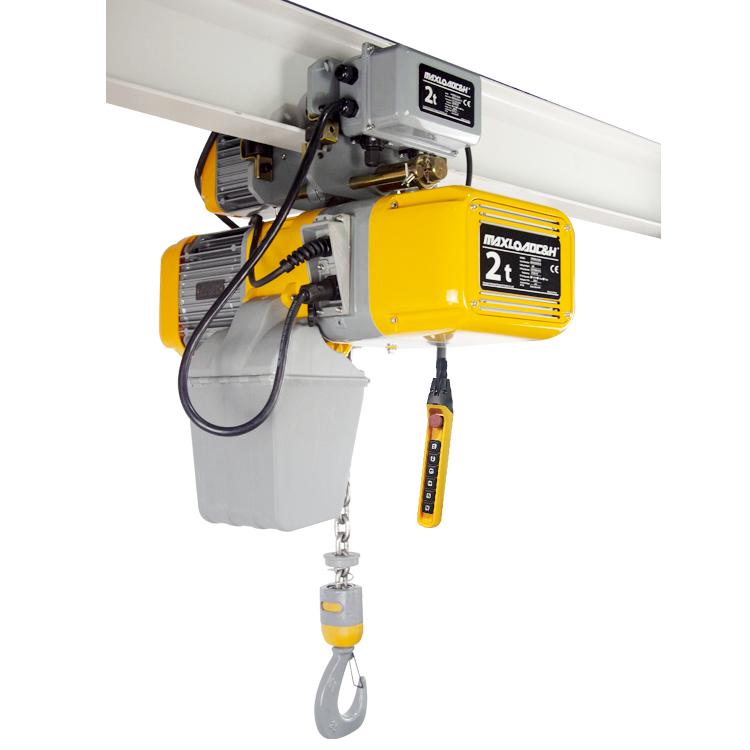
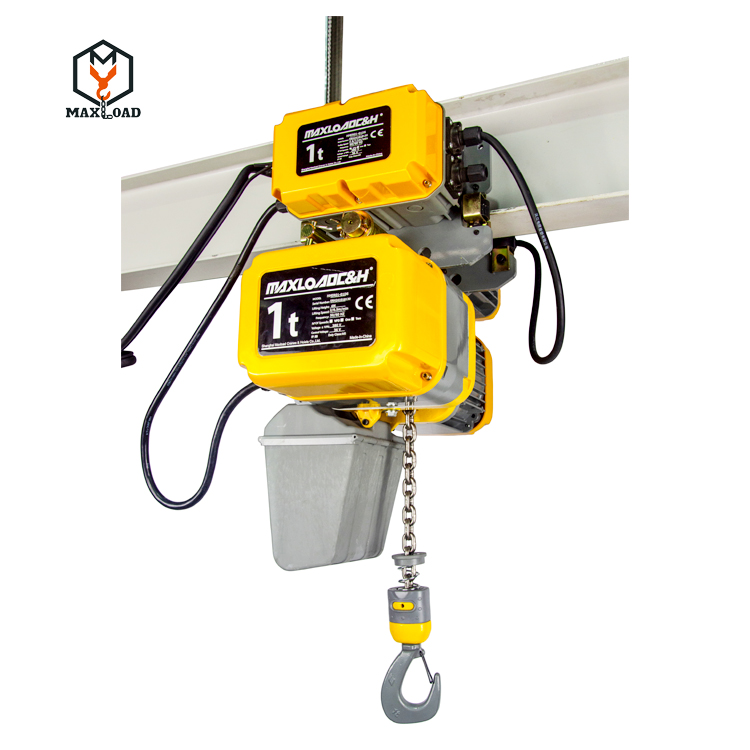
Based on the lifting medium, electric hoists are mainly divided into two categories: wire rope electric hoists and chain electric hoists. Wire rope electric hoists use flexible and high-strength steel wire ropes as the load-bearing component, offering large lifting heights and stable operation. They are suitable for applications requiring medium to large lifting heights and heavy loads, such as machine assembly workshops and mold hoisting. Electric chain hoists utilize high-strength alloy chains, resulting in a more compact and lightweight structure. Their small size makes them particularly suitable for operation in low-ceilinged spaces or within flange openings, commonly found in fixed-point lifting and equipment maintenance on production lines.
The core advantages of electric hoists lie in their economy, flexibility, and ease of use. They have relatively low purchase costs, are easy to install, and do not require sophisticated factory structures. Their modular design also facilitates integration into larger systems, such as lifting components of overhead cranes or bridge cranes. Electric hoists are often the ideal choice in the following scenarios:
Production line workstation lifting: Fixed-point lifting of parts or semi-finished products on assembly lines.
Warehouse material handling: Regular lifting and placement of goods in shelving or storage areas.
Maintenance workshops: Used for lifting machinery, automobile engines, etc., for repair.
As a component of large cranes: Acting as the main or auxiliary lifting mechanism of bridge or gantry cranes.
II. Cranes: Main Types and Their Grand Mission
The world of cranes is diverse, and their structural forms are mainly classified according to their support and operation methods:
Bridge Cranes: Their bridges run on elevated tracks, making full use of the workshop space below. These are the most common heavy-duty material handling equipment in factories, responsible for the material flow across the entire factory floor.
Gantry Cranes and Semi-Gantry Cranes: Equipped with outriggers, they run on ground tracks, resembling a "gate frame." Primarily used in open-air storage yards, railway freight yards, and shipyards for loading, unloading, and handling timber, steel, and containers.
Flexible Beam Cranes (Suspended Cranes): Typically employing a lightweight truss structure, they can be directly suspended from the factory roof structure. Multiple electric hoists work in tandem, providing flexible lifting solutions covering specific areas, suitable for production line reorganization and optimization.
The core value of a crane system lies in its comprehensive spatial coverage and enormous load potential. It is not only a symbol of power but also a key hub in the production process, capable of precisely positioning heavy objects to any required location, thereby connecting scattered work points into an efficient whole.
III. Comparative Analysis and Scientific Selection Strategy
Placing these two options on a decision-making scale, the following dimensions can be considered:
Function and Degree of Freedom: Electric hoists primarily provide vertical movement (with the option to add manual or electric trolleys for limited horizontal movement); cranes provide complete vertical and horizontal three-dimensional movement.
Load Capacity: Electric hoists typically cover small to medium tonnage; cranes easily cover the entire range from 1 ton to hundreds of tons.
Coverage Area: Electric hoists cover a line or a point; cranes cover a surface (workshop) or a three-dimensional space.
Cost and Complexity: Electric hoists are low-cost and easy to install and maintain; cranes represent a significant fixed asset investment, with more complex design, installation, and maintenance.
Space Requirements: Electric hoists have minimal space occupation; bridge and gantry cranes require rails and clearance height.
Scientific selection is not a simple either/or choice, but should begin with a precise analysis of requirements:
1. Operational Analysis: Clearly define the weight, size, and frequency of the most frequently hoisted items, as well as the required lifting height and horizontal movement path.
2. Space Audit: Assess the factory or site's clearance height, column locations, ground load-bearing capacity, and any obstructions.
3. Process Integration: Consider the equipment's role in the production process—is it an isolated maintenance point or part of a continuous production chain? How likely are future process changes?
4. Economic Assessment: Comprehensively calculate initial investment, installation costs, long-term operating energy consumption, maintenance costs, and its potential to improve overall production efficiency.
Sometimes, the best solution may be a combination of both: for example, using several overhead cranes for macro-level material handling across areas in a large workshop, while configuring independent electric hoists or light overhead crane systems for specific production lines to enable flexible and precise micro-operations.
IV. Safety and the Future: A Timeless Theme and Development Trend
Regardless of whether electric hoists or cranes are chosen, safety is always the overriding rule. This includes, but is not limited to: ensuring that equipment is installed and regularly inspected by qualified professionals; requiring operators to undergo rigorous training and be certified; strictly implementing daily inspection procedures to check the condition of key components such as wire ropes/chains, hooks, brakes, and limit devices; strictly prohibiting overloading and establishing clearly defined safe operating areas.
Looking to the future, the technological development of electric hoists and cranes is moving towards greater intelligence, efficiency, and safety. The wave of intelligentization has swept across the industry, with equipment widely integrating sensors to monitor load, operating status, and the health of key components in real time, enabling predictive maintenance. With the maturity of automatic control and precise positioning technologies, unmanned automated lifting systems are beginning to be applied in warehouses and specific production processes, linking with logistics equipment such as AGVs to form the material transport arteries of smart factories. Simultaneously, lightweight design and the application of new materials reduce equipment weight while maintaining strength, improving energy efficiency. Human-centered design is also increasingly valued, including noise reduction, improved user interfaces, the application of wireless remote control, and even augmented reality technology to enhance operator comfort and safety.
In conclusion, electric hoists and cranes are indispensable "power skeletons" and "flexible joints" in the modern industrial system. Understanding their essential differences and intrinsic connections, and making scientific and rational selections and configurations based on actual needs, can not only directly improve the efficiency and safety of material handling but also lay a solid foundation for the smooth operation and continuous optimization of the entire production system. In the context of intelligent and green manufacturing, the rational use of these lifting devices is becoming a key step for enterprises to solidify their foundation and move towards excellence.
 0086 156 1824 5535
 0086 156 1824 5535
 kimliu@chnhoist.com