Electric Hoists and Overhead Cranes: The Two Arms of Modern Industrial Material Handling
In modern factories, warehouses, construction sites, and logistics centers, efficient and safe material handling is crucial for ensuring production efficiency and operational safety. Electric hoists and overhead cranes, as two core lifting and handling devices, act like the "flexible wrist" and "steel backbone" of the industrial field, working together to build a three-dimensional, automated material flow system. While they often work together, they each have their own focus in design, function, and application, jointly driving productivity improvements across various industries.
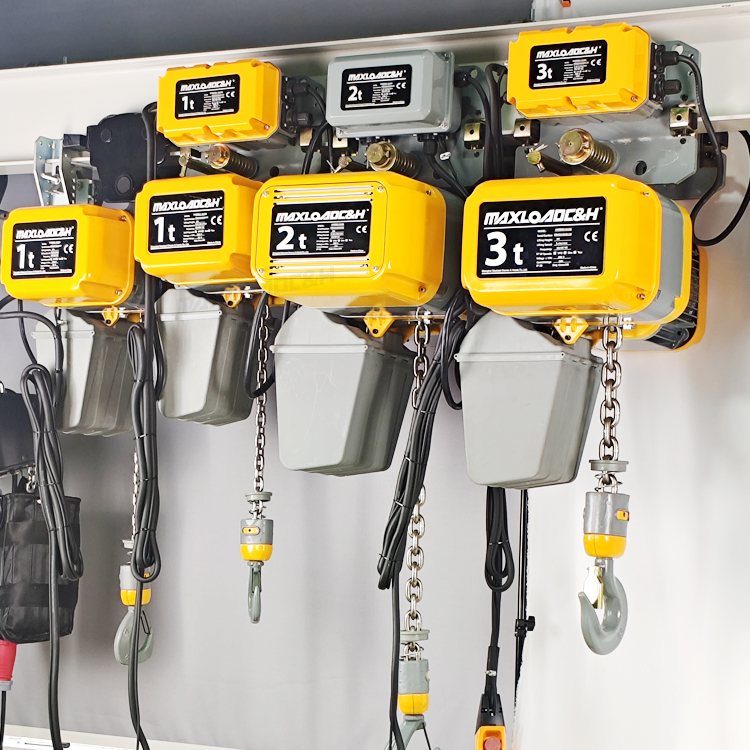
I. Electric Hoists: Precise and Efficient "Lifting Experts"
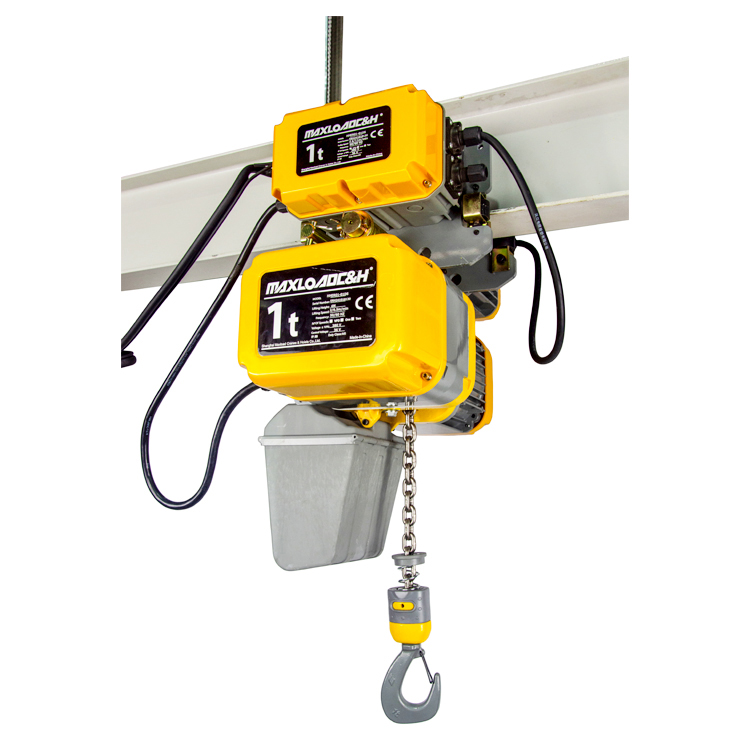
Lightweight and Flexible: Electric hoists are relatively small and lightweight. They can be installed independently on fixed I-beam rails to form a simple suspended crane, or they can be integrated into more complex cranes as lifting mechanisms. This flexibility allows them to adapt to various site and space constraints.
Easy to operate and precise to control: Most electric hoists are equipped with a hand flashlight or remote control for operation, enabling inching, continuous operation, and multi-speed control. This ensures precise lifting and positioning, making them particularly suitable for assembly and maintenance applications requiring precise alignment.
Diverse functions and complete models: Based on the usage environment and needs, electric hoists are mainly divided into two categories: wire rope electric hoists and chain electric hoists. Wire rope hoists have a large lifting height and a wide lifting capacity range; chain hoists have a more compact structure and lighter weight, making them suitable for confined spaces. In addition, there are explosion-proof, corrosion-resistant, and metallurgical-specific models to meet the special working conditions of chemical plants, ports, and foundries.
Economical and efficient, easy to maintain: As an independent lifting unit, electric hoists have relatively low purchase costs, and their modular design makes daily inspection, maintenance, and parts replacement easy.
Main application scenarios: Electric hoists are widely used in machine tool loading and unloading, production line workstation hoisting, warehouse goods storage and retrieval, automotive workshop parts delivery, repair shop equipment maintenance, and any application requiring frequent and precise vertical lifting operations. It is an indispensable "all-purpose helper" in the workshop.
II. Overhead Crane: The "Backbone" of Material Handling Above the Workshop
An overhead crane, formally known as a bridge crane, is a lifting device that spans across a workshop, warehouse, or storage yard for material handling. Its structure resembles a movable metal bridge, mainly composed of a bridge frame, a lifting trolley, a main trolley traveling mechanism, and an operator's cab.
Wide Coverage and Large Lifting Capacity: Relying on a robust bridge frame, the overhead crane travels longitudinally along the main trolley tracks laid on both sides, while the lifting trolley can move laterally along the main beam of the bridge frame. This design allows it to cover almost all work points within the rectangular area below the tracks, forming a vast three-dimensional working space. The lifting capacity of an overhead crane can range from several tons to hundreds of tons, far exceeding that of an independent electric hoist.
Stable Structure and Reliable Safety: The professional bridge frame structure design ensures the rigidity and stability of the equipment under heavy loads. It is typically equipped with comprehensive safety devices, such as overload limiters, travel limit switches, buffers, and emergency stop switches, providing solid safety guarantees for large-scale, heavy-load lifting operations.
Improving production efficiency and reducing labor intensity: Overhead cranes can quickly and smoothly lift heavy workpieces, raw materials, or finished products, overcoming equipment, personnel, and other obstacles to achieve efficient material flow and process integration within the workshop. They are core equipment for modern mass production lines and large and medium-sized warehousing and logistics.
Good foundation for automation and intelligent integration: Modern overhead cranes are easily integrated with automated control systems. Through program control, they can achieve functions such as fixed-point lifting, automatic obstacle avoidance, and warehouse management linkage, making them a key component of smart factories and automated storage and retrieval systems (AS/RS).
Main application scenarios: Overhead cranes are standard equipment in industries such as machinery manufacturing, metallurgy and steel, power plants, shipbuilding, heavy machinery assembly, and large warehousing. They are commonly used to handle heavy materials such as steel ingots, steel products, large castings and forgings, containers, and generator rotors, serving as the "aerial backbone transport line" in heavy industrial workshops.
III. Collaboration and Selection: How to configure according to needs?
In practical applications, electric hoists and overhead cranes are not mutually exclusive but often work together, forming complementary advantages.
As a component: The "lifting mechanism" of most overhead cranes is itself a large-tonnage, specifically designed electric hoist. Therefore, the vertical lifting capacity of the overhead crane is directly determined by the performance of its electric hoist.
Independent vs. Combined Use: For frequent lifting operations at fixed workstations or over short distances with small tonnage, a single overhead electric hoist can be used. However, when the work area needs to cover a large rectangular area and the weight of the items to be lifted is large, an overhead crane must be used. In large workshops, multiple independent hoists may be deployed simultaneously to serve specific workstations, supplemented by one or more overhead cranes to handle cross-area, large-tonnage transfer tasks.
Selection Considerations: When selecting suitable equipment for a specific project, the following points should be comprehensively evaluated:
Lifting capacity and working class: Determine the maximum weight to be lifted and the equipment's workload.
Span and lifting height: Determine the lateral movement range and vertical lifting distance that the equipment needs to cover.
Operating Environment: Consider the specific characteristics of the environment, such as temperature, humidity, and the presence of dust, corrosive gases, or explosive hazards, to select equipment with appropriate protection levels or special types.
Process Flow and Efficiency Requirements: Analyze the material flow path, whether it requires fixed-point lifting or large-area transport, and what the requirements are for operating speed and positioning accuracy.
Plant Conditions and Infrastructure: Assess plant height, column location, track installation conditions, and power grid capacity.
Budget and Maintenance: Weigh the initial investment cost against the convenience and cost of long-term operation and maintenance.
Conclusion: Electric hoists and overhead cranes, as fundamental and backbone equipment in the field of material handling, continuously empower modern industrial production with their unique functional positioning and wide application adaptability. Understanding their differences and potential synergies, and making scientific selection and reasonable configuration based on actual needs, can not only directly improve operational efficiency and safety, but also represent a solid step for enterprises to optimize production processes and move towards intelligent upgrading. In the future industrial landscape, this "steel duo" will continue to evolve, taking on the important task of logistics handling with a more intelligent and powerful presence.
 0086 156 1824 5535
 0086 156 1824 5535
 kimliu@chnhoist.com