The Technological Legend Behind Electric Hoists
In the steel jungles of modern factories, atop towering construction sites, and amidst bustling port terminals, a seemingly simple yet crucial piece of equipment silently dances—the electric hoist. With precise and stable movements, they transport loads ranging from tiny parts to heavy machinery, like a silent symphony orchestra of industry, conducting the melody of material flow. Though inconspicuous, the electric hoist is an indispensable power arm in modern industrial production, a key link connecting design and implementation, planning and execution.
The basic working principle of the electric hoist is a marvelous combination of mechanical and electrical engineering. These devices typically consist of a motor, a reduction gear, a drum or sprocket, a hook, and a control system. When the motor is powered on, the resulting rotational power is transmitted through multiple stages by the reduction gear, ultimately converting into the rotation of the drum or sprocket, thereby winding or unwinding the wire rope or chain to lift and lower the load. Behind this process lies a fusion of knowledge from multiple fields, including mechanical transmission, electrical control, and materials science—a microcosm of industrial wisdom.
Structurally, electric hoists can be broadly categorized into two types: wire rope and chain hoists. Wire rope electric hoists use multi-layer wound wire ropes as the load-bearing medium, offering high load capacity and long lifting heights, making them suitable for ports, heavy machinery plants, and other locations requiring large-tonnage lifting. Chain electric hoists, on the other hand, use high-strength alloy chains, resulting in a compact structure and light weight, making them particularly suitable for workshops with limited space and light assembly lines. Different types of electric hoists cover a wide range, from tens of kilograms to hundreds of tons, meeting diverse industrial needs.
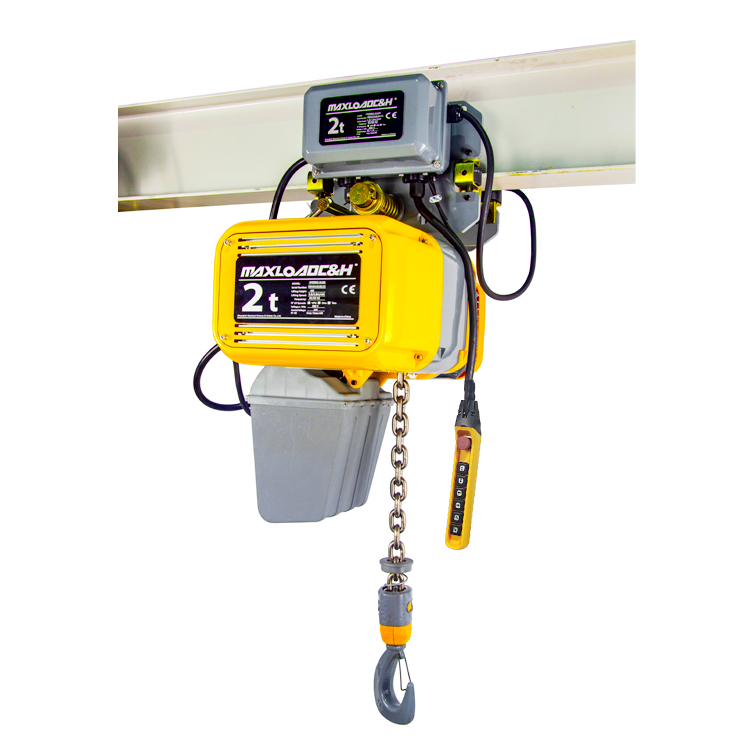
Electric hoists are used in almost every field involving material handling. In manufacturing workshops, they flexibly transport raw materials, semi-finished products, and finished products, optimizing production processes; on construction sites, they precisely deliver building materials to designated heights and locations, accelerating project progress; in logistics and warehousing, they efficiently handle loading and unloading, improving supply chain efficiency; in auto repair shops, they smoothly lift engines and car bodies, ensuring operational safety. Behind every smooth lifting action lies the reliable support of electric hoist technology.
With technological advancements, the electric hoist industry is witnessing a series of innovative breakthroughs. Intelligent control systems have made operation more precise and convenient; many modern electric hoists are equipped with wireless remote control, automatic positioning, and anti-sway functions. Safety performance is continuously improving, with dual braking systems, overload protection, and limit switches becoming standard features, significantly reducing the risk of accidents. Energy-saving and environmentally friendly concepts are also deeply integrated into product design, with high-efficiency motors and energy recovery systems gradually becoming more widespread. These innovations not only improve equipment performance but also redefine safety standards and energy efficiency levels in material handling.
Looking at the evolution of electric hoists, we can clearly see a development trajectory from manual to mechanical, from simple to complex, and from independent equipment to system integration. Early lifting equipment relied entirely on manual labor or simple mechanical principles, resulting in low efficiency and extremely high risks. With the advancement of the Industrial Revolution, steam power and electricity were gradually applied to lifting equipment, giving rise to the electric hoist. In the 20th century, breakthroughs in materials science made lighter and stronger lifting devices possible, while advancements in control technology made operation more precise and reliable. Today, with the integration of new technologies such as the Internet of Things and artificial intelligence (AI), electric hoists are evolving towards intelligence and networking, becoming a crucial node in the Industry 4.0 system.
In production practice, the selection and maintenance of electric hoists is a comprehensive science. A suitable electric hoist should consider multiple factors, including lifting capacity, lifting height, working class, and environmental conditions.
In high-temperature, humid, or explosive environments, specialized models with corresponding protection levels must be selected. Regular inspection and maintenance are equally crucial, including checking for wear on the wire rope or chain, testing the performance of the braking system, and inspecting the insulation of electrical components. Proper use and maintenance not only extend the equipment's lifespan but are also fundamental guarantees for safe production.
It is noteworthy that contemporary electric hoist technology is deeply integrating with other cutting-edge technologies. The application of sensor technology enables electric hoists to monitor load status and their own health in real time; data acquisition and analysis help optimize equipment usage patterns and maintenance plans; and integration with automated production lines or intelligent warehousing systems transforms electric hoists into intelligent terminals in the Industrial Internet, participating in broader production coordination and optimization.
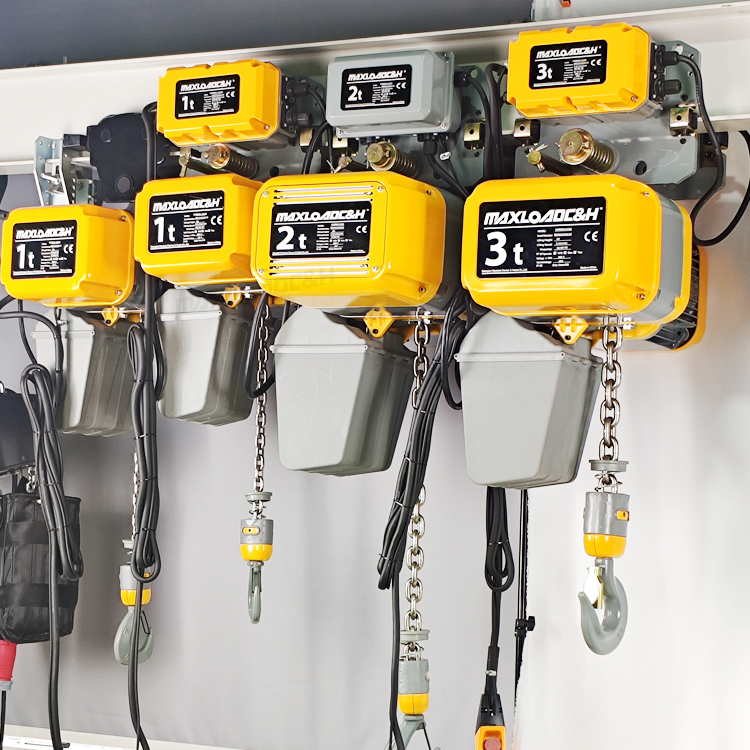
Looking back from the perspective of an increasingly automated industrial age, the history of electric hoists has almost paralleled the progress of industrial civilization. From the earliest simple manual hoists to today's intelligent lifting equipment, this evolution is not only a technological innovation but also a vivid portrayal of humanity's continuous efforts to push its limits and improve productivity. The seemingly monotonous up-and-down motion of the electric hoist carries the rhythm of industrial production, the efficiency of material flow, and the underlying logic of modern society.
The arc of the steel cable tracing through the air, the power transmitted between the gears by the chain, the deep rumble of the electric motor—these elements together compose the symphony of industrial production. As an indispensable melody in this symphony, the electric hoist will continue to play an irreplaceable role in humanity's grand blueprint for building the world, through its ever-evolving form. It is not merely a tool for lifting heavy objects but also the industrial artery connecting reality and possibility, balancing efficiency and safety, continuously driving the innovation and progress of human production methods in the symphony of steel and electricity.
 0086 156 1824 5535
 0086 156 1824 5535
 kimliu@chnhoist.com