The Industrial Art of Collaborative Operation Between Electric Hoists and Overhead Cranes
On the vast stage of modern industrial production, the precise handling of materials is like the continuous flow of blood that sustains life—it cannot stop for a moment, and there can be no room for error. At the core of this precise flow is often a tacitly coordinated "golden partnership"—the electric hoist and the overhead crane. One acts like a nimble and resilient arm, the other like a stable and moving skeleton, composing a symphony of power and intelligence in the steel forest.
I. Each Performing Its Own Duty, Complementing Each Other: Understanding the Cornerstone of Collaboration
To appreciate the beauty of their collaboration, it is essential first to understand their unique roles and inherent differences.
Electric Hoist: The Precise "End Effector"
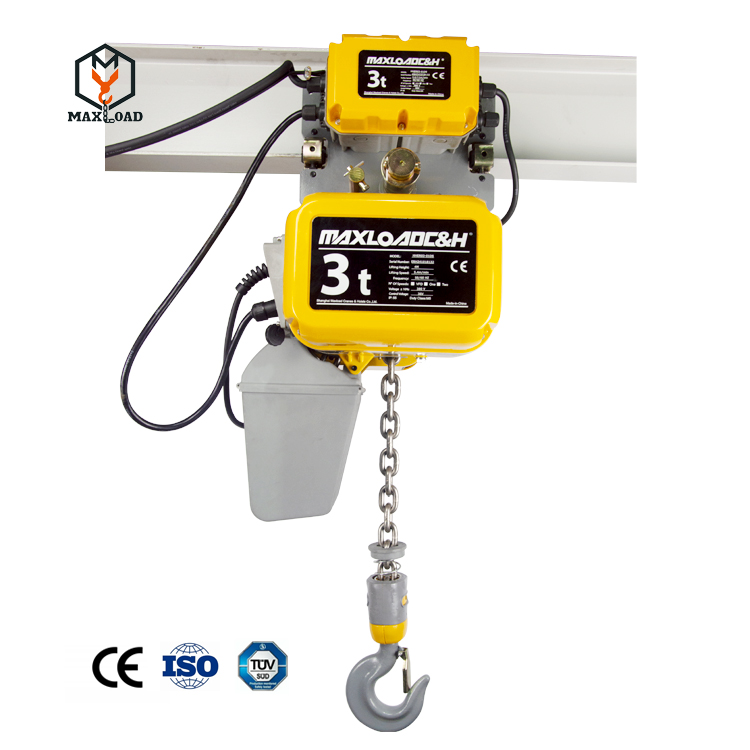
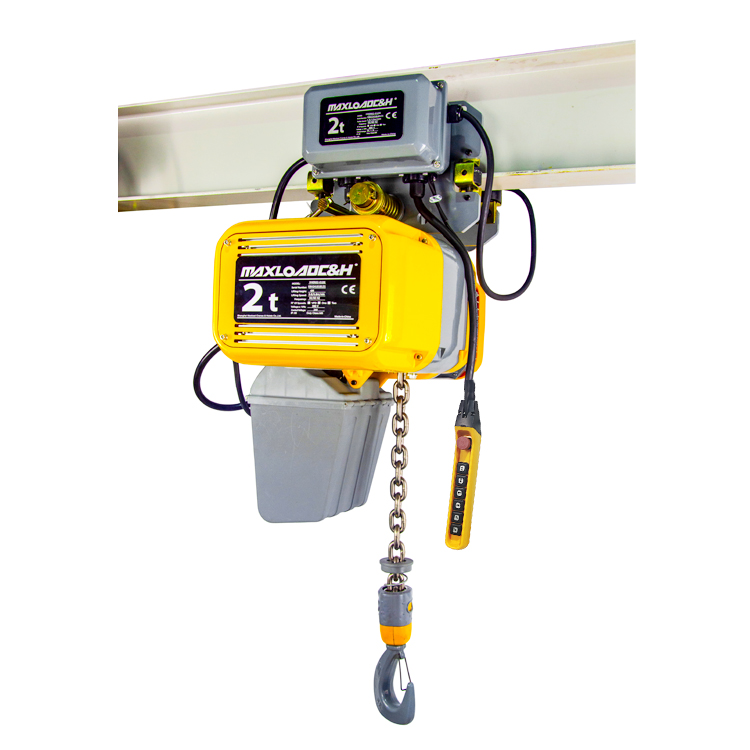
The electric hoist is the core of vertical lifting tasks. It typically consists of a motor, drum, reduction gear, braking system, and hook, focusing on force and motion in the vertical dimension. Its core value lies in precise control: capable of lifting, lowering, and hovering loads with millimeter-level accuracy. Whether it's slowly embedding heavy molds into a press or gently placing precision components on an assembly table, this meticulous control over vertical movement ensures the success of many critical processes. Its compact structure allows it to be independently mounted on a fixed fulcrum for point-to-point lifting and lowering, and it's also an indispensable "grabbing hand" in the overhead crane system.
Overhead Crane: A Cross-Domain "Aerial Mobile Platform"
Overhead cranes, especially bridge cranes, construct a vast stage in the horizontal dimension. They consist of a large bridge spanning the workshop, trolleys moving along the bridge, and related tracks, drives, and control systems. Their core capability lies in large-scale planar transport. The bridge travels along the longitudinal tracks of the workshop, while the trolleys move laterally along the bridge; their combination allows their service range to cover the entire planar area of the workshop or warehouse, forming an efficient "aerial transport network."
Synergistic Essence: Dimensional Integration and Functional Multiplication
The fundamental difference between the two lies in the dimension of motion: electric hoists primarily handle vertical lifting and lowering, while overhead cranes are responsible for horizontal movement. But it is precisely this difference that forms the basis for perfect complementarity. When an electric hoist is installed as a lifting mechanism on a trolley of an overhead crane, it enables complete freedom of material handling in three-dimensional space. This combination is not a simple addition, but a geometric increase in functionality: the overhead crane expands the working range of the electric hoist, freeing it from a fixed point; the electric hoist, in turn, endows the overhead crane with precise gripping and lifting capabilities, elevating it from a simple moving platform into an intelligent handling unit.
II. Seamless Integration, Process-Driven Success: A Symphony of Collaboration
In actual operation, the collaboration between the two is like a precisely choreographed ballet, commonly seen in the following core processes:
Precise Positioning and Gripping: The operator, via wireless remote control or cab control, first manipulates the trolley and crane to accurately move the unloaded electric hoist directly above the material to be transported. Then, the operator slowly lowers the hook of the electric hoist, assisted by ground personnel or guided by an intelligent vision system, to ensure a safe and secure connection between the hoist and the load. The electric hoist's micro-speed descent function is crucial in this step, ensuring a shock-free and damage-free connection.
Immediate Lowering Function of the Electric Hoist: Smooth Lifting and Safety Confirmation: After confirming the load connection is correct, start the electric hoist to vertically lift the material to a safe height at a smooth speed, completely avoiding personnel, equipment, and other obstacles below. During the lifting process, the dual braking system and overload protection device work together to ensure absolute safety. After lifting to the designated position, pause briefly to confirm the status.
Efficient Horizontal Conveying: After confirming the lifting safety, the operator mainly switches to trolley control. Start the trolley and auxiliary trolley drives to horizontally transport the load to the target area along the predetermined path.
Modern advanced systems often have preset slow start and stop programs, as well as anti-sway control technology, to ensure the load is as smooth as a boat during long-distance, large-span transport, significantly reducing swaying and improving safety and efficiency.
Precise Alignment and Gentle Placement: After reaching the target point, finely adjust the trolley position again for alignment, and then operate the electric hoist to precisely place the load at the designated location—which could be a machine tool table, assembly line bracket, truck cargo box, or warehouse storage location—at a controllable descent speed. The slow-positioning function makes the placement action extremely gentle, which is of great significance for protecting precision parts or fragile materials. Return and Positioning: After unloading, the electric hoist's empty hook rises to a safe travel height, and the overhead crane quickly returns to its initial position or proceeds to the next picking point, awaiting the next round of work. This completes one material handling cycle.
III. Scenario Empowerment, Value Demonstration: A Broad Stage for Collaboration
This collaborative model has been deeply integrated into the fabric of modern industry:
Heavy Manufacturing: In machinery and metallurgical workshops, handling steel billets, large castings, and forming molds weighing several tons or even hundreds of tons is routine work. Overhead cranes provide powerful mobility across furnace pits and machine tools, while heavy-duty electric hoists provide reliable lifting power.
Warehousing and Logistics: In high-bay warehouses, the combination of overhead stacker cranes and high-performance electric hoists enables automated, high-speed storage and retrieval of palletized goods between dense racks, a key to a revolution in logistics efficiency.
Assembly Production Lines: In assembly lines for large products such as automobiles and aerospace, overhead cranes equipped with electric hoists are used for the aerial transport and precise docking of large components such as engines and wings, achieving flexible assembly line operations.
Equipment Maintenance Workshop: In the factory's maintenance area, overhead cranes, in conjunction with electric hoists, can safely and conveniently lift large motors, reducers, and other equipment for maintenance, serving as unsung heroes ensuring production continuity.
IV. Safety First, Intelligence Leads the Way: The Eternal Principle and Future of Collaboration
Excellent collaboration must be based on absolute safety. This depends on:
Inherent safety of equipment: Regular inspection and maintenance to ensure reliable braking, effective limit switches, and structural integrity.
Standardized operating procedures: Operators must be certified and strictly adhere to basic principles such as the "Ten No-Lifting Rules," with clear and unified signal commands.
Clear on-site management: Demarcated work areas, ensuring unobstructed passageways and adequate lighting.
Looking to the future, the collaboration between electric hoists and overhead cranes is moving towards a new, more intelligent stage. Unmanned overhead cranes achieve fully automated material handling through precise positioning and automatic scheduling; intelligent anti-sway systems proactively suppress hook sway through algorithms, enabling high-speed and precise positioning; remote monitoring and predictive maintenance utilize IoT technology to monitor equipment status in real time, preventing malfunctions before they occur; optimized human-machine interaction, such as more intuitive remote control interfaces and augmented reality guidance, further reduces operational difficulty and risk.
Conclusion: The collaboration between electric hoists and overhead cranes is a classic paradigm in industrial engineering. It is not merely a tool for moving objects from point A to point B, but a perfect unity of power and precision, range and control, reliability and flexibility. Driven by the wave of intelligentization, this tried-and-tested pair is being endowed with new wisdom, continuing to play an irreplaceable and crucial role in building the backbone of modern industry, silently and powerfully supporting every innovation and leap forward in manufacturing.
 0086 156 1824 5535
 0086 156 1824 5535
 kimliu@chnhoist.com