Flexible and Efficient "Workstation Assistant"
In modern industrial production, the efficiency of material handling directly impacts a company's capacity and costs. For short-distance, high-frequency, and intensive hoisting operations within the workshop, a flexible and economical combination solution is increasingly favored: the pairing of electric hoists and jib cranes. This combination not only solves the problem of dead zones in workstations that large bridge cranes cannot cover, but also, with its flexibility, precision, and small footprint, has become an indispensable "workstation assistant" in machining, assembly, and warehousing.
I. Understanding the Perfect Pair: What are Electric Hoists and Jib Cranes?
To understand the advantages of this system, we must first understand its two core components.
A jib crane, also known as a cantilever crane, is a lightweight lifting device. Its structure mainly consists of a column, a slewing arm, and a hoisting mechanism. Its most significant feature is that the slewing arm can rotate (usually 270° or 360°), thus forming a fan-shaped work area. Depending on the installation method, jib cranes are mainly divided into several types, including column-mounted, wall-mounted, and mobile types.
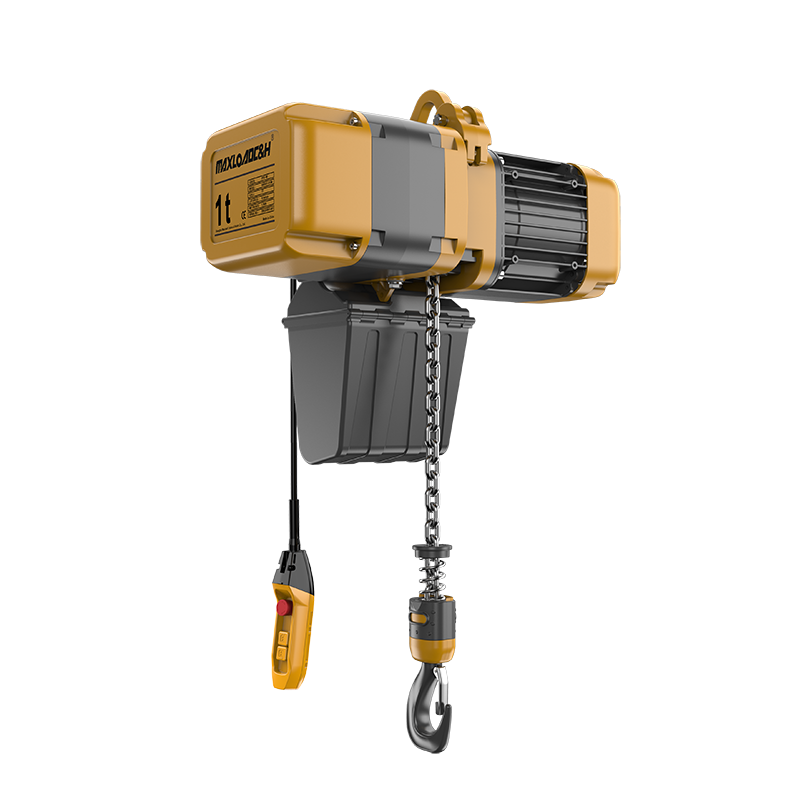
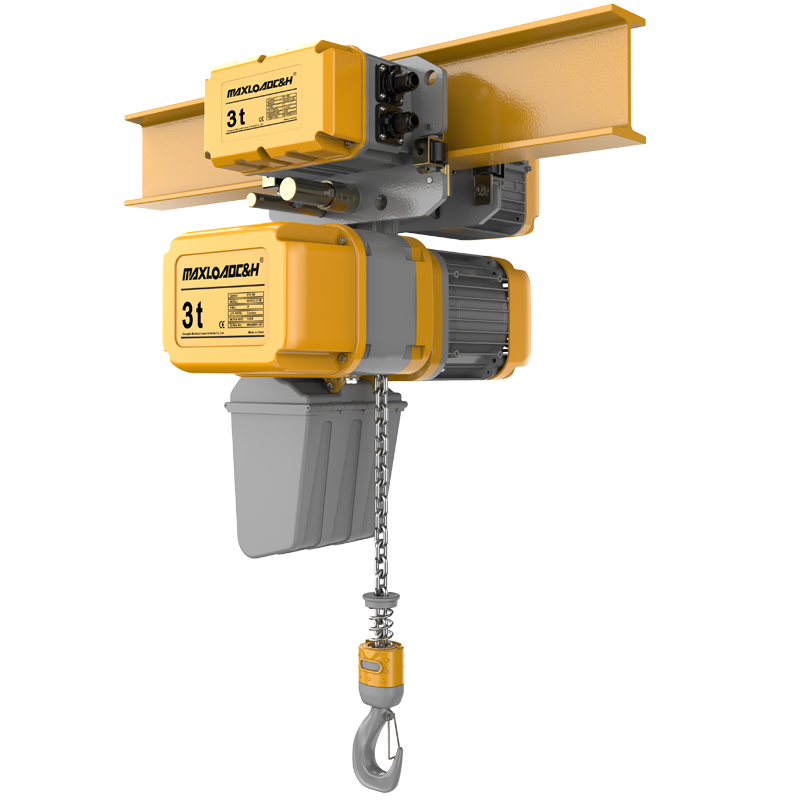
The electric hoist, mounted on the jib, is the core component responsible for actually lifting heavy objects. Common types include chain electric hoists and wire rope electric hoists. Chain electric hoists, due to their compact size, low noise, and stable operation, are often used in conjunction with jib cranes for high-frequency, precision operations; while wire rope electric hoists are more suitable for heavy loads or applications requiring higher durability.
Combining the two forms a complete workstation-level lifting solution. The jib crane provides freedom of horizontal movement and rotation, while the electric hoist handles vertical lifting and lowering; together, they enable free operation in three-dimensional space.
II. Powerful Combination: Core Advantages of Combined Applications
Why are more and more factories choosing to equip their workstations with this combination? Its core advantages are mainly reflected in the following aspects:
1. Ultimate Flexibility and Precision
In machining workshops, workers often need to move workpieces weighing tens or even hundreds of kilograms onto machine tool worktables. Traditional overhead cranes require waiting for scheduling, and precise alignment of the crane movement is difficult. The cantilever crane is positioned right next to the workstation. Operators simply push or pull the workpiece suspended on the electric hoist, utilizing the cantilever's rotation and the hoist's micro-motion function to easily achieve precise positioning. This flexibility and precision are particularly evident in precision assembly processes, such as engine block assembly and mold installation.
2. Efficient Work Coverage and Space Utilization
The cantilever crane's uprights typically occupy only a small area of ground space, yet its long cantilever can cover a large circular area. On densely packed production lines, this design cleverly utilizes overhead space, avoiding blockages in ground-level logistics channels. Wall-mounted cantilever cranes are directly installed on factory columns or walls, occupying no ground space, making them ideal for workstations along the production line.
3. Significantly Improved Safety and Reduced Labor Intensity
Manual handling of heavy workpieces is not only inefficient but also a major cause of occupational injuries such as lumbar muscle strain and crush injuries. With the introduction of electric hoists and cantilever cranes, the equipment bears all the weight, and workers only need to operate and guide it. This not only significantly reduces the physical exertion of workers but also fundamentally eliminates safety accidents caused by improper human operation through the equipment's built-in overload protection, limit switches, and other safety devices.
4. Controllable Investment Costs and High Cost-Effectiveness
Compared to large bridge cranes with huge investments and complex installations, the combination of a jib crane and an electric hoist is relatively inexpensive, easy to install, and simple to maintain. For small and medium-sized enterprises or for partial mechanization upgrades at specific workstations, this is an ideal choice for rapidly improving production efficiency and achieving lean manufacturing.
III. In-depth Scenario Analysis: Typical Industry Applications
This combination solution is highly adaptable and plays different roles in different industries.
1. Machinery Manufacturing and Machine Tool Loading and Unloading
This is the most widespread application scenario. Installing a column-mounted jib crane next to a CNC machine tool or machining center, in conjunction with a chain electric hoist, allows operators to easily load and unload heavy chucks, shafts, and housing parts. This greatly shortens machine tool auxiliary time and improves machine tool uptime. Case studies show that adopting this solution on automotive parts processing lines can increase production efficiency by over 30%.
2. Automotive Parts and Assembly Lines
On automotive final assembly or sub-assembly lines, heavy components such as axles, engines, and transmissions need to be precisely assembled onto the vehicle body. Knuckle boom cranes, due to their multi-joint structure, can bypass obstacles such as clamps and tooling, accurately delivering components to their assembly positions. For large workpieces several meters long, such as pickup truck chassis and body panels, using a combined suspended crane with a chain electric hoist enables stable, low-noise lifting, facilitating precise alignment by workers on large workpieces.
3. Special Environments: Food, Pharmaceutical, and Chemical Industries
In industries such as food, pharmaceuticals, and electronics, extremely high requirements are placed on the cleanliness and corrosion resistance of the production environment. In these cases, using a stainless steel column-mounted cantilever crane with a specially designed electric hoist becomes the best choice. The excellent corrosion resistance of stainless steel allows it to withstand frequent cleaning and disinfection environments, preventing equipment rust and product contamination. In electronics assembly workshops, lightweight articulated boom cranes can even be equipped with vacuum suction devices to gently handle precision components.
4. Steel and Warehousing Logistics
In steel processing plants, cantilever cranes can rotate 360 degrees, covering the entire raw material or finished product area. Combined with powerful electric chain hoists, they can easily handle the loading, unloading, and transfer of steel raw materials ranging from several tons to tens of tons, solving the pain point of traditional equipment being limited by its operating range. In warehousing and logistics, wall-mounted cantilever cranes can be deployed in sorting and packaging areas to achieve rapid lifting of goods, working in conjunction with forklifts, AGVs, and other equipment to improve logistics efficiency.
5. Innovative Combinations: Mobile Cantilever Cranes and Electric Flatbed Carts
For scenarios requiring long-distance transfers but fixed-point operations, even more innovative combinations have emerged. For example, cantilever cranes can be mounted on electric flatbed carts, forming an integrated "mobile + lifting" device. The electric flatbed cart is responsible for long-distance transport on tracks, moving the cantilever crane along with the goods to the target workstation, where the cantilever crane then completes the final unloading and positioning. This combination is particularly suitable for scenarios such as mold handling and the transfer of large workpieces across workshops.
IV. How to Scientifically Select and Configure Equipment
Faced with so many application scenarios, how should companies choose the right equipment? The following principles should be followed when selecting equipment:
Consider Load Capacity and Working Radius: First, clearly define the weight of the heaviest workpiece to be lifted (rated load) and the furthest working distance (slewing radius). Light loads can be handled with light-duty chain hoists, while heavy loads require medium- or heavy-duty wire rope hoists or large-tonnage chain hoists.
Consider Workstation Layout: For single-point workstations (such as next to a machine tool), choose a column-mounted type; for operations along a straight assembly line, choose a wall-mounted type; for operations requiring bypassing obstacles, choose a folding boom type; for multiple shared workstations or requiring relocation, choose a mobile type.
Consider Environmental Requirements: Standard configurations are suitable for ordinary workshops; stainless steel materials are required for cleanrooms and food processing workshops; explosion-proof and corrosion-resistant designs are necessary for chemical and spray painting workshops; and the heat resistance of the equipment is crucial for high-temperature casting workshops.
Consider the work cycle: For high-frequency, all-weather operations, electric hoists (preferably with high-performance motors) must be selected, and frequency converter control should be considered for smooth lifting; for low-frequency, occasional use, manual hoists can be considered to reduce costs.
V. Conclusion
In the wave of lean manufacturing in modern factories, the combination of electric hoists and jib cranes, with its flexibility, efficiency, safety, and cost-effectiveness, precisely solves the "last mile" problem of material handling at the workstation level. It is not merely a simple lifting device, but a crucial link in optimizing production processes, ensuring worker safety, and improving product quality.
Whether in massive machinery manufacturing workshops, food and pharmaceutical plants with stringent hygiene requirements, or busy logistics and warehousing centers, this "golden duo" is quietly exerting its power, helping modern industry achieve the dual goals of cost reduction and efficiency improvement, as well as safe production. In the future, as industrial manufacturing develops towards intelligence and flexibility, this flexible and efficient material handling solution will see even broader application prospects.
 0086 156 1824 5535
 0086 156 1824 5535
 kimliu@chnhoist.com