Application Guide for Electric Hoists and Wire Rope Hoists
In the grand narrative of modern industry, material handling remains the most fundamental yet crucial link. From towering steel-structured workshops to narrow equipment installation sites, from bustling port terminals to precision automobile manufacturing lines, electric hoists and wire rope electric hoists, with their stable performance, high operating efficiency, and extremely high safety and reliability, have become indispensable "industrial backbones" in the field of lifting machinery.
I. Definition and Structure: The Composition of the Industrial Arm
1. Electric Hoist
An electric hoist is a small, lightweight lifting device, typically composed of a motor, reducer, drum or sprocket, transmission mechanism, and lifting device (hook). It integrates the lifting and traveling mechanisms and can be suspended independently on I-beam rails or used in conjunction with single-girder, double-girder, or cantilever cranes.
2. Wire Rope Electric Hoist
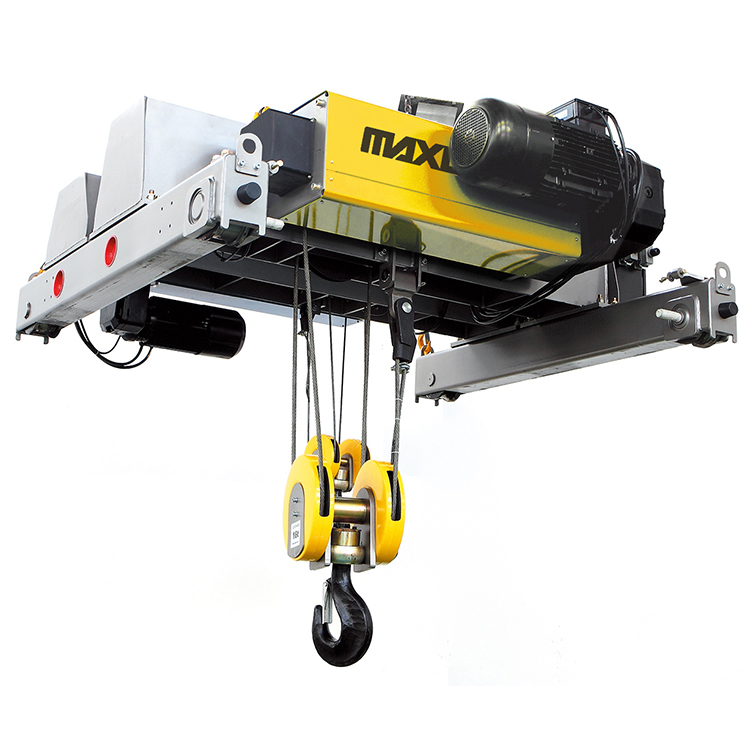
As the most widely used type in the electric hoist family, the wire rope electric hoist uses high-strength steel wire rope as its load-bearing medium. Compared to chain electric hoists, wire rope hoists offer greater lifting height, faster lifting speed, and stronger impact resistance. Their core component—the wire rope—is precisely arranged on the drum, ensuring the stability and safety of the load during lifting.
II. Core Application Scenarios: Covering the Material Handling Needs of the Entire Supply Chain
Thanks to their modular design and strong environmental adaptability, wire rope electric hoists and electric hoists have penetrated almost all fields requiring material handling.
1. Logistics, Warehousing and Automated Warehouses
With increasingly scarce land resources, automated warehouses (AS/RS) have become mainstream.
Application Characteristics: In automated warehouses, electric hoists, as the core lifting mechanism of stacker cranes, need to complete the storage and retrieval of goods at heights of tens of meters.
Value Proposition: Wire rope electric hoists have a natural advantage in terms of large lifting height. Combined with high-precision limit devices, they can accurately stop throughout their entire stroke, greatly improving the utilization rate of storage space and the efficiency of goods turnover.
2. Infrastructure Construction and Steel Structure Installation
In bridge construction, subway construction, and the hoisting of steel structures in large venues, electric hoists are often used in group lifting (multiple units operating in tandem).
Application Characteristics: In scenarios involving the overall lifting of large space frame structures or the opening and closing of dam gates, multiple hoists need to operate synchronously.
Value Proposition: Modern electric hoist systems achieve synchronous lifting of multiple devices through electrical control, solving the problem of lifting large, irregularly shaped components at a single point and ensuring the safety and synchronization of the construction process.
3. Automobile Manufacturing and Precision Assembly
Automotive production lines have extremely high requirements for cycle time and precision.
Application Characteristics: In welding workshops, electric hoists are responsible for hoisting body assemblies; in final assembly lines, they are used for the precise docking of core components such as engines and chassis.
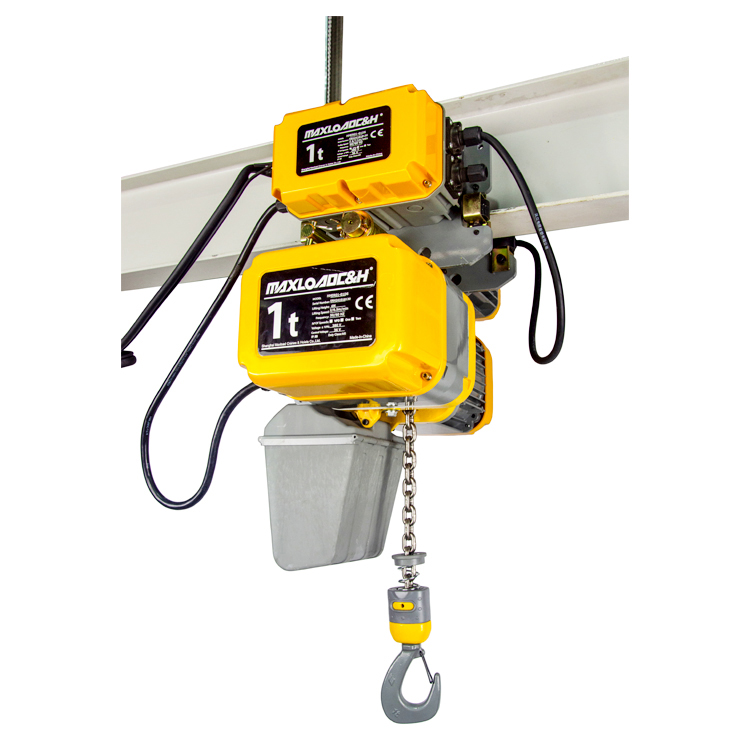
Value Proposition: The low headroom design of electric hoists allows for maximum lifting stroke within a limited space. Simultaneously, their quiet operation optimizes the workshop working environment, meeting the management requirements of modern lean manufacturing.
4. Special Environments and Special Operations
Besides conventional environments, electric hoists play a crucial role in special working conditions.
Explosion-proof Environments: In flammable and explosive environments such as petrochemical plants and paint shops, electric hoists equipped with explosion-proof motors ensure that no electrical sparks are generated during operation.
Cleanroom Environments: In food processing or electronic chip manufacturing workshops, cleanroom hoists with special coatings and lubricants prevent dust pollution and oil leaks.
III. Selection Considerations: How to Configure the Most Suitable Lifting Solution
When purchasing electric hoists or wire rope hoists, companies should not only focus on price but also scientifically match parameters based on actual working conditions. The following are some core considerations:
1. Working Class
This is the most easily overlooked but most important parameter. International standards classify lifting equipment working classes from M1 to M8.
Simply put: If the equipment requires continuous operation for extended periods (such as in metallurgical casting), a heavy-duty hoist of M5 or higher must be selected; otherwise, the motor and brakes will experience a drastically shortened lifespan due to overheating or excessive wear.
2. Lifting Height and Speed
Lifting Height: Determined based on the actual net height of the factory or the working depth. For deep well operations or high-bay warehouses, it is necessary to confirm whether the wire rope capacity meets the requirements.
Lifting Speed: Single speed is suitable for simple loading and unloading; dual speed or variable frequency stepless speed regulation is suitable for assembly operations requiring precise positioning. Variable frequency technology provides better acceleration and deceleration curves, reducing cargo swaying.
3. Control Method
Ground Control: Operated via a wired handle or wireless remote control. Wireless remote control allows the operator to select the best observation position and avoid dangerous areas, and is currently the mainstream trend.
4. Installation Type
Fixed Type: Suspended on a fixed support point, providing only vertical lifting and lowering, suitable for lifting specific workstations.
Rotating Type: Equipped with an electric trolley, traveling on I-beams or rails to achieve horizontal material transfer, covering a wider area.
IV. Safety and Technological Trends: Hoists in the Intelligent Era
Safety is the lifeline of lifting equipment. Modern electric hoists are highly sophisticated in their safety features:
Multiple Braking: Dual protection with both a working brake and a safety brake prevents heavy objects from falling, even in extreme situations.
Overload Protection: A built-in electronic overload protection device automatically cuts off the circuit when the lifting weight exceeds the rated load, preventing overloading at the source.
Limit Protection: A combination of counterweight limit and screw limit ensures the hook stops safely at its highest and lowest points, preventing overshooting or rope tangling.
V. Maintenance and Care: Key to Extending Lifespan
Even high-quality equipment requires scientific maintenance. To ensure the wire rope electric hoist is always in optimal condition, a standardized maintenance procedure is recommended:
1. Wire Rope Inspection: The wire rope is the core load-bearing component and should be inspected daily for broken wires, twisting, flattening, or corrosion. Once it reaches the scrap standard (e.g., more than 10% of wires broken within one lay length), it must be replaced immediately.
2. Brake Adjustment: The braking torque of the brake directly affects safety. During the initial operation and after long-term use, the brake clearance must be checked to ensure smooth braking without hook slippage under rated load.
3. Lubrication Management: Regularly lubricate the wire rope, gearbox, and bearings. Lubricating oil not only reduces wear but also prevents rust and corrosion.
4. Electrical Component Inspection: Check the contactor contacts, cable insulation, and limit switch sensitivity to prevent malfunctions caused by electrical aging.
Conclusion:
Whether in a busy factory workshop or a large construction site, electric hoists and wire rope electric hoists consistently support the weight of industrial development with utmost stability.
Choosing suitable lifting equipment not only means controlling procurement costs but also improving production efficiency, ensuring worker safety, and optimizing long-term operating costs. In today's rapidly evolving technological landscape, focusing on equipment's working level matching, intelligent upgrade potential, and life-cycle maintenance costs will help companies build a safer, more efficient, and leaner material handling system.
If you are looking for a reliable lifting solution for your production line, warehouse, or engineering project, consider starting by clearly defining your operating requirements and choosing a wire rope electric hoist that truly suits your application scenario—this will be an important step in enhancing your core competitiveness.
 0086 156 1824 5535
 0086 156 1824 5535
 kimliu@chnhoist.com