Lifting at the Workstation Is No Small Matter
Many workshop managers fall into a "capacity-only" mindset when selecting electric hoists. They tend to treat the rated lifting capacity as the sole criterion, believing that as long as the tonnage matches, the equipment will perform adequately. In actual workstation operations, however, a mismatched hoist often causes far greater losses in efficiency and safety than anticipated. Downtime due to tangled wire ropes, severe swinging during operation, and frequent motor overheating trips—these symptoms are rooted in a selection logic that overlooks the workstation environment.
This article steps away from specification sheets and explores, from the perspective of real working scenarios, how to match the most suitable electric hoist to a specific workstation.
I. Three-Dimensional Assessment Before Selection: More Than Just Tonnage
Before flipping through product manuals, it is advisable to first conduct a three-dimensional diagnosis of the workstation environment.
Spatial Dimension: The effective height of the workstation determines the hoist's body length and hook travel. Many factory buildings have limited usable space due to overhead steel structures or piping layouts. In such cases, special attention must be paid to the hoist's "headroom"—the distance from the rail surface to the lower limit of the hook. Focusing only on capacity while neglecting this parameter may prevent the hook from reaching the desired upper position, or even cause dangerous conditions such as drum crushing or multi-layer rope winding. Where conditions permit, it is advisable to prioritize low-headroom designs or use suspended trolleys to reduce the hoist body height.
Temporal Dimension: This refers to the duty classification—one of the most easily misinterpreted parameters. Electric hoists are not defined by tonnage alone but by their "mechanism duty class." Two hoists with the same tonnage—one used for occasional maintenance lifting and another for continuous, cycle-paced conveying on a production line—have vastly different requirements for motors, gearboxes, and brakes. The former may suit class M3, while the latter may require M5 or even M6. Simply choosing a larger tonnage cannot compensate for a misalignment in duty class; in fact, the added deadweight and increased running inertia may accelerate structural fatigue.
Environmental Dimension: The workstation environment is the "ecological soil" for the machinery. Dust in foundries, steam in food-processing areas, corrosive gases in chemical zones, and extreme temperature variations outdoors or in cold storage—all these factors directly determine the electrical protection rating and surface treatment processes. A common pitfall is adding seals to cope with dust while neglecting heat dissipation, causing motors to overheat frequently in a sealed state.
II. Wire Rope Hoists vs. Chain Hoists: Different Functional Roles
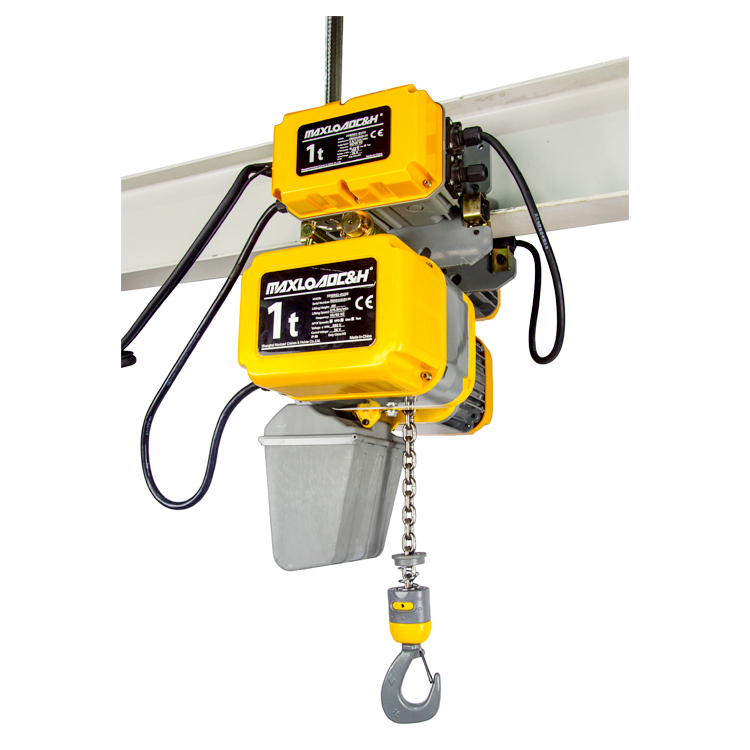
Workstation electric hoists are mainly divided into wire rope hoists and chain hoists. These are not about superiority or inferiority but about trade-offs for specific applications.
Wire rope hoists excel in applications with greater lifting heights and higher operating frequencies. They run smoothly and offer faster lifting speeds, making them particularly suitable for long-travel crane bridge operations. However, wire ropes are sensitive to fleet angles; if the workstation involves multi-directional diagonal pulling, it can easily cause rope tangling or damage to the rope guide.
Chain hoists, on the other hand, demonstrate stronger adaptability to workstation conditions. Their chains have good flexibility, allowing a certain degree of inclined pulling, and wear on the chain link is visible to the naked eye for easy inspection. In low-clearance buildings or where frequent lateral movement is required—such as installations on jib cranes or lightweight I-beams—chain hoists offer an advantage due to their compact body. Their downsides are generally lower speeds than wire rope hoists and higher noise levels during high-speed chain operation.
Selection recommendation: For main plant bays with large spans, high frequency, and long lift heights, wire rope hoists are the priority. For standalone workstations, maintenance areas, or assembly lines where some inclined pulling is inevitable, chain hoists are the more practical choice.
III. Travel Mechanism and Control Modes: Details Drive Efficiency
In workstation operations, precise load positioning is more important than lifting speed. The following three easily overlooked details deserve attention during selection.
Speed control requirements: A crude "fast" vs. "slow" approach cannot meet fine handling needs. For precision mold assembly or machine tool loading/unloading workstations, two-speed or variable-frequency drive (VFD) models are recommended to enable inching positioning at low speeds. For coarse handling stations that merely move heavy loads from point A to point B, single-speed operation with good inching response is sufficient. Note that while VFD improves starting and braking impact, it comes with higher purchase and maintenance costs, so a cost-benefit assessment based on the workstation's return on investment is necessary.
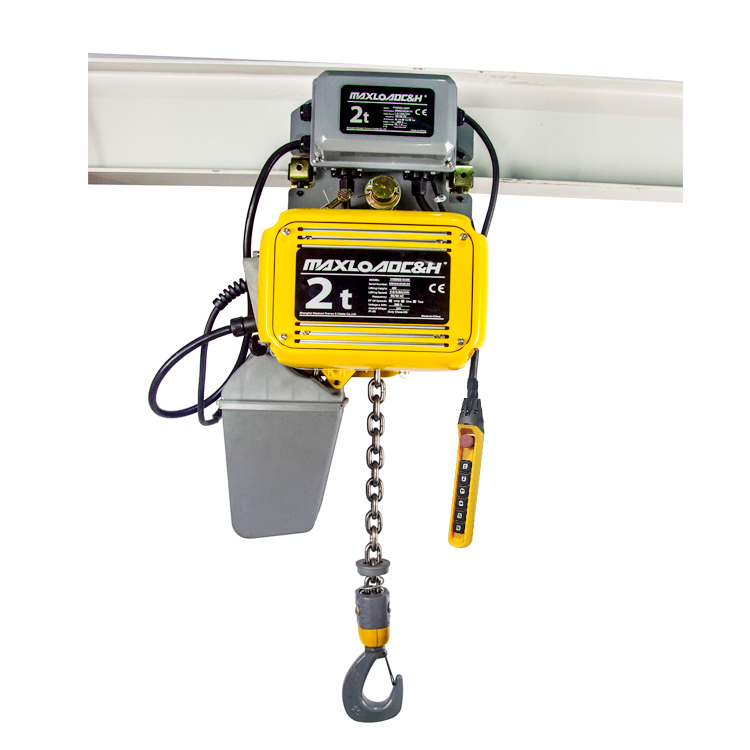
On-site control adaptation: The control method affects the operator's line of sight and stance. Common ground control options include pendant push-button stations and wireless remote controls. Push-button pendants are less expensive, but cable length limits the operating radius and cables are prone to snagging on other equipment in complex stations. Wireless remotes give operators the best visibility and mobility, but battery life and anti-interference capability must be considered. During selection, it is advisable to simulate the operator's actual standing position to confirm that either the remote or pendant station ensures the operator stays clear of the danger zone beneath the suspended load.
Rail and power supply type: The choice of I-beam rail profile directly affects trolley running stability. Many users only consider load-bearing capacity, overlooking the fit between the flange width and the trolley wheel tread, resulting in running resistance or uneven wear. For power supply: for long straight-line workstations, enclosed conductor bars offer better stability than trailing cables; however, for circular or curved routes with frequent turns, cable festoon systems or battery-powered supply are more reliable.
IV. Rational Trade-offs in Safety Features
Safety is not about piling up devices but about targeted risk mitigation.
Overload protection should be standard in workstation selection. Electronic load limiters are more responsive than traditional friction-type devices and can cut off the lifting circuit instantly upon overload, but attention must be paid to their calibration intervals.
Limit switches require attention to their tripping mechanism. The gravity-type upper limit is simple and reliable but only prevents over-hoisting of the hook; geared or rotary limit switches provide both upper and lower protection, making them more suitable for deep-well or sunken workstations with defined travel endpoints.
Anti-sway devices have been increasingly applied in positioning-critical workstations in recent years, but they add cost and deadweight, and are only effective against specific sway frequencies. For stations with simple lifting routes and steady operating speeds, relying on operator skill to control inertia is often more economical than relying on electronic anti-sway systems.
Warning lights and illumination: In dimly lit environments or stations where the load blocks the operator's view, equipped spotlights and audible/visual alarms can significantly enhance human-machine safety interaction. These are practical additions and should not be regarded as unnecessary extras.
V. Maintainability and Life-Cycle Cost
The purchase cost of a workstation hoist accounts for only a small portion of its total life-cycle cost. Selection should also consider long-term hidden expenses:
Commonality of wear parts: Minimize the variety of spare parts for different hoist models in the same workshop. If wearing parts such as brake linings, contactors, and travel-limit switches are interchangeable with existing inventory, spare parts pressure can be greatly reduced.
Reserved maintenance access: During installation, ensure adequate clearance for accessing the motor rear cover and reducer. In many workstations, constrained space means replacing a motor requires first dismantling the rail, significantly increasing repair downtime.
Lubrication method: For remote workstations that are inconvenient for routine maintenance, choosing self-lubricating or long-life lubricated bearings and gearboxes can prevent premature failure due to neglected servicing.
VI. Summary: The Logical Chain of Selection
In summary, rational selection of workstation electric hoists should follow these steps: first, measure the actual spatial dimensions and usage frequency of the workstation to determine the required duty class; second, based on the lifting path and environmental characteristics, decide between wire rope and chain hoist types; third, choose speed control and operation modes according to the precision required; finally, equip the necessary safety devices and evaluate long-term maintenance costs.
Abandon the outdated notion of "one hoist fits all" and treat each selection as an ergonomic optimization tailored to a specific workstation. When the equipment is seamlessly integrated with the working conditions—operators no longer anxious about equipment jams, maintenance staff no longer exhausted by frequent repairs—the stability of production rhythm and the enhancement of safety levels rest on a solid mechanical foundation. That is the ultimate value of professional hoist selection.
 0086 156 1824 5535
 0086 156 1824 5535
 kimliu@chnhoist.com