Full-Dimensional Practical Guide to Electric Hoist Selection
In modern industrial settings, the electric hoist is no longer a crude "just lift it" piece of equipment. With accelerating production rhythms, higher workpiece added value, and growing demands for operator comfort, selecting a hoist suited to a specific workstation environment has become nearly as complex as configuring a precision machine tool. Selection errors not only waste equipment and capital but can also become a bottleneck in production line efficiency—or even create safety hazards. This article moves beyond superficial parameter listings, refocuses on the workstation itself, and provides a practical, implementable logic for hoist selection.
First Principle Before Selection: Look at the Workstation First, Then the Load
The vast majority of selection errors stem from the ingrained habit of "only looking at weight." In reality, for the same tonnage capacity, the optimal hoist choice for a cleanroom, a foundry, an outdoor yard, and a food processing line can be completely different. The correct logical sequence is: first define the environmental boundary conditions of the workstation, then incorporate load parameters into that framework for screening.
This means that before consulting any product catalog, the selector should first complete a workstation environment self-checklist, covering at least: operational frequency, spatial dimensions of the working area, power supply conditions, ambient temperature and humidity, dust or corrosive gas levels, and the operators' habitual working tendencies.
Spatial Constraints: Clear Height Is a Hard Requirement
The effective clear height above the workstation directly determines the hoist's structural configuration. Effective clear height is defined as the vertical distance from the hook's highest limit position to the floor, minus the required safety clearance after the workpiece is lifted.
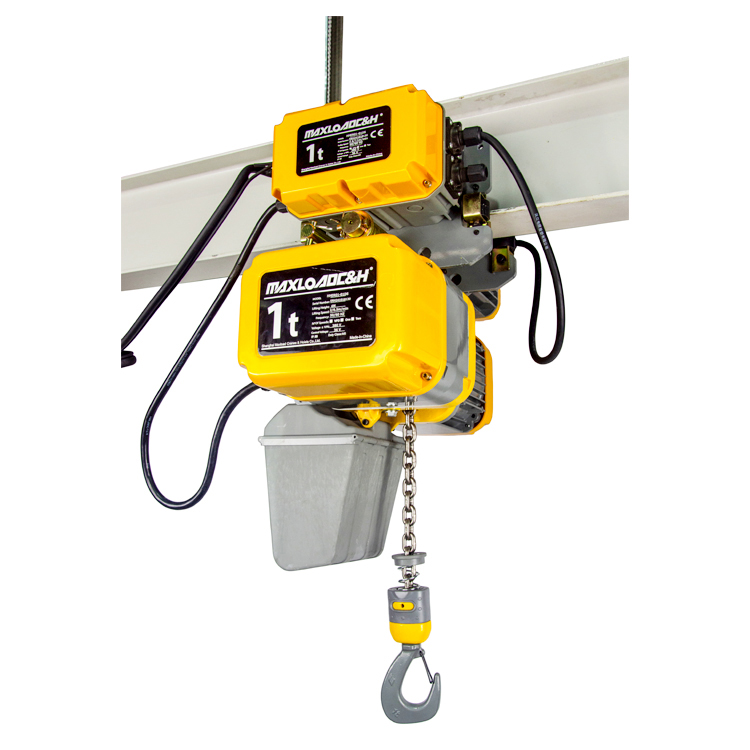
In workstations with ample clear height, standard hoists face virtually no restrictions, and both low-headroom and high-headroom configurations are available. However, in many older workshops or new modular container-style factory buildings, clear height is often compressed to less than 3.5 meters. In such cases, the compact design advantage of certain hoists becomes evident—their overall height can be more than 20% lower than standard models, providing additional lifting travel within the limited height.
Even more critical is the hook approach issue. Due to track or I-beam layout constraints, when the hoist travels to the end of the rail, the hook center often cannot align with the rail end point, leaving a dead zone that cannot be covered. If the workstation requires the lifting point to reach the farthest end of the rail, a hoist with a smaller hook approach must be selected; otherwise, an auxiliary manual push-pull device must be installed at the rail end, adding to operational burden.
Lifting Speed: The Trade-Off Between Efficiency and Safety
Lifting speed selection is far from simply "faster is better." For light-duty, high-repeatability loading and unloading stations, moderate speed increases can significantly shorten cycle times and boost throughput. However, when the workpiece weight approaches 90% or more of the rated load, high-speed lifting introduces impact loads that accelerate brake wear and may even cause load drift.
Duty Classification: The Lifespan Yardstick for Continuous Operation
Duty classification is often misinterpreted as a "quality grade," but it actually reflects the hoist's design service life under specific load conditions. Under Chinese standards, classes M3 through M6 correspond to duty intensities ranging from light to heavy.
A typical selection pitfall: a workstation lifts 100 times per day, each at only 30% of the rated load, and the selector casually chooses an M4 class. However, based on the duty-class calculation logic, when the actual load is far below the rated value, the load spectrum factor decreases accordingly, and an M4 class may be entirely sufficient. Conversely, if lifting occurs only 50 times per day but each approaches the rated load, at least an M5 class is required to ensure expected service life.
The most pragmatic approach is to collect actual operational data from the past three months, calculate the ratio of average load to maximum load, and cross-validate it against the duty classification chart using the average daily lifting count. Blindly choosing one class higher increases procurement costs by about 15%–20%, while selecting one class lower may lead to major overhaul within two years.
Power Supply Conditions: An Often-Overlooked Selection Showstopper
Power supply compatibility issues frequently surface only after the equipment arrives on site. Three-phase 380V is the industrial standard, but some older workstations have only 220V single-phase power, and upgrading the line requires complicated internal approval processes. In such cases, forcibly selecting a three-phase hoist may result in retrofitting costs and time that exceed the hoist's own value.
Another scenario is voltage drop. When the hoist is installed at the end of a rail more than 150 meters from the distribution cabinet, the voltage drop during startup can cause unstable contactor engagement or even motor burnout. Solutions include selecting a model with a wide voltage operating range or installing voltage stabilization compensation equipment mid-line—but the former narrows the available product options, while the latter adds extra equipment investment, both of which must be considered comprehensively during the selection phase.
Environmental Adaptability: The Hidden Threshold of Dust, Temperature, and Humidity
Environmental factors are often the most underestimated variables in selection, yet they are among the leading causes of later failures.
Dusty environments pose another major threat. Conductive dust in foundries, cement product workshops, and woodworking stations can easily cause short circuits or contactor sticking once it infiltrates the hoist's electrical control enclosure. Standard enclosed boxes are insufficient for such risks; control units with positive-pressure purging or fully encapsulated sealing are required, along with shortened routine cleaning and maintenance intervals.
The combined effect of temperature and humidity is frequently overlooked. In cold storage or outdoor winter workstations in northern regions, temperatures may drop below -20°C, causing the lubricating oil on ordinary steel wire ropes to solidify and become brittle, increasing the risk of bending fatigue fracture. Low-temperature-resistant wire ropes and specialized low-temperature greases are mandatory. In high-temperature workstations (such as casting pouring areas), thermal radiation adds to motor temperature rise; if the hoist's thermal margin is insufficient, overheat protection will trip frequently, causing unscheduled downtime.
Control Method: The Choice Between Arm's Reach and Remote Access
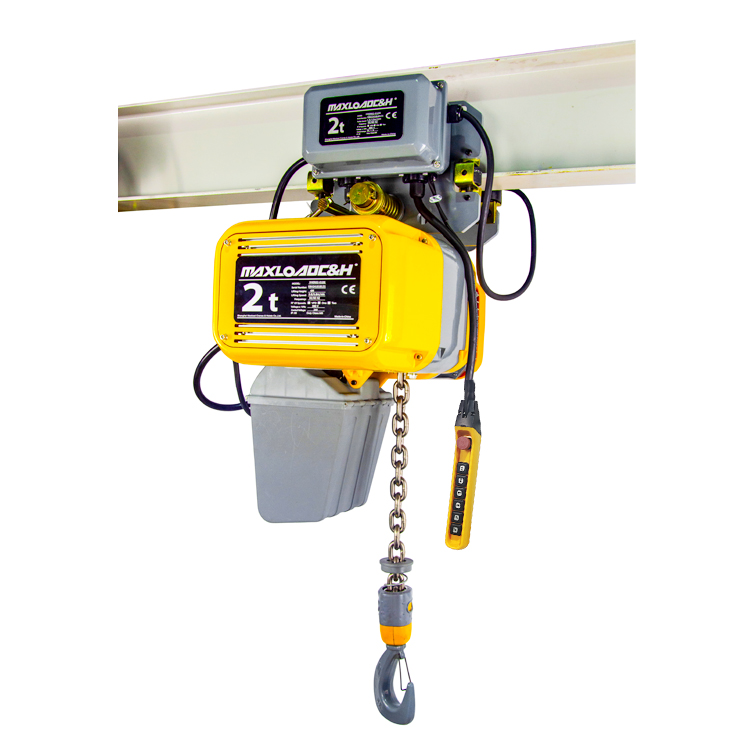
Floor-mounted pendant control remains the most economical and reliable method, but its usable range is limited by the pendant cable length. When operators need to follow the load over long distances or when obstacles exist within the workstation, cable drag severely compromises operational flexibility.
Wireless remote control has gained popularity in recent years, but its applicability must be differentiated by scenario. In environments with strong electromagnetic interference—such as in front of steelmaking furnaces or at high-frequency quenching stations—signals from ordinary industrial remotes can be disrupted to the point of failure. Selecting transmitters with frequency-hopping spread spectrum technology or employing infrared-assisted auxiliary solutions ensures command integrity. Additionally, if the remote's response delay exceeds 100 milliseconds, operators will experience discomfort during fine positioning tasks, affecting work efficiency.
For workstations where multiple hoists operate cooperatively on the same track, anti-collision control must be included in the selection checklist. Distance radar or laser ranging interlocking can prevent hoists from colliding during travel—this is not only equipment protection but also a fundamental safeguard for personnel safety.
Selection Review from a Maintenance Perspective
The selection decision should not end with the purchase order. From a total-lifecycle-cost perspective, a hoist well-matched to its workstation environment can have a total cost of ownership over ten years that is more than 30% lower than one that merely meets basic parameters. The key lies in prioritizing environmental adaptability upfront rather than applying remedial measures afterward.
Workstation environments are dynamic—capacity ramps increase operational frequency, process changes may shift the workpiece center of gravity, and even workshop ventilation modifications can alter dust concentrations. Therefore, regular reassessment after selection is equally important. It is recommended to conduct an environmental fitness review of in-service hoists every two years, and to proactively evaluate whether existing equipment remains in its optimal matching range when significant workstation changes occur.
At its core, the electric hoist is a tool serving workstation operations. Its value does not lie in impressive specification-sheet numbers, but in whether it can seamlessly integrate with every lifting motion made by the operator, transferring loads through space almost unnoticed. Selection, in the final analysis, is a rational decision made after understanding the workstation, understanding the operation, and understanding the people involved.
 0086 156 1824 5535
 0086 156 1824 5535
 kimliu@chnhoist.com