Workstation "Tailored" Selection:
Many factories, when adding lifting equipment to a workstation, often fall into a common trap: they focus solely on price and maximum lifting capacity, while overlooking the workstation's spatial constraints, usage frequency, and future production flexibility. As a result, after installation, they find the slewing radius is insufficient, the column position blocks material pathways, or even worse, inadequate wall load-bearing capacity creates safety hazards. Setting aside specification sheets, this article breaks down selection logic from four practical operational dimensions to help you find the right match.
First, Assess Spatial Layout: Fixed-Post or Wall-Mounted?
This is the first step in selection and the key to determining installation feasibility. The fundamental difference between the two types lies in their completely distinct load-bearing support systems.
A fixed-post slewing jib crane has its own independent column, secured to a dedicated concrete foundation via anchor bolts, forming a complete stress system. It does not rely on the factory wall and can be installed in the middle of a workshop, offering 360° full-slewing coverage. If your workstation is in the center of the shop floor, surrounded by multiple machines, or if your older factory building has insufficient wall load-bearing capacity, the fixed-post type is the safer choice. The downsides are that it occupies some floor space and requires foundation pouring.
A wall-mounted slewing jib crane, on the other hand, is installed directly onto the factory's load-bearing columns or walls, taking up zero floor space—ideal for workstations arranged along walls or in narrow aisles. However, two hard requirements must be noted: the mounting base must be a solid concrete column or H-beam steel column; ordinary hollow brick walls are absolutely not permitted. Additionally, the slewing angle is typically limited to 180°, covering only a fan-shaped area outside the wall.
Decision tip: Choose the fixed-post type for independent central workstations requiring full-circle coverage; choose the wall-mounted type for wall-side operations where floor space is at a premium.
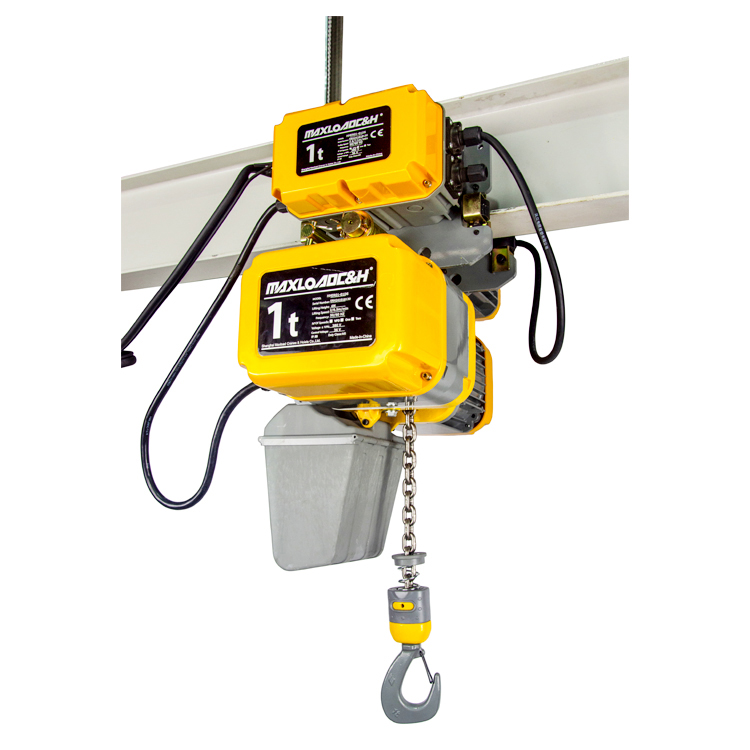
Next, Calculate Actual Load: Leave Sufficient Safety Margin to Avoid "Overloading a Small Cart"
Tonnage selection cannot be based solely on the net weight of the workpiece—this is a safety detail often overlooked by many purchasers. According to national standard load combination requirements:
Low-frequency operation: A safety factor of 1.1 is acceptable, suitable for temporary maintenance or light-part handling.
Medium-frequency operation: A safety factor of 1.2 is commonly used for routine machine tool loading/unloading.
High-frequency continuous operation: A dynamic coefficient of 1.25 must be applied to ensure structural rigidity under long-term fatigue conditions.
For example: workpiece 200 kg, lifting accessory 20 kg, 30 lifts per day. Required load = (200 + 20) × 1.2 = 264 kg. In this case, you should round up to a 0.5 t rated capacity, rather than barely selecting a 0.25 t model. In practice, over 30% of customers end up undersizing because they fail to include the weight of lifting accessories, leading to accelerated fatigue and safety risks.
Match Boom Length and Height: Reach Enough, and Don't Hit the Ceiling
The slewing radius determines your operational coverage. Measure the distance from the column center to the farthest work point at the workstation, then add at least 0.5 meters of operating margin—that is your minimum required boom length. For example, if the machine loading point is 3.2 meters from the column, you should choose a 3.5m or 4m boom. Note that for every 1-meter increase in boom length, the overturning moment at the column base increases exponentially; booms exceeding 6 meters typically require additional bracing or structural reinforcement.
The effective lifting height requires detailed calculation:
Clear factory height – hoist unit height – lifting accessory length – workpiece height – at least 0.5m overhead clearance for maintenance = usable lifting height.
If overhead clearance is insufficient, consider a custom low-headroom design or opt for a manual chain hoist to reduce height requirements.
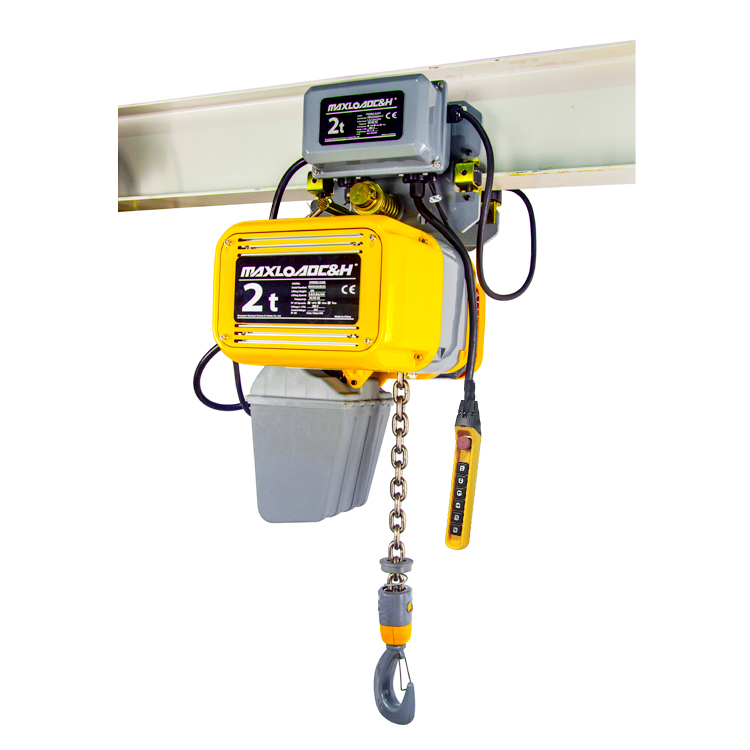
Special Solutions for Complex Environments: Articulating Jib and Mobile Cranes
If your workstation has dense equipment and multiple obstructions, a conventional straight-boom jib crane may not be able to swing freely. In such cases, an articulating jib crane is a better option. Its boom can fold like a joint, navigating around pipes, columns, and other obstacles for precise lifting—particularly suitable for welding stations, internal equipment maintenance, and other complex-path handling tasks. It can also be equipped with optional heat-resistant sleeves and spatter guards.
If your workshop has no fixed workstation, or if you need to share one device across multiple stations, a mobile slewing jib crane offers flexibility. It comes with casters for manual transfer. However, there are two safety red lines: first, never move the crane while it is under load; second, all caster brakes must be locked before any lifting operation, and the working floor must be level and solid, with a slope within 1°.
Selection is essentially a "tailored fit" for your workstation conditions. First, determine whether the space is centrally independent or compact wall-side; then, calculate the actual load including lifting accessories; and finally, verify the boom length and clear height. Follow these four steps, and the direction of your equipment selection will essentially be on the right track.
 0086 156 1824 5535
 0086 156 1824 5535
 kimliu@chnhoist.com