The Practical Logic of Deriving Equipment Selection from the Shop Floor
In many factories, the process for purchasing a jib crane goes like this: procurement receives a request, opens a computer, searches for "jib crane manufacturers," gets quotes from two or three vendors, picks one if the prices are similar, and installs it as long as it works. There's nothing inherently wrong with this process, but it often overlooks one key issue—after the equipment is installed, whether it actually works well is something only the person who uses it every day truly knows.
A jib crane combined with an electric hoist may seem simple in structure—just a pillar, a boom, and a trolley, right? But the same combination requires completely different selection approaches depending on whether it's used in a precision assembly workshop or a cast iron rough grinding area. Below, we break down, step by step, from the actual workplace perspective, how to select a truly user-friendly jib crane based on the workstation environment.
Don't Look at the Equipment First—Look at Three Things First
Many selection errors stem from jumping straight to product specifications while missing the most basic on-site information. Before consulting any product manual, first clarify these three questions:
What's the floor condition? Is it an epoxy floor, a corundum aggregate floor, ordinary concrete, or even an open-air dirt surface? The base mounting method of the jib crane depends directly on the floor conditions. Epoxy floors don't allow large-scale damage, so expansion bolt fixing must be considered, possibly with a steel transition plate. If the concrete floor is already cracking or spalling, expansion bolts won't hold at all—you'll have to use through-bolts through the floor slab or pour a new foundation. For outdoor environments, corrosion protection and drainage must also be considered, and the base must not accumulate water.
What is being lifted each time? This isn't just about asking "What's the maximum weight?" You need to ask: Is the material shape regular or irregular? Does it carry water, oil, or dust? Is it metal or fragile? Is it magnetic? Are there surface protection requirements? These factors determine the type of sling, whether to use chain or wire rope, and whether variable speed control is needed.
How does the operator do the work? Is it a one-person or two-person operation? Is the lifting frequency high? How many lifts per day? What's the operator's height? Are they left-handed or right-handed? These may sound trivial, but they directly determine pendant cord length, button layout, and operating height—details that affect efficiency far more than major parameters.
Choose the Structural Type Based on Workstation Type
Jib cranes are classified into several structural types. Don't settle on one type right away—look at the workstation scenario first.
Fixed workstation, small working range, high lifting frequency—for example, material supply stations on assembly lines, where each station handles parts within a 1–2 meter range. This scenario is best suited for a pillar-mounted jib crane, with the pillar fixed next to the workstation and the boom rotation covering the operating area. Pillar-mounted cranes offer the best rigidity and stability, suitable for frequent lifting. The downside is limited rotation radius, typically 2–5 meters, and the pillar takes up floor space.
The workstation needs to cover a larger area, but only one unit is installed—for instance, a maintenance station that needs to lift various components across a dozen square meters. In this case, a wall-mounted jib crane is a good choice, provided the wall has sufficient load-bearing capacity. The boom is fixed to the wall, takes up no floor space, and can achieve a rotation radius of 4–6 meters. However, wall-mounted cranes have requirements for wall construction and mounting height and are not suitable for lightweight partition walls.
Multiple workstations share a crane with common aisles, and lifting is needed at different positions occasionally—for example, in a die shop where several machine tools share one lifting device. A portable/movable jib crane can be considered, with wheels on the base so it can be pushed to wherever it's needed. The trade-off is that the lifting capacity is limited, generally not exceeding 500 kg, and the floor must be flat for movement.
The working area is long and narrow, such as along a production line—the rotation coverage of a standard jib crane is a sector, which isn't very efficient for long, narrow areas. A double-girder jib crane or a KBK light crane system could be considered, but that goes beyond the scope of jib cranes and won't be covered here.
The selection principle is straightforward: fixed workstation → pillar-mounted; large area → wall-mounted; multiple workstations shared → portable. More than half of selection mistakes come from mismatching the scenario with the structural type.
How You Match the Electric Hoist Matters More Than the Crane Itself
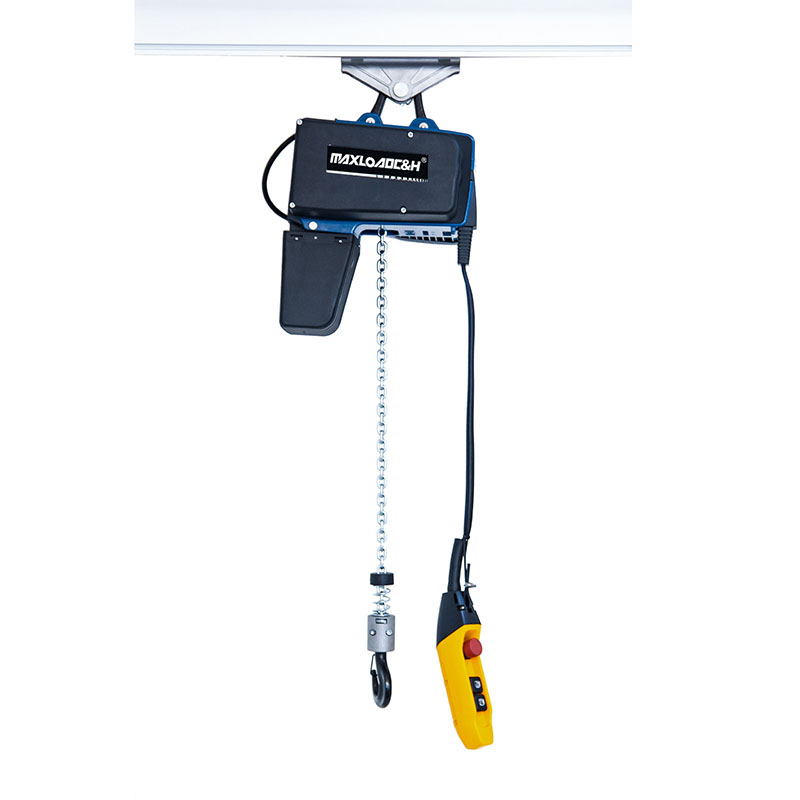
The jib crane is just the frame; the electric hoist does the actual work. Many times the equipment looks fine on paper, but operators complain daily—nine times out of ten, it's because the hoist wasn't chosen correctly.
Chain hoist vs. wire rope hoist—this is the most fundamental fork in the road. Chain hoists are slower, cheaper, and easier to maintain, suitable for workstations with low lifting frequency and moderate loads. Wire rope hoists are faster, offer greater lift height, and are more durable, suitable for heavy-duty, high-frequency operations. However, wire ropes risk breakage and require regular inspection and replacement, adding maintenance costs. A simple rule of thumb: if lifting exceeds 50 times per day, choose wire rope; if below 50, a chain hoist is sufficient.
Does lifting speed need to be adjustable? For precision assembly workstations where parts need to be aligned with mounting holes, slow speed is important. For general material handling, constant speed is fine. Variable-frequency drive (VFD) hoists are considerably more expensive, but "more advanced" isn't always better—operators need stability and precision, not speed. In precision assembly scenarios, fine inching control matters much more than high speed.
Hook or specialized sling? Many workstations just use a standard hook, but a hook is actually the least user-friendly lifting attachment—it's slow to attach, prone to accidental release, and can damage workpieces. If you can switch to C-hooks, lifting clamps, electromagnets, or vacuum suction cups, operational efficiency and safety improve significantly. The key is that there must be an anti-rotation device between the sling and the hoist; otherwise, the workpiece spins in the air, and the operator has to steady it by hand—unsafe and tiring.
Limit and protection features cannot be compromised. Both upper and lower limit switches are mandatory, and they must be dual-limit—mechanical limit plus electronic limit—to prevent the operator from accidentally over-traveling the hoist. Overload protection is also essential; don't cut corners here. Many accidents don't happen because the hoist can't lift the load, but because the operator doesn't know it's overloaded and forces it, leading to structural damage.
Rotation Flexibility—Often Overlooked
The boom of a jib crane needs to rotate smoothly, or operators won't want to use it. If rotation is stiff, people will find excuses to avoid using it, and the equipment becomes a decoration.
Three factors affect rotation flexibility: the selection and quality of the slewing bearing, the verticality of the pillar, and the lubrication method. It's best to choose a slewing bearing with seals to prevent dust ingress. The pillar must be installed perfectly vertical—even a slight deviation significantly increases rotation resistance. For lubrication, a centralized lubrication system is far superior to manual greasing—manual grease points are often at the top of the boom, which operators can't easily reach, so they skip it; bearings run dry and bind; binding makes them even less willing to use it—a vicious cycle.
Additionally, the boom rotation angle should be confirmed. Some workstations require 360° rotation, while 180° is sufficient for others. If full rotation isn't needed, limit stops can be installed to restrict the rotation range to the effective working area, improving safety and preventing cable twisting.
Operating Height and Handle Position—Details That Define Experience
These are the most easily overlooked details, yet they have the greatest impact on the operator.
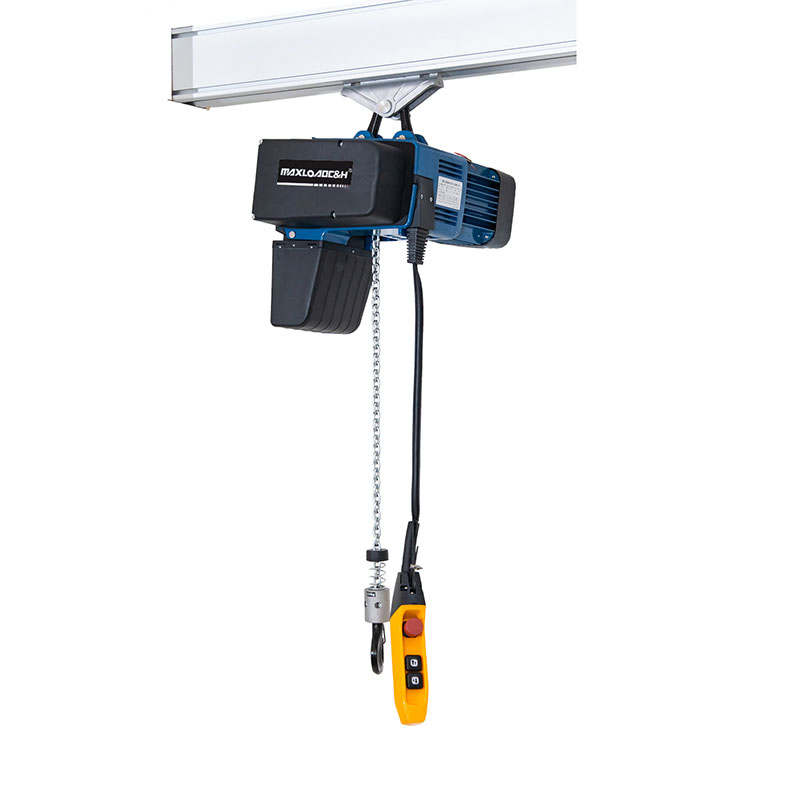
The pendant cord length of the electric hoist must be appropriate. If it's too short, the operator can't reach distant lifting points and has to drag the hoist along; if too long, the excess cord hangs down, gets in the way, and may snag on workpieces. The correct approach: pendant cord length should equal the maximum boom rotation radius plus the distance from the operator's standing position to the pillar, with an additional 10–15% margin.
The button layout on the pendant should follow intuitive operating habits. The up and down buttons should be arranged one above the other, with adequate spacing so they can be pressed accurately even with gloves on. The emergency stop button must be prominent and must be of the latching type—it stays in the off position when pressed and requires manual resetting to restore power. Some budget pendants have buttons too small to press comfortably with work gloves—a failure to account for actual operator PPE during selection.
For operating height, the pendant's hanging position should be at chest level of the operator, within easy reach without bending or tiptoeing. If the hanging point is too high, the operator has to stretch every time—over hundreds of lifts per day, that physical toll adds up significantly.
Safety and Auxiliary Features—Don't Wait for an Accident to Add Them
Despite its simple structure, a jib crane must not lack safety features.
Anti-collision devices—if the boom rotation range includes pillars, walls, or other equipment, anti-collision buffers must be installed, or limit switches should be set to prevent the boom from striking rigid structures.
Operational warning—when the hoist is running or the boom is rotating, audible and visual warnings are advisable, especially in noisy workshops where operators may not hear the hoist running. Warning lights alert nearby personnel that the equipment is in motion.
Power-off braking—it must be confirmed that the electric hoist's brake is of the power-off type, meaning the brake automatically engages when power is cut, preventing load falls. This feature is mandatory, but not all low-cost products implement it reliably, so this must be specifically verified during selection.
Cable management—the hoist's power cable runs from the pillar to the boom and then to the hoist, passing through the boom rotation. How the cable is routed, how twisting is prevented, and how wear is avoided must all be planned. Cable carriers (drag chains) and slip rings are two common methods, each suitable for different scenarios; choosing incorrectly creates long-term headaches.
Conclusion
A jib crane with an electric hoist is indeed one of the most mature material handling solutions—simple in structure, affordable, and widely applicable. But precisely because it's simple, many people don't pay enough attention during selection, ending up with equipment that "works" but isn't pleasant to use.
A good selection approach starts from the workstation site: first understand the floor, material, and operation method, then determine the structure, match the hoist, and fine-tune the details. If you walk through the seven steps outlined above, you might not end up with the absolute perfect equipment, but you'll at least avoid basic mistakes. After the equipment arrives and is installed, if operators find it handy, maintenance staff find it easy to service, and safety inspectors find no issues—that's a successful selection.
 0086 156 1824 5535
 0086 156 1824 5535
 kimliu@chnhoist.com