How to Select the Right Electric Chain Hoist Based on the Workstation Environment
In factory workshops, assembly lines, warehouses, or maintenance workstations, electric chain hoists are lightweight and small lifting equipment used quite frequently. Their selection may not seem complicated, but in actual work, improper selection often leads to high equipment failure rates, poor operating experience, and even safety hazards. The problem is often not with the product itself, but with the fact that during selection, people only look at "whether it can lift the load" and ignore the actual characteristics of the workstation environment.
First, look clearly at the spatial conditions of the workstation
One of the core advantages of an electric chain hoist is its compact structure and light deadweight. At the same lifting capacity, the body size and deadweight of a chain hoist are usually much smaller than those of a wire rope hoist, which is a very practical consideration in low factories or workstations with limited space. But compact does not mean it can be placed in anywhere at will. Before selection, two key dimensions need to be confirmed first: headroom and available suspension method.
Headroom determines whether the hoist can be installed and, after installation, whether the hook can rise to the required position. If there are crane beams, pipeline bridges, or ventilation ducts above the workstation, the actual available height may be less than it appears. The lifting height of chain hoists is generally within 12 meters, and most workstation scenarios are between 3 and 8 meters. If the floor height of the workstation is tight, fixed installation will save more vertical space than traveling installation, because it does not require additional travel tracks and trolley structures.
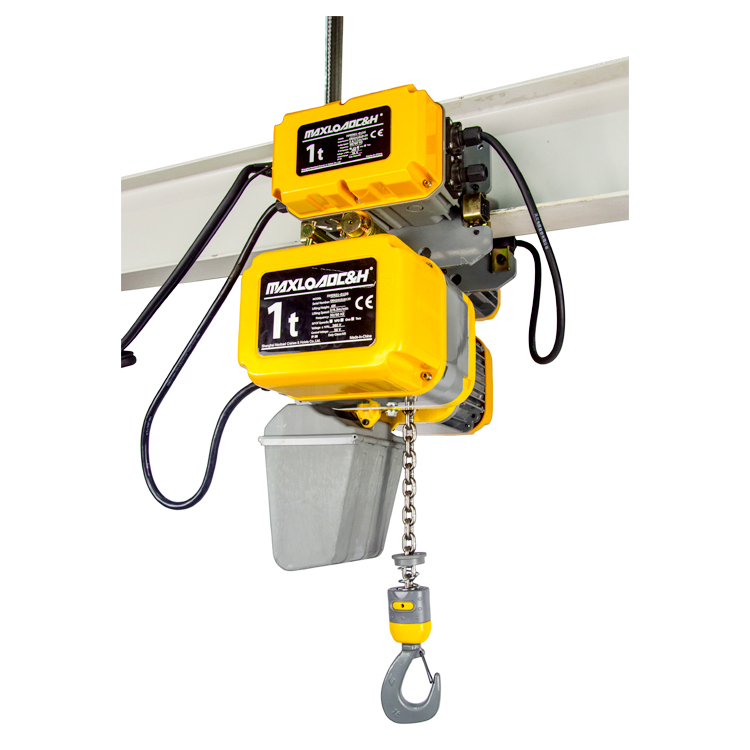
The choice of suspension method depends on what is above the workstation. If there is an I-beam track, a traveling trolley can be equipped to achieve horizontal movement; for fixed workstations without tracks, direct fixed installation with a lifting ring or hook is sufficient. Some workstations have both fixed-point lifting needs and occasional short-distance movement requirements. In this case, a manual traveling trolley is a compromise: low cost, no additional power supply required, but the operator needs to push and pull manually, and after the load exceeds 500 kg, the labor intensity increases significantly.
Calculate the operating frequency and load conditions clearly
This is the step most easily skipped in selection, but it is precisely the one that most affects equipment life. The motor and brake of an electric chain hoist both have duty limitations, which in plain terms means "they cannot run continuously without rest." If the workstation is feeding materials on an assembly line, with lifting and lowering almost every minute, that is completely different from a maintenance workstation that uses it three to five times a day in terms of equipment requirements.
In the industry, working levels are used to quantify this difference. Common levels include M3, M4, M5, and so on. The larger the value, the higher the load duration rate and the more starts the design can withstand. Light-duty workstations are sufficient with M3; for medium-frequency scenarios with relatively stable loads, such as assembly lines or machining loading and unloading, M4 is a more reliable choice; if the workstation rhythm is very fast and frequently lifts at full load, then M5 or even higher needs to be considered. Here is a practical judgment method: estimate the proportion of the workstation's actual "lifting working time" in the total working time each day. If this proportion exceeds 40% to 50%, it should not be selected on the basis of "used only occasionally." If the motor is undersized, it can run in the short term, but accumulated heat will accelerate insulation aging, and problems will appear before long. When selecting, leaving an appropriate margin is more cost-effective than frequent repairs later.
Determine whether the workstation environment has "special characteristics"
An ordinary workshop environment has no additional requirements for a chain hoist, but the environmental conditions of some workstations directly affect whether the hoist can be used and how long it can last.
Dust and cleanliness: In workstations with cleanliness requirements, such as food processing, electronics assembly, and lithium battery materials, the grease volatilization and particles generated by metal friction of ordinary hoists can become pollution sources. Such workstations need clean-type electric chain hoists, characterized by a fully enclosed structure, low-volatility grease, and a smooth and easy-to-clean surface. The protection level of electrical components is usually required to be IP65 or above. Conversely, if the workstation has a lot of dust, the focus should be on dustproof sealing to prevent abrasive particles from entering the chain and gears and causing abnormal wear.
Flammable and explosive environments: In chemical, spraying, or workstations where combustible gases or dusts exist, explosion-proof electric chain hoists must be selected. The core difference of this type of equipment is that electrical components use flameproof structures and exposed parts use spark-free materials, avoiding electric sparks or mechanical sparks generated during operation from igniting the environment. Particular attention should be paid to the fact that the explosion-proof rating must match the specific hazardous area of the workstation. Requirements for gas environments and dust environments are different and cannot be mixed.
Humid or corrosive environments: In electroplating, cleaning, or outdoor workstations, the corrosion resistance of the chain and housing is key. Galvanized chains have significantly improved corrosion resistance compared with ordinary chains, and the surface treatment method of the housing also needs attention. If the workstation is washed frequently, the protection level of the electrical part should be at least IP65.
Match the operating precision and speed requirements
The last dimension is "how people use it." For the same lifting capacity, different workstations can differ greatly in their requirements for speed and positioning accuracy.
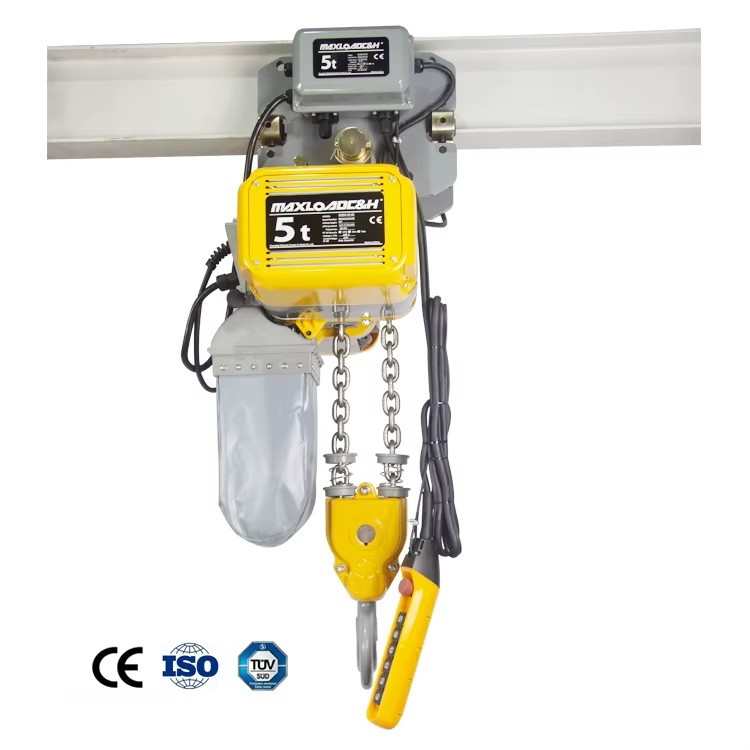
For fixed-point loading and unloading workstations, operators usually want fast lifting and lowering and do not have high requirements for positioning accuracy. A standard two-speed hoist is sufficient, with slow speed used for fine adjustment when approaching the target position. For precision assembly or positioning workstations, heavy objects need to move smoothly without impact or sway. In this case, the lifting speed itself should not be too fast, or variable-frequency control is needed to achieve stepless speed regulation and soft start and stop. The lifting and lowering of a chain hoist itself is relatively smooth. Combined with a variable-frequency drive, the positioning accuracy of the heavy object will be significantly improved, making it suitable for workstations with requirements for operating feel. In addition, the operation method is also worth considering. Pendant control is standard, but in some workstations—such as assembly positions where the operator needs both hands to support the workpiece—remote control can significantly improve convenience and safety.
A simplified selection judgment sequence
In actual selection, the range can be narrowed step by step in this order: first determine the installation method and required lifting height according to the workstation space; then determine the working level according to the actual daily usage intensity and load conditions; then check whether the environmental conditions require special configurations such as clean type, explosion-proof, or corrosion-resistant; finally choose the speed configuration and control method according to operating habits. The conclusion of each step will narrow the available range, and the final result will match the actual needs of the workstation, rather than equipment with impressive parameters but no practicality.
An electric chain hoist is a tool at the workstation, and the value of a tool lies in reliably completing daily activities. When selecting, thinking one step further about the real conditions of the workstation is much less troublesome than repairing and replacing later.
 0086 156 1824 5535
 0086 156 1824 5535
 kimliu@chnhoist.com