Matching Logic Between Electric Hoists and Overhead Cranes
In industrial workshops, the most common mistake in crane selection is using the single parameter of "lifting capacity" to cover all decisions. In reality, lifting capacity only defines the lower limit of the equipment's load-bearing capacity. What truly determines whether the equipment can be used, whether it is easy to use, and how long it can last is the working station environment itself. Electric hoists and overhead cranes are two systems that need to work together with precision, and the way they are combined directly responds to the space, frequency, environment, and material characteristics of the working station.
First, clearly understand the four dimensions of the working station environment.
Before selecting equipment, break the working station down and look at it first. The first dimension is spatial conditions: how high the factory clearance is, whether there are columns obstructing the area, and whether the lifting path is a straight line or needs to cover a rectangular area. The second dimension is operating frequency: how many lifts per day, whether each lift is at full load or light load, and what the lifting height of a single cycle is. The third dimension is environmental characteristics: whether the workshop is at normal temperature and dry, or humid, dusty, exposed to corrosive gases, or subject to rigid cleanliness requirements. The fourth dimension is material characteristics: whether what is being lifted is precision castings, heavy molds, or fragile boxes or coiled sheets, and how much tolerance the material has for sway and impact. Together, these four dimensions directly determine the selection of the electric hoist's duty class and the trade-offs in the overhead crane structure.
Spatial conditions determine the structural form.
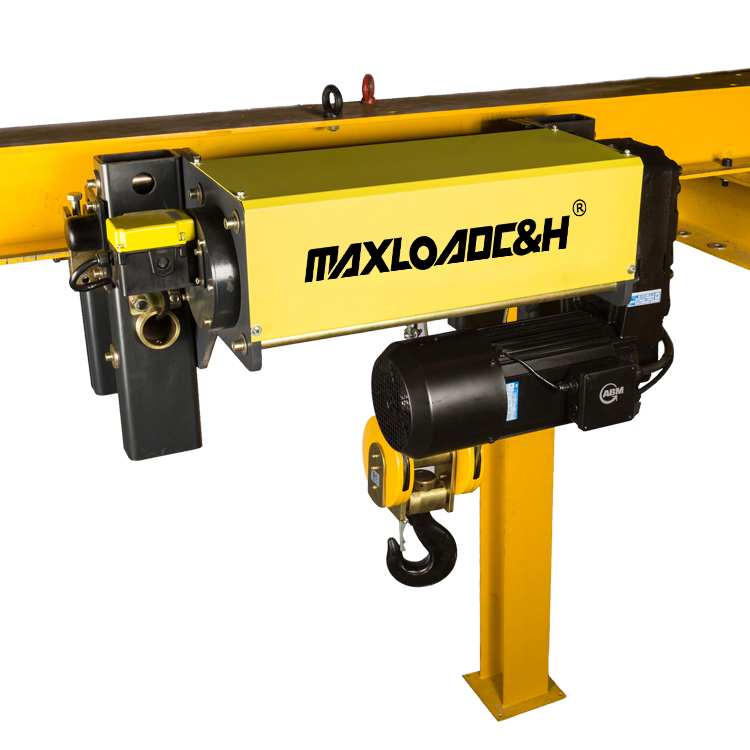
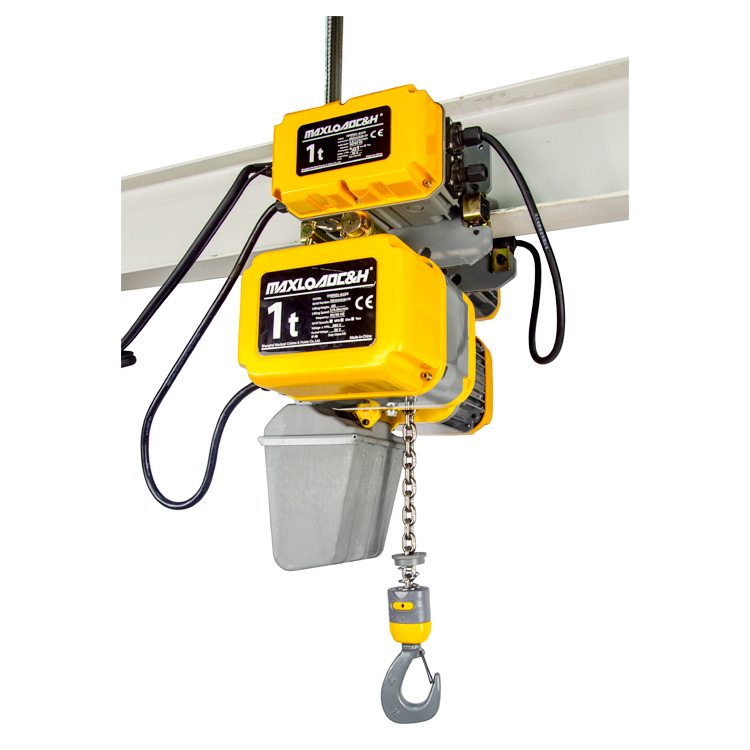
Clearance height is the first screening condition. An ordinary wire rope electric hoist itself occupies 500 to 800 mm of vertical space. Adding the travel of the hook and the lifting attachment, when the factory clear height is insufficient, the actual usable lifting height will shrink severely. Low-clearance working stations need to prioritize compact hoists, such as designs with a higher degree of integration between the drum and the traveling trolley, or directly use chain electric hoists - the body height of a chain hoist is usually about one-third lower than that of a wire rope hoist of the same tonnage.
If the working station is inside a production line and above it are building beams or densely packed piping areas, a suspended overhead crane is more practical than a freestanding one. Suspended rails are fixed directly to the building structure, with no support columns on the ground, allowing forklifts and transfer vehicles to pass freely. When only a local area of the working station needs to be covered, such as the loading and unloading point of one machine tool, the fan-shaped working area of a jib crane is sufficient, with a simple structure and flexible installation; but if the working station needs to cover a rectangular area of multiple pieces of equipment, a KBK combined rail system or a single-girder overhead crane is more suitable.
Span is also key. Electric hoists are usually suitable for spans below 22.5 meters. Beyond this range, the deflection and operating stability of the main girder will deteriorate noticeably, and a double-girder overhead crane structure should be used instead. The box-shaped main girder of a double-girder crane has far better bending stiffness than a single-girder I-beam, and for working stations above 10 tons it is almost the default choice.
Operating frequency determines the duty class, not the lifting capacity.
This is the most easily overlooked part of selection. For the same 5-ton lift, a maintenance station that lifts twice a day and a machining loading station that lifts two hundred times a day require completely different electric hoists.
The duty class of an electric hoist is determined by two variables: the load spectrum and the average daily working time. The load spectrum measures the frequency with which full load appears in actual lifting operations - occasionally lifting full load belongs to light duty, while frequently lifting near rated load belongs to heavy duty or even extra heavy duty. Daily working time directly corresponds to the cumulative operating hours of the mechanism.
For the common working conditions in machining workshops of intermittent frequent lifting and frequent inching for positioning, the duty class usually falls between M4 and M5. For mold lifting or continuous operations in foundry workshops, M6 and above is the baseline. If a hoist with an insufficient duty class is used at a high-frequency working station, the consequence is not simply that it "breaks down quickly," but that brake wear accelerates and the risk of load slipping increases. If a conical rotor brake motor does not have enough heat dissipation margin under frequent inching, overheating will cause the braking torque to decline.
When choosing the duty class, there is a simple empirical judgment: if the effective lifting time at the working station exceeds one hour per day and most lifts exceed 70% of the rated value, then you should start from M5, rather than matching the cheapest hoist according to lifting capacity.
Environmental characteristics determine protective configuration.
An ordinary electric hoist can work normally in a normal-temperature, dry machining workshop, but once the working station environment deviates from these conditions, the standard configuration will run into problems.
For humid or outdoor working stations, the motor protection rating should not be lower than IP54, and the junction box and control handle need to reach IP65. The salt in the air of coastal factory buildings in the south has an obvious corrosive effect on steel structures, and the anti-corrosion treatment of crane rails and main girders must be upgraded accordingly.
In machining workshops with iron chips and oil contamination, wheel and rail wear will accelerate. Quenched wear-resistant wheels last much longer than ordinary cast steel wheels. Collector rail power supply is more suitable for oily environments than soft cables, because cable sheaths will age faster under long-term contact with cutting fluid.
The logic for cleanroom working stations is completely different. For cranes in semiconductor, pharmaceutical, or precision assembly areas, the first requirement is low particle generation. Exposed gears, chains, and lubrication points are all sources of particles. Such working stations require enclosed transmission structures, special cleanroom lubricating grease, dust covers, and smooth outer surfaces that are easy to wipe. In clean environments, chain hoists are easier to handle than wire rope hoists, because chains can use nickel plating or special coatings to reduce friction-generated dust, while the fiber core of wire rope will aggravate wear and particle generation after lubricant loss.
Explosion-proof working stations require full-chain explosion-proof certification from the motor and electrical controls to mechanical friction components. This is not something that can be solved by adding an option during selection; it needs to be determined as a hard constraint at the scheme stage.
Material characteristics affect operating precision and lifting attachment configuration.
The more precise and valuable the workpiece, the more demanding the requirements for operating stability and positioning accuracy. At a lifting station beside a precision measuring machine, any collision during the transfer of the workpiece from the material tray to the measuring platform is unacceptable. Electric hoist hooks generally have a sway amplitude of 2 to 3 cm during frequent inching. This is tolerable for ordinary machining loading, but completely unacceptable for precision assembly. Variable-frequency speed control is not "the icing on the cake" here, but a necessary condition for giving the hoist slow and precise positioning capability.
Anti-sway systems or two-speed lifting modes can significantly improve positioning accuracy. For lifting operations that require frequent turning or angle adjustment, the hook's 360-degree rotation capability and the standardized design of the lifting attachment interface are equally important.
The choice of lifting attachment also depends on the shape of the material. Coiled sheets require C-hooks or special coil lifting attachments, molds require lifting holes that match the mold cavity, and box-type workpieces are suitable for spreader-beam suspension devices to distribute the lifting points. The weight and center-of-gravity position of these lifting attachments in turn affect the selection of the electric hoist - the dead weight of the lifting attachment must be included in the total load, and a lifting attachment whose center of gravity deviates from the centerline of the hoist will also generate an additional overturning moment.
A practical selection path
For a specific working station, selection can proceed in this order: first confirm the clearance and coverage area, and determine whether to use a suspended or freestanding type, and single-girder or double-girder; then calculate the actual number of daily lifts and load distribution to determine the duty class; next check whether the environment has humidity, corrosion, cleanliness, or explosion-proof requirements to determine the baseline for protective configuration; finally, based on material characteristics, determine whether variable-frequency speed control, anti-sway, and special lifting attachments are needed.
After these four steps are completed, the combined solution of the electric hoist and overhead crane is basically clear. The working station environment is the starting point of selection and also the final standard for checking whether the solution is reasonable - after the equipment is installed, every specific action the operator faces every day verifies whether the judgment of the environment during selection was accurate.
 0086 156 1824 5535
 0086 156 1824 5535
 kimliu@chnhoist.com