Workstation Environment Determines Electric Hoist Selection: A Practical On-Site Judgment Guide
When selecting an electric hoist, tonnage and lifting height are usually the first factors to be calculated. But when it actually comes to the workstation, the variable that often determines how long the equipment can be used and how smoothly it operates is another factor: the environment.
For the same two-ton load, the suitable equipment may be completely different in a dry, clean assembly workshop versus a humid, dusty foundry workshop. In the former, a standard model can handle the job with ease, while in the latter, if the standard configuration is copied directly, it may lead to frequent failures in mild cases or, in severe cases, plant hidden safety hazards. Environmental selection is not an optional "nice-to-have," but a fundamental prerequisite for whether the equipment and the workstation can match each other over the long term.
First, look for "warning signals"
The manufacturing premise of ordinary electric hoists is "normal use conditions": dry, clean, moderate temperature, and no corrosive media. Once the workstation environment deviates from this baseline, a special selection logic must be activated.
To determine whether the environment is "special," you can ask three questions:
Is there anything in the air? Dust, fibers, corrosive gases, salt spray—these substances may either block heat dissipation channels or corrode electrical components and the surfaces of chains.
Is the humidity high? In environments with humidity consistently above 85%, motor insulation and brakes are prone to moisture-related failure, especially in locations with frequent temperature differences.
Are temperatures extreme? Standard electric hoists are usually designed for -10°C to +40°C. In front of steelmaking furnaces, in heat treatment workshops, and in cold storage, these are all temperature scenarios that require special confirmation.
If the answers to these three questions all point to "normal," the standard model can proceed to the next round of screening. As long as one points to "abnormal," environmental suitability must be determined as a priority before tonnage.
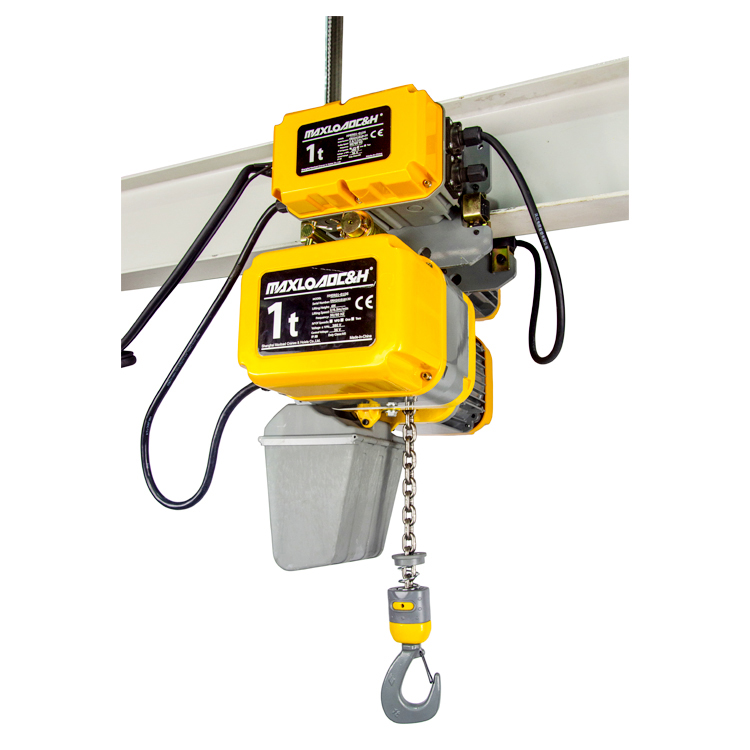
Match the protection rating according to environmental characteristics
The protection rating is the electric hoist's "basic resistance" to the environment. Once the workstation environment is determined, the IP rating is the first mandatory indicator that needs to be locked in.
For dry, clean indoor workshops, the standard configuration is usually sufficient. In such environments, the focus is not on "resisting external intrusion," but simply on maintaining conventional ventilation and heat dissipation.
For humid, dusty, or water-splash environments, such as food processing workshops, foundry workshops, and sheltered outdoor loading and unloading areas, the protection rating needs to be raised to IP65 or higher. IP65 means completely dust-tight and water-jet protected, and can effectively prevent dust from entering the motor and electrical box. If the workstation has a habit of high-pressure water gun washing, it is also necessary to further confirm whether the protection rating covers that condition.
For corrosive environments, such as electroplating, pickling, and marine chemical workstations, IP rating alone is not enough. Corrosive media will attack ordinary coatings and metal parts, so models with anti-corrosion coatings, stainless steel hooks, or special surface treatments are required. In such environments, chains and wire ropes are often the first components to be damaged, and the material solution needs to be confirmed together during selection.
Explosion-proof judgment—the most error-prone part
Explosion-proof selection is the most underestimated area in workstation environment assessment. Many procurement personnel see "there is dust in the workshop" or "there is a paint smell" and think "it should be explosion-proof," but explosion protection is far more than "there is dust" or "there is a smell."
The division of explosion-proof zones is professional work, based on the frequency and duration of the presence of hazardous media. Gas explosion protection is usually divided into Zone 0, Zone 1, and Zone 2, while dust explosion protection is divided into Zone 20, Zone 21, and Zone 22. Different zones correspond to completely different equipment explosion-proof ratings.
For workstation selection, what needs to be confirmed is not "whether explosion protection is needed," but "which explosion-proof zone the workstation belongs to." This question requires a clear conclusion from a safety or process engineer. During selection, provide the zone information directly, rather than vaguely saying "there is an explosion risk."
An easily overlooked detail is that the explosion-proof design of an explosion-proof electric hoist is not only aimed at the motor and electrical box, but also includes moving parts such as hooks and pulleys that may generate friction sparks. When confirming the explosion-proof solution, it is necessary to check whether these details are covered.
Space conditions determine the model structure
Another hard constraint of the workstation environment comes from space: clear height, track form, and interference conditions around the workstation.
Insufficient clear height is the most common problem in the renovation of old workshops. The drum structure of traditional wire rope electric hoists occupies a relatively large amount of vertical space. If the factory building has limited height or the top has already been occupied by pipelines, the lifting height will be further compressed. In this case, the advantage of the chain electric hoist becomes apparent: it has a more compact structure and occupies less clear height for the same lifting height.
Interference in the workstation layout also needs to be considered. If the electric hoist needs to operate between two pieces of equipment or near a wall, the swing range of the hook and the overall dimensions of the hoist body become key parameters. In terms of operation mode, ground-following pendant control is suitable for workstations where the operator needs to move with the load, while a fixed operating position can consider a simpler control solution.
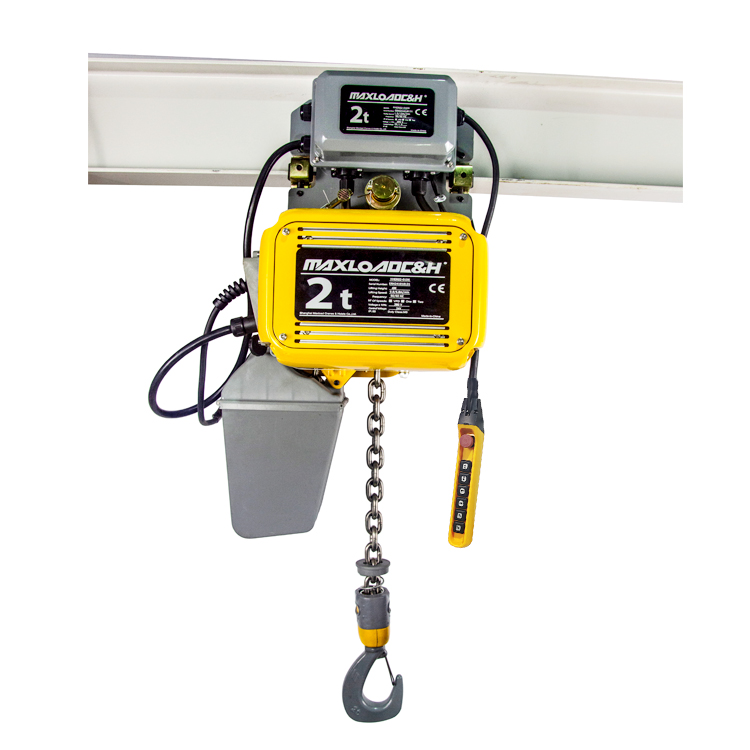
Work duty determines the working class
Work duty is the most easily overlooked dimension in workstation environment selection. For the same load, lifting twice a day and lifting once every ten minutes place completely different demands on the equipment.
The working class of an electric hoist is used to describe this kind of "work intensity." It comprehensively considers factors such as load size, number of starts per hour, and daily operating time. If selected too low, the motor will overheat due to frequent starting and stopping, and its service life will be greatly shortened; if selected too high, it means higher procurement costs and possibly excessive performance.
For intermittent workstations, such as maintenance lifting and loading and unloading, a single-speed model with a lower working class can meet the demand. For assembly line workstations or high-frequency loading and unloading workstations, dual-speed or variable-frequency models are more suitable: slow speed for precise positioning, fast speed for empty return travel, and the working class needs to be increased accordingly.
Another scenario prone to problems is long-travel lifting. If the workstation needs to lift the load to a relatively high height, the single continuous operating time of the motor will increase significantly. Even if it is operated only a few times a day, the thermal load may exceed expectations. In this case, the assessment of short-time duty is more important than simply the number of cycles per hour.
A practical workstation survey checklist
If you need to quickly determine the key points of environmental selection on site, you can check them one by one in the following order:
1. Environmental media: Is the air clean? Are there dust, corrosive gases, or salt spray? If so, what type and concentration are they?
2. Temperature and humidity range: What are the maximum/minimum temperatures at the workstation? What is the year-round relative humidity level? Is there washing operation?
3. Explosion-proof zone: Does the workstation have a clear explosion-proof zone division? If so, which zone and what medium?
4. Space constraints: What is the available clear height? What is the effective lifting distance from the track to the ground? Are there obstacles around the workstation?
5. Work duty: What is the average number of lifting operations per day? What is the lifting height each time? Is precise positioning required? Is it continuous operation?
Once the answers to these five questions are clearly organized, the selection boundaries for the electric hoist are basically determined. The remaining tonnage and speed parameters can then be matched one by one within these boundaries.
Only when environmental selection is done solidly will the equipment not "fail to adapt" when it arrives at the workstation. Rather than regretting it after a failure occurs, it is better to spend an extra half hour clarifying the environmental issues during the selection stage.
 0086 156 1824 5535
 0086 156 1824 5535