The Pragmatic Logic of Choosing an Electric Hoist
Many people, when equipping a workstation with an electric hoist, are used to first flipping through catalogs to look at tonnage and price, and after comparing a round of options, they choose a model whose "parameters are sufficient." But after installation, they find that it either cannot reach, sways badly, or develops frequent minor problems in less than six months. The problem is not the quality of the equipment itself, but that during selection the workstation environment was treated as background information rather than as the starting point for decision-making.
The selection of an electric hoist is essentially a matching problem: the spatial conditions, operating rhythm, environmental media, and operating method of the workstation jointly determine what type of machine can run stably in that position. Below, we break this down layer by layer according to the problems actually encountered at workstations, without empty talk, and discuss only practical criteria for judgment.
Look at headroom first, not tonnage
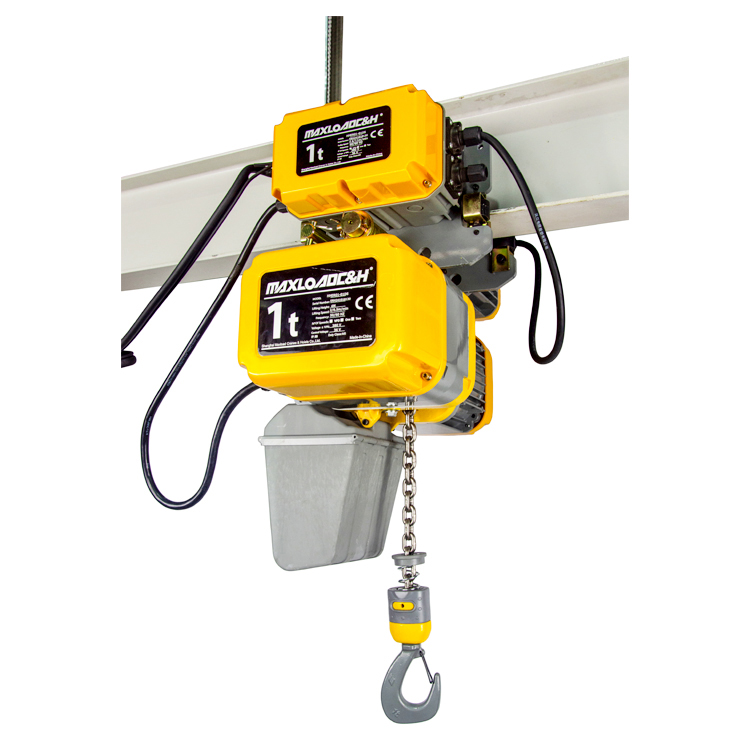
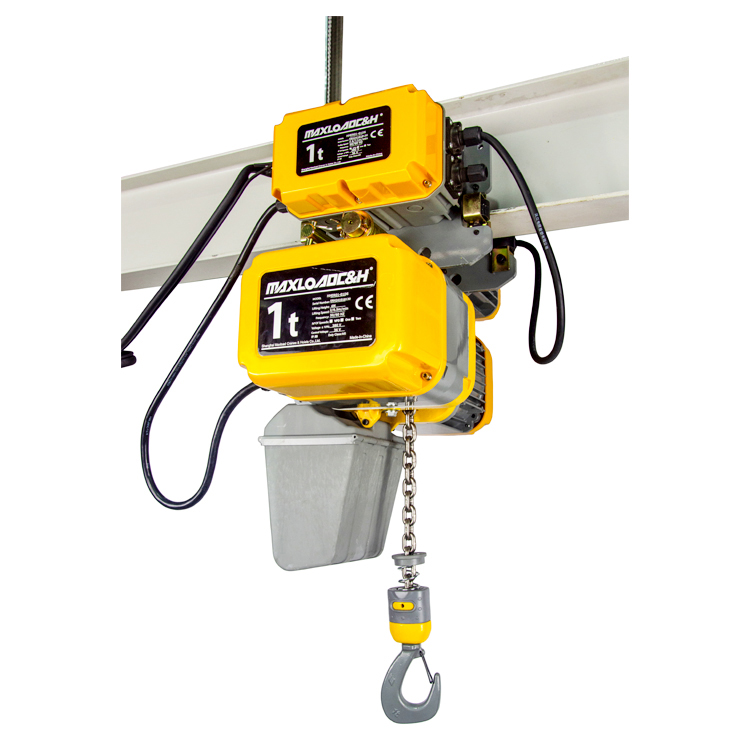
How much vertical space remains above the workstation directly rules out a considerable number of models. Conventional wire rope electric hoists have a relatively long structural length. If the plant is an old renovation or itself has tight floor height, the effective lifting height from the hook to the ground after installation may not even be enough to lift the workpiece. In such cases, low-headroom chain electric hoists should be given priority; the body is thinner, and under the same rail elevation, they can provide several tens of centimeters of additional usable travel.
Conversely, if the workstation has ample floor height and a long lifting stroke, wire rope models have more advantages in lifting height and running stability. There is a point here that is easily overlooked: an increase in lifting height means that the motor's running time in each cycle becomes longer, and heat accumulation increases accordingly. If the workstation also happens to involve high-frequency operation, then with a long stroke plus high frequency, the motor's thermal load will rapidly approach its limit. In such cases, when selecting a model, you must not look only at rated lifting capacity; you must also calculate the number of lifting operations per hour and the single-run time together.
Operating rhythm determines speed configuration and motor duty
Workstation cycle time is the dividing line between "choosing casually" and "selecting seriously." For occasionally lifting a load in a warehouse corner, a single-speed hoist is completely sufficient, with a simple structure and few failure points. But an electric hoist at an assembly line workstation faces a different logic: workpieces need to be positioned, set down gently, and protected from collision. A single-speed model starts moving at full speed as soon as the button is pressed, and operators can only rely on inching to make do. Contactors engage frequently, brake pads wear faster, and problems soon appear.
This is where the significance of dual-speed or variable-frequency models lies. The slow-speed gear is used for approach and precise placement, while the fast-speed gear handles empty hook return and long travel, ensuring both efficiency and positioning accuracy. The judgment criterion is direct: if the workstation operator presses buttons more than several dozen times a day, or if the lifted workpieces cannot be allowed to suffer collisions, then dual speed is the minimum configuration, not an option.
Motor duty also follows the rhythm. Workstations with intermittent operation and continuous assembly line workstations differ by an entire grade in requirements for motor thermal capacity. If selection only reports "roughly how many lifts per day," it is difficult for the supplier to judge what duty class machine should be provided; only by clearly stating the number of lifts per hour, average load rate, and single-run duration can you avoid the pitfall of "rated tonnage is sufficient, but the motor burns out first."
Environmental media determine protection and special configurations
If the workstation environment contains dust, moisture, acid-base mist, or combustible substances, the service life of ordinary models will decay at a visibly rapid rate.
In dust environments, the nature of the dust must be considered. Ordinary grinding dust and combustible dust are two different matters. The latter requires explosion-proof models, and the explosion-proof rating must match the dust type and area classification. Combustible dust environments usually correspond to Zone 21 or Zone 22, and the equipment protection level must be at least IP65, with electrical components fully flameproof enclosed. If the workstation is merely dusty but not combustible, selecting a conventional model with a high protection rating and shortening the cleaning cycle is sufficient; there is no need to pay extra cost for explosion-proof certification.
Corrosive environments are common at workstations in electroplating, acid pickling, and chemical workshops. In such environments, ordinary paint begins to blister and peel within a few months, and the internal structure then corrodes. The key to corrosion-resistant models is not the color of the paint, but the surface treatment process and the isolation design of key components, with a protection level usually required to be IP56. During selection, if there is an obvious acid-base odor or moisture around the workstation, when submitting the corrosion resistance requirement to the supplier, it is best to attach the medium type and concentration so that the supplier can judge the suitability of sealing materials and surface treatment.
High-temperature workstations need separate discussion. Around metallurgical, casting, or heat treatment workshops, the ambient temperature may far exceed the 40°C upper limit of conventional models. For such workstations, either select metallurgy-specific models or use conventional models with derating, while also confirming whether the high-temperature resistance of the wire rope or chain meets the radiant heat conditions.
Operating method follows workstation layout
The choice among fixed hook suspension, manual trolley, and motorized travel trolley does not depend on the equipment itself, but on the movement path of workpieces between workstations. If the hoist only needs to lift up and down at one fixed point, the fixed type is the most economical and has the best rigidity. If the workstation is a short line and the operator needs to carry the hoist along the rail for a few steps, a manual trolley is sufficient and structurally simple. Only when the workstation layout requires the hoist to travel a relatively long distance on its own, or when the operator needs to control both travel and lifting at the same time, is a motorized travel trolley necessary.
The same applies to the control method. Pendant control is suitable for workstations where the operator always stays beside the equipment, while wireless remote control is suitable for occasions where the operating position needs to change, or where the workstation space is restricted and it is inconvenient for personnel to follow the unit. Here is a practical suggestion: if the workstation has multiple operating positions or obstructed lines of sight, it is better to spend a little more budget on remote control than to have the operator lean out and pull the pendant, which affects positioning accuracy and increases fatigue.
Two easily overlooked matters
Power supply conditions should be confirmed early in the selection process. Three-phase 380V is the conventional configuration for industrial workstations, but some old workshops or temporary workstations have only single-phase power. Single-phase models are not unusable, but at the same tonnage their duty class is usually lower, and continuous high-frequency operation can easily cause overheating. If the workstation power supply is limited and a single-phase model must be used, cooling intervals should be left in the rhythm arrangement, or the tonnage should be reduced by one grade directly; do not let the equipment run near its limit for long periods.
Tonnage margin does not need to be enlarged blindly. For conventional intermittent working conditions, a 25% margin is sufficient to cover the dead weight of the spreader and lifting impact; for high-frequency or high-vibration workstations, 50% is enough. But excessive margin also has costs: the larger the tonnage, the heavier the body, and the requirements for rails and building structures rise accordingly, while the range of options for low-headroom workstations actually narrows. The appropriate principle is: add the workpiece weight, spreader weight, and maximum impact factor together to calculate an actual required value, and on that basis decide whether to move up one grade or two according to operating frequency, rather than simply doubling it.
Conclusion
Choosing an electric hoist for a workstation ultimately comes down to answering one question: under what conditions, at what rhythm, and how many times repeatedly will this equipment operate? If the four dimensions of headroom, cycle time, environment, and operating path are ranked clearly by priority, many seemingly complex model comparisons will automatically converge to one or two clear options. Conversely, setting the brand first and then working backward to parameters, or copying the configuration of the neighboring workshop, is often the starting point for frequent later downtime and modification. Spending an extra hour during the selection stage to clarify the working condition data is far more cost-effective than spending a week on rectification after installation.
 0086 156 1824 5535
 0086 156 1824 5535