Four Hard Constraints for Electric Hoist Selection
Many people, when selecting an electric hoist, are accustomed to first looking at the lifting capacity table, rounding up one level based on the maximum weight of the lifted object, then comparing prices, checking delivery times, and placing an order. This process seems efficient, but it overlooks the prerequisite that truly determines whether the equipment can be used, whether it works well, and whether it is durable: the workstation environment itself.
An electric hoist is not an isolated piece of equipment. It is suspended under a specific beam structure, serves a specific process rhythm, is exposed to a specific air medium, and is operated by specific people. Discussing selection apart from the workstation environment means that no matter how impressive the parameter table looks, once installed problems may still arise, such as the lifting height being half a meter short, the motor corroding within half a year, or the load swinging so much during slow-speed positioning that work cannot be done. The following expands on four environmental dimensions that are easily underestimated, to clarify what exactly should be examined during selection.
I. Clearance Conditions: First Measure the Height Under the Beam, Then Discuss the Model
How much vertical space is available above the workstation is the first hard constraint in selection, with priority higher than tonnage. Conventional wire rope electric hoists have mature structures and large lifting heights, but the body itself occupies a certain height. If the clearance under the beam in the plant is ample, choosing a conventional model is no problem. Trouble arises in old workshop renovations, low floors, and workstations with dense ceiling pipelines—where the distance from under the beam to the ground is already limited, and after deducting the hoist body thickness and hook block height, very little effective lifting stroke remains. Only after installation do you discover that it cannot reach the workstation table, and the rework cost far exceeds the equipment itself.
For such workstations, low-headroom chain electric hoists should be given priority. Their structural design compresses the body height to a smaller range, releasing more effective lifting stroke for the same height under the beam. Another advantage of chain models in low-headroom scenarios is their lighter dead weight, which imposes less additional load on the suspension point or track beam—this is particularly practical in renovation projects where the original structure has limited load-bearing capacity.
Conversely, if the workstation requires long-distance vertical lifting and a large lifting height, the high-speed running stability and rope-length adaptability of wire rope models are more suitable. The key action is: before requesting a quote, first measure the actual clearance under the beam at the workstation, the lowest point the hook needs to reach, and the highest point, and give these three dimensions to the equipment supplier, rather than reporting only a tonnage.
II. Air Medium: Protection Rating Is Only the Baseline; Material Is the Dividing Line
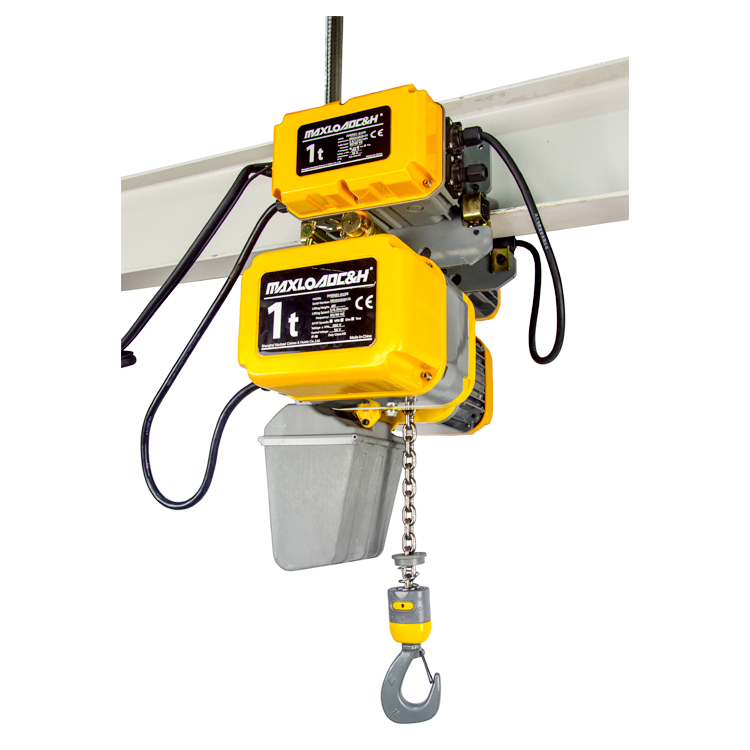
In the same workshop, a dry assembly workstation and a workstation beside an acid pickling tank have completely different requirements for electric hoists. The former is fine with an ordinary protection rating, while the latter, if selected as a standard model, will soon develop problems in the motor and electrical box.
Humidity is a gradient. When humidity under conventional working conditions does not exceed 85%, protection rating IP44 is basically sufficient; but for workstations with long-term high humidity or condensation, the protection rating of motors and electrical equipment needs to be raised to IP55, and large-power motors should also consider adding preheating and drying devices to prevent insulation from becoming damp after shutdown. For workstations involving water washing or steam, the protection rating must be raised further.
Corrosive media are a more hidden killer. Acid mist, plating solution splashes, and chemical atmospheres will not immediately stop the equipment, but they will intrude layer by layer starting from the paint surface, seals, and wiring terminals. When selecting for such workstations, the protection rating is only an admission ticket; what truly matters is the material of the flow-path components: whether key structural parts use stainless steel or special coatings, whether the sealing material of the electrical box is resistant to chemical media, and whether exposed fasteners have been treated accordingly. If the workstation contains flammable gas or dust, ordinary models are directly excluded, and equipment with the corresponding explosion-proof level and temperature group must be selected according to the hazardous area classification. Moreover, the gas level and temperature group in the explosion-proof marking must match the on-site medium—not just any "explosion-proof hoist" can be used universally.
Dust workstations are easily underestimated. In woodworking, grinding, powder feeding, and similar workstations, fine particulate matter continuously intrudes into the gaps between the motor and brake, causing deteriorated heat dissipation and brake slipping. The protection rating in dusty environments should be raised accordingly to IP54 or IP64, and the dust cleaning maintenance cycle should be shortened.
III. Work Rhythm and Operating Precision: Between Single-Speed and Dual-Speed, What Differs Is Process Quality
The parameter of lifting speed is just a number on the parameter table, but at the workstation it is a direct variable affecting operating experience and process qualification rate.
For low-frequency, intermittent lifting workstations, such as occasional loading and unloading in warehouses or occasional lifting at maintenance workstations, single-speed models are fully sufficient, with simple structures, few failure points, and the highest cost-effectiveness. But for assembly line rhythm workstations, precision workpiece positioning, mold assembly, and similar scenarios, the start-stop impact of single-speed models will cause obvious swinging of the load, and operators need to repeatedly jog to stabilize the position, which both delays the rhythm and easily causes collisions. The slow-speed gear of dual-speed models provides stable fine adjustment capability when approaching the target position, with small start-stop impact, substantially improving positioning accuracy and operational safety.
There is another workstation environment factor that is often overlooked: where the operator stands. If the hoist is installed high and the operator needs to look up and observe the hook at close range, or if obstacles at the workstation block the line of sight, the practical value of wireless remote control is far higher than pendant line control. The operator can retreat to a position with a better field of view, avoiding standing directly below the load, which is also safer. Conversely, in fixed workstations with clear operating positions and where cables do not constitute an obstruction, pendant control is direct and reliable, and there is no need to spend extra on remote control.
IV. The Role of the Workstation in the Production Line: Fixed or Mobile Determines the Model Structure
In the same workshop, the selection logic for fixed-point assembly workstations and cross-area transfer workstations is different.
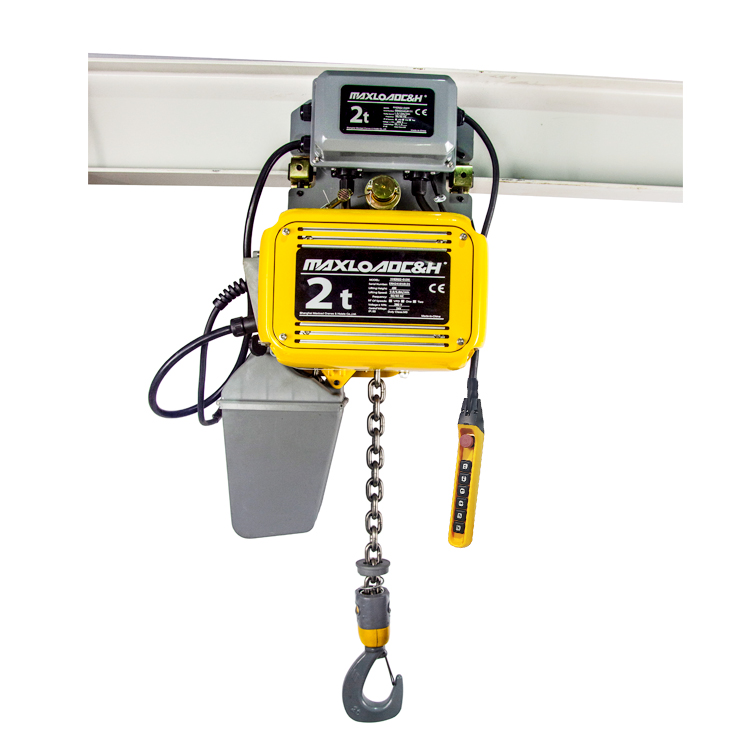
For workstations where materials are only lifted and lowered at a fixed position and no lateral displacement is required, fixed electric hoists are the most economical choice. They are installed on established supports or under beams, with compact structures and concentrated maintenance points. For scenarios requiring lateral movement along I-beam tracks and material transfer between different workstations, traveling models must be selected, and the matching degree between the trolley mechanism and the track directly affects running resistance and wheel flange wear.
Here is a detail that is easily overlooked: whether the track is straight or curved. In some workstation layouts, limited by column spacing and production line direction, the track needs to have a curve. Curved operation imposes additional requirements on the adaptability of the trolley structure. If this is not stated during selection, a standard straight-running trolley may experience jamming or uneven wheel flange wear on curves.
In addition, the working level of the workstation should not be estimated by "about right." The actual usage data—daily lifting frequency, load rate, and whether starting and braking are frequent—determines the design margin of the motor and brake. Selecting a higher level for light-duty workstations is wasteful, while selecting a lower level for heavy-duty workstations leads to rapid brake wear and alarming motor temperature rise. Giving the equipment supplier these three numbers—average daily lifting frequency, the proportion of typical load to rated tonnage, and single-run duration—is far more useful than saying vaguely that "it is used quite a lot."
Conclusion
The selection sequence for electric hoists should be reversed: first confirm the workstation's clearance, medium, rhythm, and movement requirements, and then select tonnage and model within the range constrained by these factors. Leaving a tonnage margin is necessary—consider 1.25 times the maximum lifting load under conventional working conditions, and 1.5 times for frequent operations or workstations with large vibration—but the margin solves the safety factor issue, not the environmental adaptability issue.
A practical approach is to organize the workstation as a "working condition package" rather than reporting only a lifting capacity. The clearance dimension under the beam, the height of the lowest lifting point from the ground, the description of ambient temperature and humidity and media, the average daily lifting frequency, and whether lateral movement is required and the track direction—give these five pieces of information to any equipment supplier, and they can more quickly narrow down the suitable model range, saving the trouble of repeated confirmation and later order changes. Whether the equipment can be used, works well, and is durable after installation depends on the accuracy of these pieces of information in the early stage.
 0086 156 1824 5535
 0086 156 1824 5535