A Four-Step Screening Method: From Space and Environment to Duty Cycle
When electric hoist selection goes wrong, it is rarely because the tonnage was calculated incorrectly—it is usually because the workstation environment was not taken seriously from the very beginning. The same 2-ton job, whether installed on the overhead beam of a standard factory building, squeezed into the low-clearance mezzanine of an old renovated workshop, placed in the explosion-proof zone of a chemical plant, or hung from the ceiling of a cleanroom, requires four completely different machines. Look at the environment first, then determine the parameters. If the order is reversed, everything that follows will be rework.
The screening logic below follows the sequence of space → environment → duty cycle → load. Each step is a hard constraint. If the previous step is not passed, no matter how impressive the later parameters look, they are useless.
Measure the Clearance, Determine the Model Structure
How much vertical distance remains above the workstation is the first thing that should be measured with a tape measure, not the first thing to look up in a catalog.
If the factory building has ample height and generous clearance below the beam, a conventional wire rope electric hoist is a reliable choice, offering large lifting height and smooth operation, suitable for workstations requiring long-distance lifting and lowering. But in reality, another situation is more common: old factory renovations, mezzanine workstations, densely packed ceiling pipelines—the distance from below the beam to the floor may be only three or four meters, and space must still be reserved for the hook and rigging travel. If a conventional hoist is forced into such a workstation, after installation you will find that the hook is too close to the ground, and slightly taller workpieces cannot be lifted.
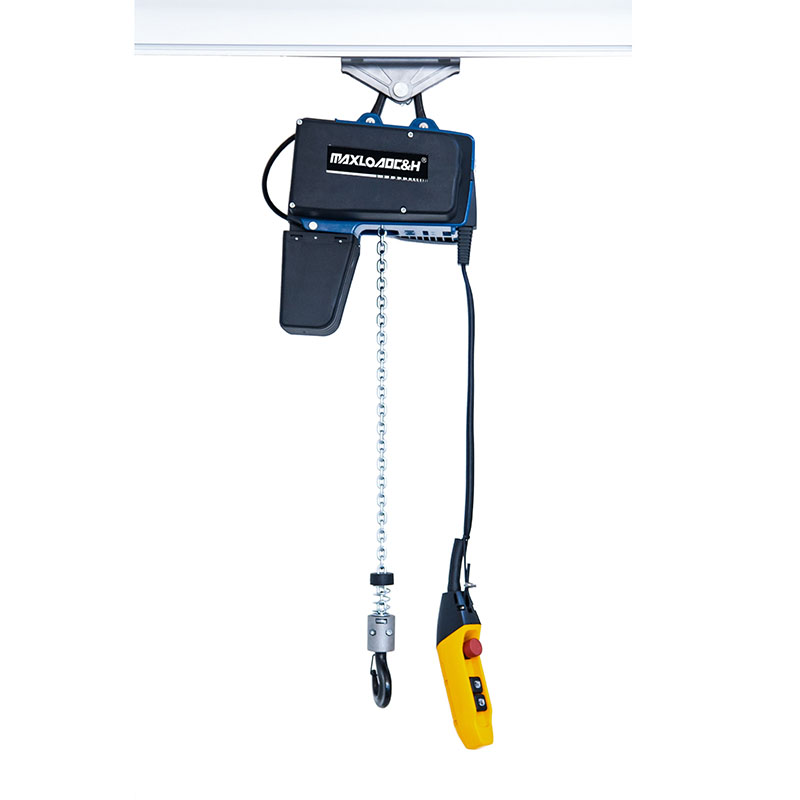
The low-headroom chain electric hoist is designed precisely for such cramped workstations. Its body structure is compressed, allowing the hoist body to run closer to the track, giving as much of the limited vertical space as possible to the lifting travel. The chain structure itself is also more compact than a wire rope drum, with obvious advantages in low, confined spaces. The judgment criterion is simple: if the distance from the lower edge of the track beam to the highest point of the hook, after subtracting the height of the rigging and the height of the workpiece, leaves less than half a meter of margin, low-headroom models should be seriously considered rather than forcing a standard model.
Check the Environment, Determine Protection and Explosion-Proof Ratings
Once the space determines the structure, next look at what is in the air at the workstation. This step directly determines the protection configuration of the motor and electrical controls. Save money here, and the maintenance costs later will come back doubled.
Conventional dry workshop: a standard model is sufficient, with a protection rating starting at IP44, meeting daily dust and water resistance requirements. Humid, dusty, or outdoor semi-open workstations: the protection rating of the motor and electrical equipment must be raised. For dusty environments, at least IP54 is recommended; for workstations with long-term high humidity or the possibility of washing down, IP55 or even IP65 should be used. Outdoor installations also require an additional rain cover—do not expect the hoist itself to withstand rain. Corrosive atmospheres: chemical plant surroundings, near electroplating lines, coastal high-salt-mist environments—the shell material and surface treatment must be upgraded; ordinary painted parts will not last long. Flammable and explosive areas: this is a red line with no room for negotiation. When combustible gases, vapors, or combustible dust are present at the workstation, an explosion-proof hoist with the corresponding explosion-proof rating certification must be selected. The explosion-proof rating must match the hazardous medium category and temperature class at the site; do not place an order based merely on the word "explosion-proof." Using an ordinary hoist in an explosion-proof area—the purchase price difference saved is far less than the cost of a single safety accident.
Cleanroom or high-cleanliness workstation: conversely, the problem is not preventing intrusion from the outside, but ensuring the equipment itself does not become a contamination source. The volatilization of lubricating grease from ordinary hoists, metal particles generated by chain friction, and dust accumulation on the shell are all hidden hazards in a clean environment. Such workstations require fully enclosed housings, low-volatility lubricating grease, stainless steel or specially coated shells, and smooth surface designs that are easy to wipe clean.
Calculate the Duty Cycle, Determine Speed and Working Class
For hoists of the same tonnage, lifting twice a day versus lifting two hundred times a day results in a service life expectation that differs several times over. The workstation duty cycle determines two things: speed configuration and working class.
If the workstation involves intermittent lifting—occasional warehouse loading and unloading, or a maintenance station used every few days—a single-speed model is entirely sufficient, with a simple structure, few failure points, and easy maintenance. But if it is a fixed workstation beside an assembly line where workpieces need frequent loading and unloading, or if the lifting object is a precision part that needs to be aligned with fixtures or bolt holes, the start-stop impact of single speed will drive operators crazy. Two-speed or variable-frequency models can achieve millimeter-level inching positioning in the slow speed range, with smooth starting and stopping without swaying, protecting both the workpiece and the operator's patience.
Working class is a more hidden pitfall. Classified by mechanism usage level and load condition, M3 class is suitable for light-load workstations with short daily operating time and infrequent start-stop; M4 to M5 cover most workshop normal production rhythms; M6 and above are reserved for workstations with continuous high-intensity operation. If selected too low, the motor and brake will accelerate wear during frequent start-stop, and the failure rate will rise sharply after one or two years; if selected too high, the procurement cost will rise unnecessarily. When unsure, record the estimated daily lifting cycles and average load rate of the workstation, and check them against the working class curves in the catalog—this is more reliable than making a judgment call.
Verify the Load, Leave Margin Rather Than Cutting It Close
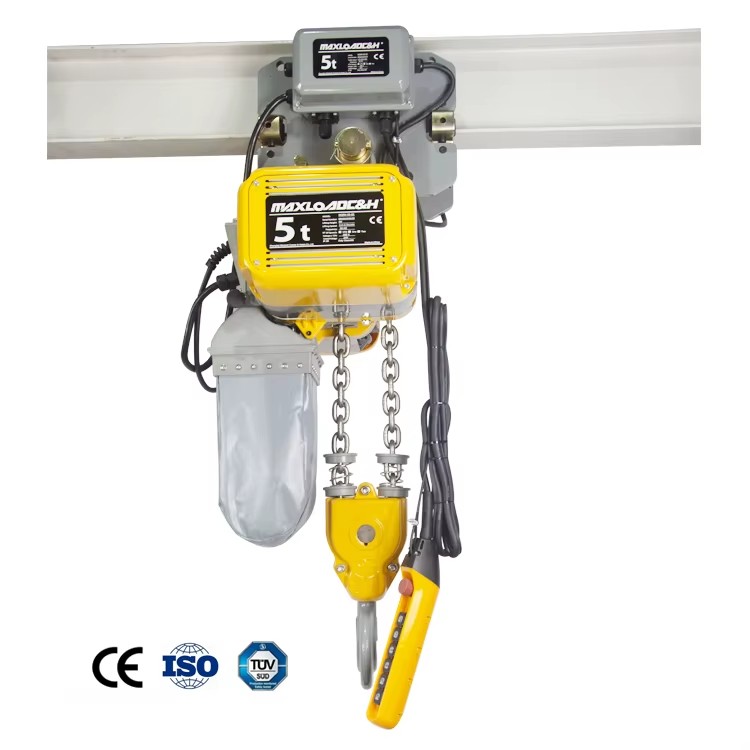
The most common mistake in tonnage selection is "just enough." If the maximum lifting object at the workstation is 1 ton, choosing a 1-ton hoist ignores the dead weight of the rigging, the dynamic load impact at the moment of lifting, and the performance degradation after long-term use.
Under conventional working conditions, the rated capacity should leave at least a 25% margin, i.e., the maximum lifting weight multiplied by 1.25 as the lower limit for selection. If the workstation has frequent start-stop, vibration, or the possibility of workpiece swaying during lifting, the margin should be increased to 1.5 times. This is not conservatism—it is leaving buffer space for impact loads and occasional overloads. In addition, the weight of all attachments above the hook—fixtures, slings, spreader beams, special rigging—must be included in the total load; do not count only the net weight of the workpiece.
Organize the Workstation Information into a Selection Sheet
Before requesting quotations or comparing solutions, write the following items on paper: clearance height below the beam, workstation environment attributes, estimated daily lifting cycles and positioning accuracy requirements, maximum lifting object weight plus rigging weight, and whether lateral movement along the track is required. Use these five items to screen, and the vast majority of mismatched models can be eliminated in the first round.
In selection, expensive is not necessarily right, and cheap often means waiting for the bill later. The workstation environment is an objective constraint; the machine adapts to the environment, not the other way around where the environment accommodates the machine. Lock down the two hard boundaries of space and environment first, then compare duty cycle and load among the remaining candidates. Only then will the hoist you select not become the "if only we had..." regret in the workshop after installation.
 0086 156 1824 5535
 0086 156 1824 5535