The Matching Logic Between Jib Cranes and Electric Hoists
When many factories procure workstation lifting equipment, they tend to look at load capacity first, then price, and only lastly consider the installation environment. This order is actually reversed. The combination of a jib crane and an electric hoist is essentially a local lifting system centered on the workstation and with the operating radius as its reach. Its effectiveness does not depend on how high any single parameter is, but on whether the equipment form and the workstation environment mesh with each other. The same 200 kg workpiece, at an independent machining station versus beside an assembly line, requires completely different cantilever structures, hoist types, and even control methods.
First confirm the floor and structural conditions of the workstation; this determines the installation form of the cantilever
The base form of a jib crane is not freely chosen; it is constrained by the floor's load-bearing capacity and the upper structural conditions at the workstation location. The most common column-mounted jib crane requires an independent concrete foundation, generally requiring a floor thickness of no less than 15 to 20 cm, a strength grade of C25 or above, and no voids or loose layers beneath. If the workstation is located on a second-floor workshop or on a floor slab structure, the counterweight and overturning moment of the column-mounted type may exceed the floor's load allowance. In this case, the floor's load-bearing capacity must be checked, or a wall-mounted or suspension-mounted solution should be adopted to transfer the force to building columns or load-bearing beams.
A wall-mounted jib crane does not occupy floor space and is suitable for scenarios where the workstation is close to a factory column or solid wall, but the premise is that the wall or column itself has sufficient bending and shear resistance. A detail that is easily overlooked is that the slewing angle of a wall-mounted jib is usually limited, often covering only a semicircular area. If the workstation operation requires picking up and placing materials across both sides of the column, the wall-mounted type is less flexible than the column-mounted type. The suspension-mounted type is installed on the underside of an overhead crane beam or platform and occupies zero floor space below, but it requires that the upper structure have sufficient load-bearing allowance and that the installation position does not conflict with existing pipelines or cable trays. The judgment sequence should be: first see whether the floor can support a foundation; if not, see whether a wall or column can provide support; if still not, then consider upper suspension.
The operating coverage area should be calculated according to "sector effectiveness," not just by looking at the cantilever length
The coverage area of a jib crane is a sector or circle centered on the column, and the electric hoist moves radially along the cantilever. A common mistake in selection is to focus only on whether the maximum radius can reach the farthest workpiece, while ignoring near-end coverage and dead zones. For example, if the workstation material table is directly behind the column and the cantilever's slewing angle is blocked by surrounding equipment, the actual effective coverage may be far smaller than the theoretical value.
A reasonable approach is to first draw a plan view of the workstation, marking the proposed column installation position, all pick-up and placement points, equipment obstacles, and operator standing positions. The cantilever radius should cover the distance from the column center to the farthest pick-up point, while confirming that no fixed obstacles intrude into the slewing arc. If there is a wall or large equipment on one side of the workstation, the actual slewing angle of the cantilever may be only 180 degrees or even less. At this point, this limitation should be accepted and the coverage area checked accordingly, rather than forcibly pursuing 360-degree rotation. Another factor that needs to be included in the calculation is the hook's effective lifting height: the clear height from the lower edge of the cantilever to the ground minus the height of the rigging and workpiece; the remaining value must allow the workpiece to pass over the workstation table or equipment edge. If clear height is tight, the compact advantage of a chain hoist is more obvious than that of a wire rope hoist.
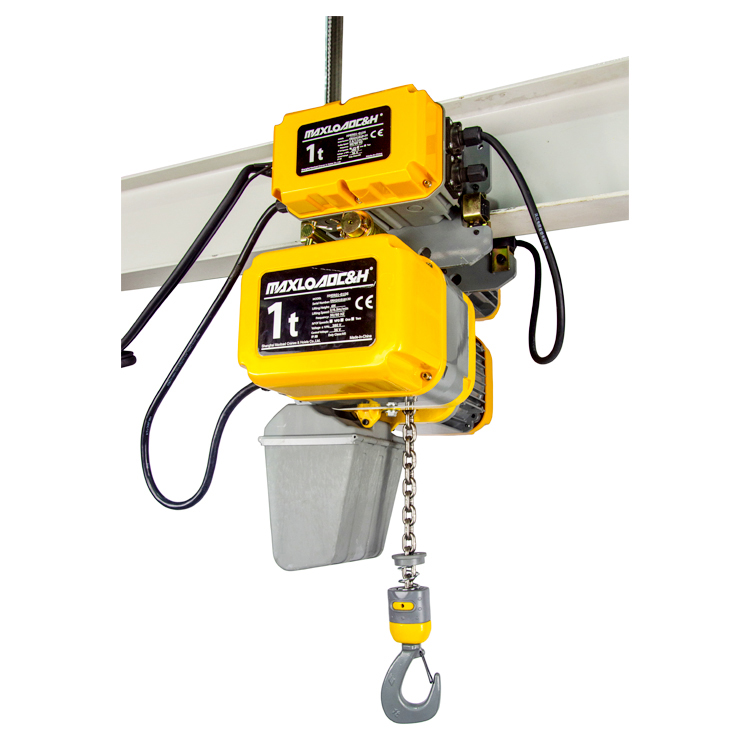
For electric hoist selection, the duty class is more worth scrutinizing than the rated load
Leaving a margin in lifting capacity is common sense; for a 200 kg workpiece, a 250 kg or 300 kg class is sufficient. What truly determines hoist life and failure rate is whether the duty class matches the actual frequency of use. The baseline duty class of an electric hoist is usually classified according to the permissible operating duration under load. Light duty and medium duty are suitable for intermittent operation. If the workstation cycle is tight, the number of lifting operations per hour exceeds about ten, or the hoist frequently operates at full load during lifting, a medium-duty hoist will operate long-term close to its thermal limit, and the wear rate of the motor and brake will increase significantly.
A practical estimation method is to look at the number of full-load cycles per hour. If the workstation needs to complete one pick-and-place operation per minute, that is sixty cycles per hour, which has already exceeded the comfortable range of a conventional medium-duty hoist, and a higher duty class or appropriately increased hoist power should be considered. Conversely, if the workstation only occasionally lifts assembly parts, with only a few operations per hour, choosing a high-duty-class hoist is a redundant investment, increasing procurement cost without bringing actual benefit. The choice between chain hoists and wire rope hoists is also related to this: chain hoists have relatively slower lifting speeds but are compact in structure and occupy little clear height, making them suitable for machining stations that require high positioning accuracy and are not sensitive to speed; wire rope hoists have faster lifting speeds and are suitable for assembly or logistics stations with tight cycles and a need for rapid lifting and lowering.
The control method and the human-machine relationship at the workstation determine the upper limit of efficiency
Electric hoist control methods include pendant push-button control and wireless remote control. The advantage of pendant control is that the operator must stand outside the safety distance at a position with a good field of view, making it suitable for workstations with larger workpieces that require maintaining an observation distance; the disadvantage is that the cable is prone to wear during frequent operation and may entangle with workpieces or equipment in narrow spaces. Wireless remote control gives the operator greater freedom of movement and allows them to stand to the side or behind the suspended load to observe clearances, making it more practical when the workstation space is cramped and the operator needs to change standing positions frequently.
Another detail that is often overlooked is the form of the hoist's trolley. The cantilever of a jib crane is mostly an I-beam or box beam, and the electric hoist is suspended from the lower flange of the beam via a trolley. If the workstation requires the hoist to move back and forth frequently along the cantilever, the trolley's running resistance directly affects the ease of operation. Manual trolleys have low cost but are laborious to operate, especially when the cantilever has slight deflection or dust accumulates on the track, which increases push-pull resistance; electric trolleys save effort but increase control complexity and failure points. For workstations with a limited number of movements per day, a manual trolley is sufficient; for operations requiring precise positioning and frequent fine adjustment, the inching control of an electric trolley is more advantageous.
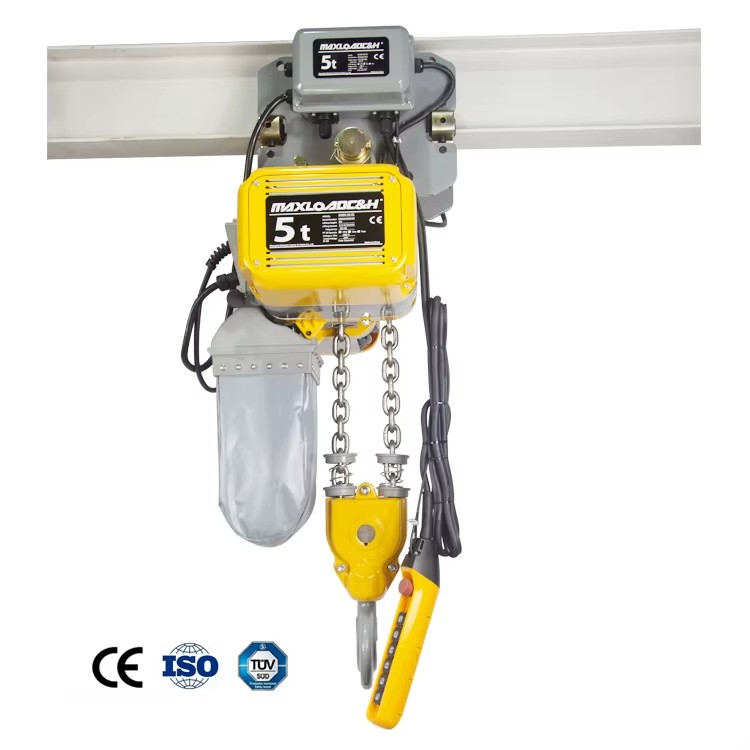
Safety configuration is the baseline item in selection, not a bonus item
No matter how simple the workstation appears, the lifting height limiter and overload limiter should be listed as mandatory items. The area below the cantilever of a jib crane is often an area where operators frequently walk. Once the hoist fails or the rigging slips off, the consequences are unacceptable. The slewing limiter is especially important on wall-mounted jibs or cantilevers with limited slewing angles, as it prevents the cantilever from hitting walls or equipment. In addition, the grounding and electrical protection level of the jib crane need to match the workstation environment: machining stations may have cutting fluid splashes, assembly stations may have dust, and humid or corrosive environments require higher protection levels. After installation is completed, no-load trial operation and static load testing cannot be omitted. Only after confirming that the cantilever has no jamming throughout the full slewing stroke and that the brake is reliable should it be put into daily use.
Ultimately, the core logic of workstation environment selection is: first let the equipment adapt to the user's space and structural conditions, then let the parameters match the actual load and frequency, and finally use safety configuration as a fallback. Doing it the other way around—first choosing a jib crane and then trying to fit it into the workstation—often leads to additional modification costs during the installation stage or leaves efficiency bottlenecks in daily use. Once the workstation is clearly measured, most of the selection problem is already solved.
 0086 156 1824 5535
 0086 156 1824 5535