The Matching Logic Between Jib Cranes and Electric Hoists
When purchasing workstation lifting equipment, many factories habitually look at tonnage first, then compare prices, and only consider installation conditions last. This order is actually reversed. Whether a jib crane can be used stably at a specific workstation over the long term is often determined not by the number on the rated lifting capacity line, but by the spatial conditions, usage rhythm, and operating habits of the workstation itself. Choosing too large wastes money; choosing too small means constant problems; choosing the wrong structural form makes later modifications awkward no matter how you do them.
First Look at What the Workstation "Looks Like," Then Talk About Equipment
The essence of a jib crane is local lifting equipment serving a fixed area. Its coverage area is a sector or circle centered on the column, with the jib length as the radius. This means that whether there are columns around the workstation, whether walls can bear load, and whether the floor concrete is thick enough directly determines whether you should choose a column-mounted type, wall-mounted type, or mobile type.
The column-mounted type is the most versatile, with a rotation angle that can reach 360°, suitable for occasions where the surroundings of the workstation are relatively open and the floor conditions allow expansion bolts. If the workstation is close to a factory column or load-bearing wall and only needs to cover a semicircular range, the wall-mounted type can save the floor space occupied by a column, making it friendlier for workshops with narrow aisles. The mobile type is suitable for situations where one piece of equipment is shared across multiple workstations, but its lifting capacity is usually limited, and it has requirements for floor flatness.
There is an easily overlooked detail: floor concrete thickness. The base fixation of a column-mounted jib crane requires the concrete layer to have sufficient load-bearing capacity. Thin concrete floors may crack or loosen under long-term eccentric loading. If the floor conditions of an old factory building are unclear, mobile or wall-mounted fixation is a more reliable starting point.
Lifting Capacity Is Not Just "Can It Lift It"
The workpiece weighs 200 kg. Is a 250 kg jib crane acceptable? From a static load perspective, it is barely sufficient, but from a dynamic working condition perspective, it is far from enough. The acceleration at the moment of lifting, the lateral force caused by workpiece swaying, and metal fatigue after long-term use all require a margin.
A more practical calculation method is: workpiece weight plus spreader weight, then multiplied by a coefficient linked to usage frequency. For workstations with few lifting operations per day, the coefficient can be around 1.1; if there are dozens or even hundreds of operations per day, pulling the coefficient to 1.25 is not excessive. The price difference between a 0.5-ton jib crane and a 1-ton one is far smaller than imagined, but the cost of maintenance downtime and safety hazards caused by long-term overload operation is much higher.
More critical is the working class. The motor and brake of an electric hoist are designed with clear limits on load duration. For maintenance workstations that only lift occasionally a few times a day, M3 is sufficient; but for scenarios in machining workshops where the hoist works with machine tool loading and unloading and operates hundreds of times a day, M4 or even M5 is the reasonable starting point. If a hoist with an insufficient working class is used at a high-frequency workstation, motor overheating and burnout is only a matter of time.
Jib Length: Shorter Is Better Than Longer
The longer the jib, the larger the coverage radius, and the more "cost-effective" it sounds. But for every additional meter of jib, the bending moment borne by the column increases exponentially, equipment dead weight and foundation load also rise, and the cost increase is quite obvious. A more practical issue is that the positioning accuracy and rigidity at the jib end decrease as length increases, and the operating feel also deteriorates.
A reasonable approach is to first measure the true distance from the farthest operating point of the workstation to the planned column installation position, then add about half a meter of margin. If the workstation layout is compact, a 2 to 3 meter jib with 180° slewing is often more practical than a 4 meter jib with 360° slewing. The operator does not need to walk around a large circle, and the motion path is actually shorter. Only warehouse loading and unloading or large-span workstations need to seriously consider jibs of more than 4 meters, but at that point you are already paying for coverage range, not for workstation efficiency.
Choosing the Type of Electric Hoist: Chain or Wire Rope
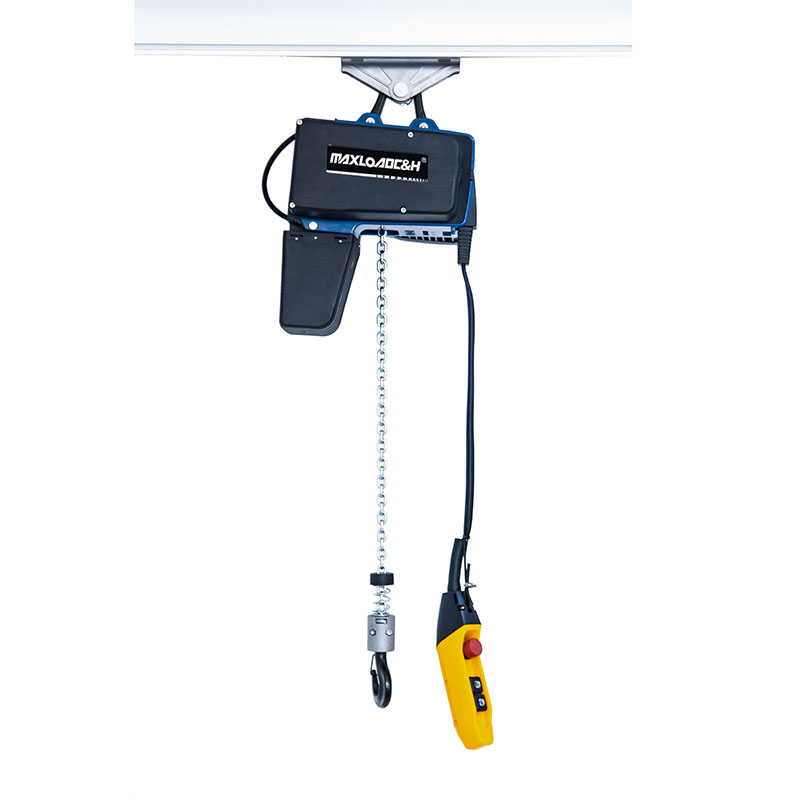
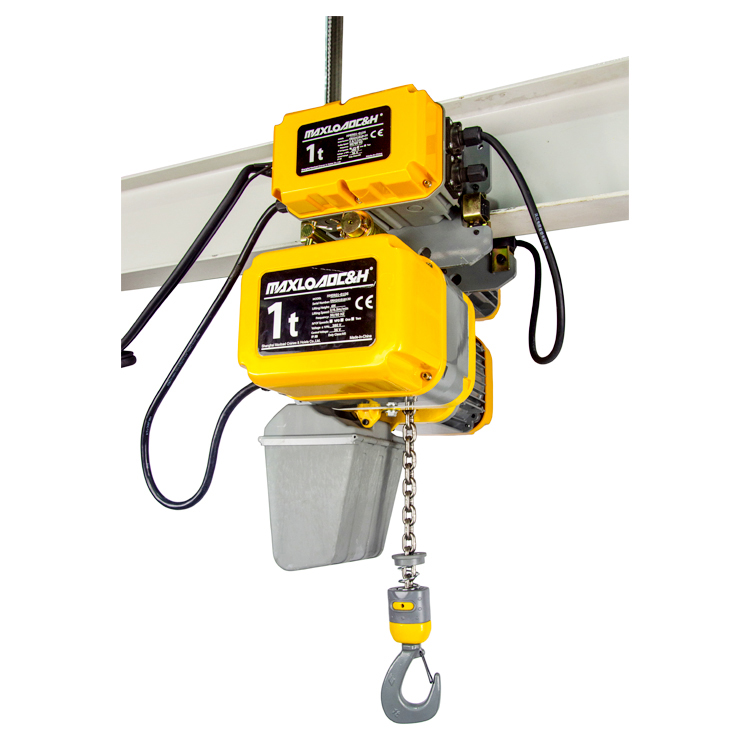
In workstation scenarios below 5 tons, the installed base of chain electric hoists is far higher than that of wire rope hoists. The reason is not complicated: chain hoists are compact in structure, light in dead weight, impose less additional load on the jib end, and have better stability during low-speed lifting, making them easier to control during precision assembly or mold alignment. Wire rope hoists have more advantages in situations with greater lifting height and higher speed requirements, but their volume and dead weight are larger, which may not be cost-effective for small-tonnage jib cranes.
If the workstation involves frequent precise positioning—such as mold loading and unloading or fixture replacement—dual-speed or variable-frequency controlled electric hoists are worth serious consideration. A single-speed hoist can only rely on inching when approaching the target position. The operator repeatedly presses the button, which is inefficient and likely to cause load swaying. A dual-speed hoist provides a slow-speed gear for fine adjustment, and the difference in actual experience is very obvious.
There is also a type of easily overlooked environmental constraint: if there are flammable or explosive gases or dust near the workstation, the arcs generated by the motor and contactors of an ordinary hoist are a hazard, and an explosion-proof type is a mandatory requirement with no alternative. Food or clean workshops need to pay attention to whether the coating and lubricants on the hoist surface meet cleanliness requirements. Ordinary industrial models used in such environments for a long time will have rust and oil contamination become pollution sources.
Matching the Operation Method With the Workstation Cycle Time
Whether to choose manual or electric slewing depends on how many times the operator needs to rotate per day. If the slewing of the jib crane is pushed by hand, pushing is not laborious when the load is several hundred kilograms, but after hundreds of times a day, the burden on the operator's shoulders and waist cannot be ignored. Electric slewing can significantly reduce labor intensity at workstations with frequent reversing, but it adds a control handle and cables, and flexibility may instead decrease.
The same applies to the operation of the lifting mechanism. Handle control is the most common method, with low cost and direct response. If the workstation involves lifting high-temperature parts or hazardous materials, remote control operation can keep the operator away from beneath the load, and the safety improvement is substantial.
The essence of selection is finding the intersection between workstation constraints and equipment capabilities. Jib cranes and electric hoists are both mature products. No single model is "the best"; only the one that matches the specific workstation environment most smoothly. Understanding the workstation conditions clearly is more useful than studying the parameter tables in product brochures.
 0086 156 1824 5535
 0086 156 1824 5535