Start from the Environment and Work Back to the Equipment, Not the Other Way Around
When purchasing lifting equipment for a workstation, many companies habitually ask first, "How much does a one-ton jib crane cost?" and only then consider whether it can be installed on site. This order is backwards. Jib cranes and electric hoists are equipment installed at a specific workstation. The workstation's spatial dimensions, environmental media, work cycle, and operating habits directly determine what structural configuration can be used and what protection-rated components will not frequently fail. The starting point for selection is not the tonnage; it is the workstation environment itself.
I. First Look at Spatial Constraints: Can the Column Stand, and Where Should the Jib Rotate?
The essence of a jib crane is a jib that rotates around a column, with an electric hoist suspended from the jib for radial movement. The first bottleneck in whether a workstation can accommodate a jib crane is the floor.
A column-mounted jib crane requires an independent concrete foundation or a sufficiently thick floor slab to secure the base. If the workstation is adjacent to a passageway, or if the floor is a later-installed epoxy coating that is unsuitable for large-scale excavation and pouring, a column-mounted design becomes very awkward—the base takes up a block of operating space, and operators having to walk around it actually reduces efficiency. In such cases, a wall-mounted jib crane is the more reasonable choice: it is fixed to a wall or load-bearing column, does not occupy floor passageways, and is suitable for machine loading/unloading or shelf picking/placing arranged against a wall. However, wall-mounted designs have requirements for wall load-bearing capacity; hollow brick walls or lightweight partition walls cannot directly bear the load, and the structural conditions of the mounting surface must be confirmed.
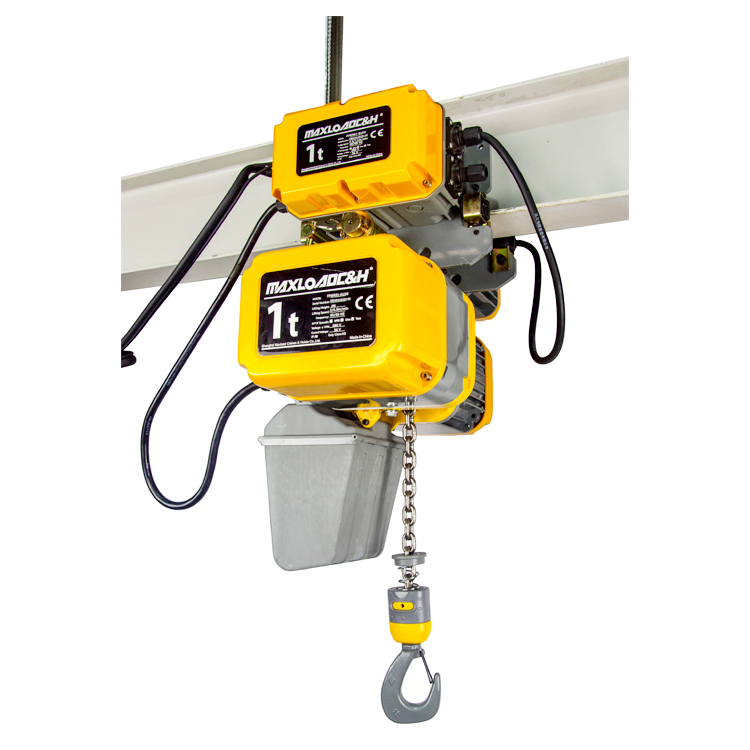
Jib length and slewing angle are likewise locked in by the workstation layout. The jib's coverage should be just enough to reach the pick-up point and the placement point; any excess becomes an obstacle in a narrow workstation. If there are equipment or racks on both sides of the workstation, the slewing angle may be limited to within 180°, and choosing a 360° slewing model is meaningless—it may even cause the jib to strike surrounding facilities if the installation position is wrong. Conversely, if the pick-up area and the machine chuck are located on opposite sides of the column, it must be confirmed that there is no interference from pipes, cable trays, or fire protection facilities along the 360° slewing path. A common on-site lesson: only after the jib is installed is a conduit running down from the ceiling discovered within the slewing range—and the cost of relocating the conduit exceeds that of the equipment itself.
Clearance height is also an easily overlooked parameter. The "under-jib height" of a jib crane determines how much vertical travel remains after accounting for the hoist body and the lifting attachment. If there are crane girders, ventilation ducts, or lighting bridges above the workstation, the clearance from the floor to the bottom of the obstruction must be measured on site, and then the jib mounting height and hoist selection must be worked out backward from that. European-style compact hoists have shorter bodies and lighter dead weight than traditional hoists, giving them a clear advantage in workstations with tight clearance.
II. Then Look at Environmental Media: Normal and Special Conditions Are Two Separate Selection Logics
The workstation environment affects equipment mainly through electrical components and moving parts. The same one-ton jib crane installed in an ordinary machining workshop versus a battery electrolyte-filling workshop will have completely different hoist motors, brakes, and control boxes.
In dusty environments, particular attention must be paid to the electric hoist's protection rating and cooling method. In foundries, grinding stations, or powder feeding areas, fine particulate matter will adhere to motor cooling fins and penetrate brake gaps. An ordinary hoist will not last long in such environments before brake slippage or motor overheating occurs. During selection, priority should be given to motors with a protection rating of at least IP54 and sealed brakes, and the structure should avoid upward-facing surfaces where dust accumulates. If the dust is combustible, an explosion-proof hoist of the corresponding rating must be selected according to the dust explosion-proof zone classification—there is no room for compromise on this point.
Corrosive or humid environments are common in electroplating, acid pickling, seafood processing, or cold storage workstations. The jib crane's steel structure requires hot-dip galvanizing or heavy-duty anti-corrosion coating, and the hoist's chain or wire rope requires stainless steel material or special lubrication. An ordinary galvanized chain will develop rust spots within one to two months in a humid environment; rusted chain links wear faster during operation, and as the pitch elongates, meshing with the sprocket deteriorates, ultimately leading to chain climbing. In such environments, chain hoists have an advantage over wire rope hoists: there are more surface treatment options for chains, and the single-strand chain structure makes it easier to inspect for rust and broken wires than multi-layer wound wire rope.
Clean or explosion-proof combined environments are the most difficult selection scenarios, and new energy battery production lines and precision electronics assembly workstations fall into this category. These workstations often simultaneously require that equipment not generate dust, not leak oil, and that electrical components not produce ignition sources. The steel structure friction surfaces of an ordinary jib crane will shed particles, and the breather cap of the hoist's reducer may seep oil mist—these issues are trivial in an ordinary workshop but are yield killers at a clean workstation. The corresponding approach is: structural parts use stainless steel cladding or anodized treatment, the hoist uses a fully enclosed structure with low-volatility lubricating grease, and the electrical part is configured with explosion-proof motors and explosion-proof control boxes according to the explosion-proof zone classification. It should be noted that explosion-proofing and cleanliness are two independent requirements; doing only explosion-proofing without addressing dust generation and oil seepage, or doing only cleanliness without addressing electrical explosion-proofing, both constitute non-compliant configurations on battery production lines.
III. Hoist Selection: Beyond Tonnage, Duty Cycle and Lifting Precision Deserve More Attention
The jib crane is the skeleton, but the electric hoist is the core component that determines the workstation's handling efficiency and reliability. Many buyers look only at rated load when selecting a hoist, overlooking two parameters that have a greater impact on actual use.
Duty cycle corresponds to the workstation's actual daily operating frequency. A hoist rated at 1 ton, if selected on the basis of eight hours of full-load operation per day, will have a motor and brake life far below expectations. Workstation loading/unloading is high-frequency, short-stroke work—each lift may be only a few tens of centimeters, but the number of movements is high. In such cases, the motor's energization rate reflects the actual severity of the working conditions better than the rated load. Workstations with frequent starts and stops should prioritize hoists suitable for intermittent duty cycles, or appropriately increase power margin by one step so that the motor has sufficient cooling intervals in each cycle. Using an economical hoist designed for light duty on a high-frequency two-shift workstation will significantly increase the probability of brake abnormal noise or motor overheating protection within six months.
Lifting precision and inching performance are far more important at assembly workstations than at handling workstations. Machine chuck tool setting, mold closing, battery module insertion—these operations require millimeter-level low-speed control, not rapid lifting and lowering. Ordinary hoists have only one or two lifting speeds; jogging the button produces a harsh response—easy to overshoot when lightly loaded, yet unable to lift when heavily loaded. Variable-frequency-controlled hoists can achieve stepless speed regulation with gentle starting and braking, giving operators the confidence to use them effectively in precision alignment scenarios. If the workstation involves fragile workpieces or high-value products, the sway suppression brought by variable-frequency soft start/stop is a worthwhile investment—it reduces not only operating difficulty but also collision losses.
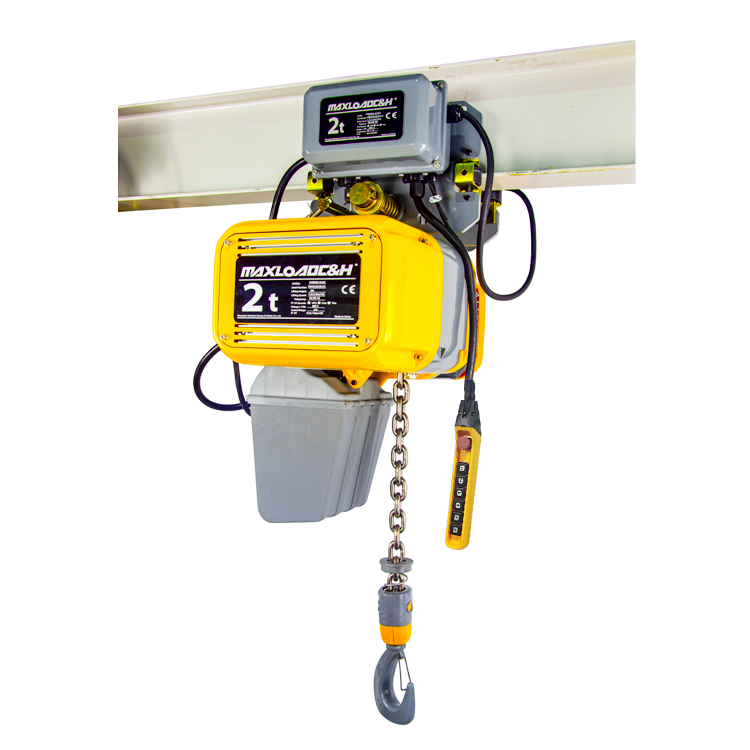
There is another easily overlooked detail: the hoist's own dead weight. The jib of a jib crane is a cantilever structure, and the bending moment is greatest when the hoist is suspended at the jib tip. European-style compact hoists are 20–30% lighter than traditional hoists; with the same jib length, a lighter hoist means lower forces on the jib and column, and correspondingly lower foundation requirements. For wall-mounted installations or retrofit workstations in old factory buildings, this weight reduction may directly determine whether the solution is feasible.
IV. Operation Method and Safety Configuration: Determined by the Workstation's Human-Machine Relationship
The choice of operation method depends on where the operator stands and what actions must be performed simultaneously.
Wired pendant control is the most basic and reliable method, suitable for workstations with a fixed operating position, such as dedicated machine loading/unloading. The operator operates buttons with one hand and stabilizes the workpiece with the other, with a clear action rhythm. However, if the jib crane has a large slewing radius, the operator needs to walk along with the jib, and the pendant cable may become tangled or be too short—in this case, wireless remote control is more suitable. An additional benefit of wireless remote control is that the operator can stand at a position with a better view to observe the lifting status, rather than being confined to a corner by the pendant cable.
In terms of safety configuration, overload protection and upper/lower limit switches are the baseline. Particular attention should be paid to slewing limits: if the workstation does not allow 360° jib rotation, mechanical stops or electrical limit switches must be configured to prevent misoperation from causing the jib to swing into a hazardous area. Another practical problem area is oblique pulling: both the jib crane's slewing and the hoist's lateral movement are in a free state, and when operators pull workpieces diagonally for convenience, the jib bears lateral bending moments rather than the vertical loads of the design condition. Long-term oblique pulling can cause abnormal wear of the column bearing or loosening of the jib connection bolts. During selection, hoists with load limiting or skew detection can be considered, but the more fundamental solution is to arrange the workstation layout so that both the pick-up point and the placement point fall within the arc naturally covered by the jib, so that operators can complete the transfer without oblique pulling.
V. A Simplified Selection Checklist Sequence
When visiting the workstation site, go through this sequence and most selection errors can be avoided:
Step 1: Measure the floor—is there room at the column installation position to build a foundation? If not, switch to a wall-mounted or rail-mounted solution. Step 2: Measure the clearance—subtract the jib beam height and hoist net height from the distance between the floor and the overhead obstruction; is the remaining travel sufficient to lift the workpiece from the pick-up point to the placement point? Step 3: Check the environment—are there dust, corrosion, explosion-proof, or cleanliness requirements? If any apply, the corresponding protective configuration must be determined first and cannot be added later. Step 4: Count the movements—how many lifts per day, how high each lift, and what alignment precision is required? For high-frequency short strokes, choose a hoist suitable for intermittent duty; for precision alignment, choose variable frequency. Step 5: Define the operation—where does the operator stand, what is the line of sight, and is walking control needed? This determines wired versus wireless, pendant versus remote.
Write the answers to these five questions clearly and send them to any supplier, and they can provide accurate configuration recommendations. Conversely, if you only tell a supplier "I want a one-ton jib crane," the equipment you receive will most likely conflict with the workstation environment somewhere—either it won't fit, or it will be awkward to use, or it will need constant repairs. Jib cranes and electric hoists are not independent products; they are part of the workstation environment. The selection workload lies in site survey and judgment, not in price comparison.
 0086 156 1824 5535
 0086 156 1824 5535