Let the Workstation Environment Drive the Selection
The most common selection mistake in workshops isn't buying the wrong equipment—it's getting the selection sequence backwards: first fixing the tonnage, then hunting for an installation spot, only to discover the column spacing is insufficient, the beam can't take the load, or half the slewing radius is blocked by equipment. A jib crane serves the "workstation," so the right approach is to thoroughly survey the workstation environment first, then work backwards to the configuration.
Measure Three Things First: Span, Height, and Foundation
Effective working radius. The jib arm length must cover every lifting point at the workstation: the machine tool chuck position, the rack pickup point, and the tote box drop-off zone. When measuring, note that the truly usable radius is the arm length minus the minimum clearance required by the hoist body and hook. For a jib crane with a 4-meter arm, roughly the 0.6-meter zone nearest the column is essentially unusable—when planning the workstation layout, set this "dead zone" aside.
Lifting height. Take the workshop's clear height, subtract the height of the jib beam, then subtract the space occupied by the hoist and hook—what remains is the effective lifting travel. Many customers choose the standard configuration in old buildings with low ceilings, only to discover after installation that the hook can't reach the floor. A rule of thumb: in a workshop with 6 meters of clear height, a chain hoist leaves roughly 3.5 meters of actual travel. If you're lifting molds or castings that need to be flipped at floor level, reserve additional travel for the flipping maneuver.
Column foundation. A pillar-mounted jib crane's self-weight is three to five times the rated capacity or more, and combined with the bending moment from a fully loaded swing, it all bears down on a single column base. Whether the floor is thin concrete poured over backfill or an independent foundation over native soil makes a several-fold difference in bearing capacity. For arm lengths over 4 meters or capacities of 2 tons and above, an independent foundation—or a bearing-capacity check of the existing slab—is recommended. Don't skimp on this.
The Jib Crane Body: Three Structures for Three Types of Workstations
The freestanding (floor-mounted) column type is the most versatile choice, with 360-degree rotation, suited to independent workstations and layouts where stations are spaced apart. The downsides: it occupies a foundation footprint and takes up floor space in the aisle.
Wall-mounted type hangs on the building's columns or walls, takes up no floor space, and suits machine tool workstations lined up along a wall. But rotation is typically limited to about 180 degrees, and its demands on the building's steel structure are strict—the wall must resist the overturning moment, so brick walls in old buildings are basically out of the question. Before choosing a wall mount, always confirm the structural form of the connection point.
Mobile type suits cases where one lifting point serves multiple machines, or workshops where workstations will be rearranged in the future. It's flexible but has lower positioning accuracy and a higher price, so it's more common in light-duty applications.
The slewing method must also be decided: manual push-pull rotation is low-cost and fine for light loads; powered rotation is more stable for capacities above 2 tons or when handling precision parts, avoiding the load swing caused by workers shoving and pulling.
Matching the Electric Hoist to the Jib: Focus on Three Points
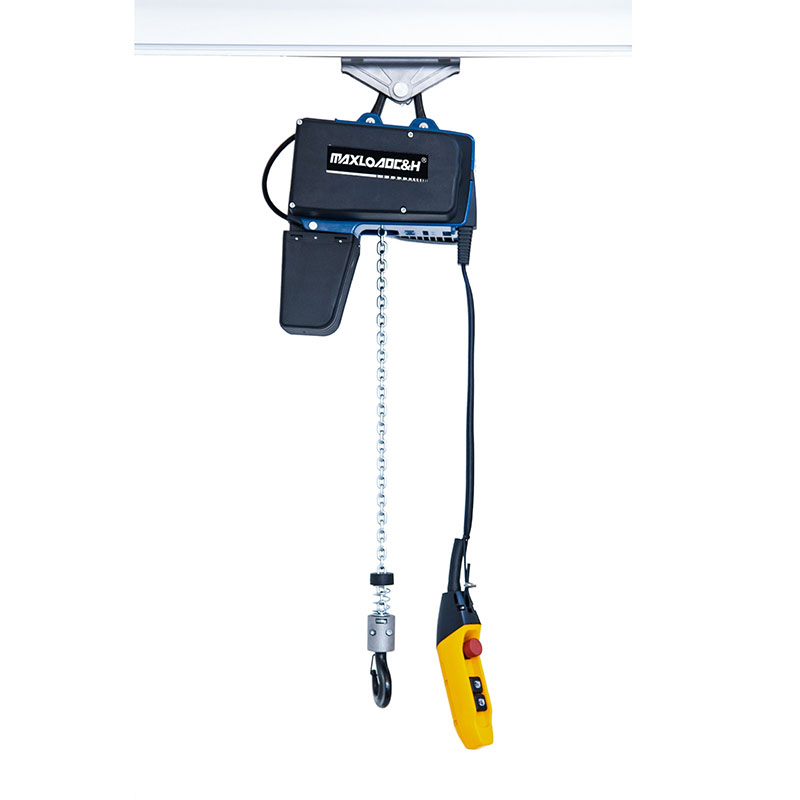
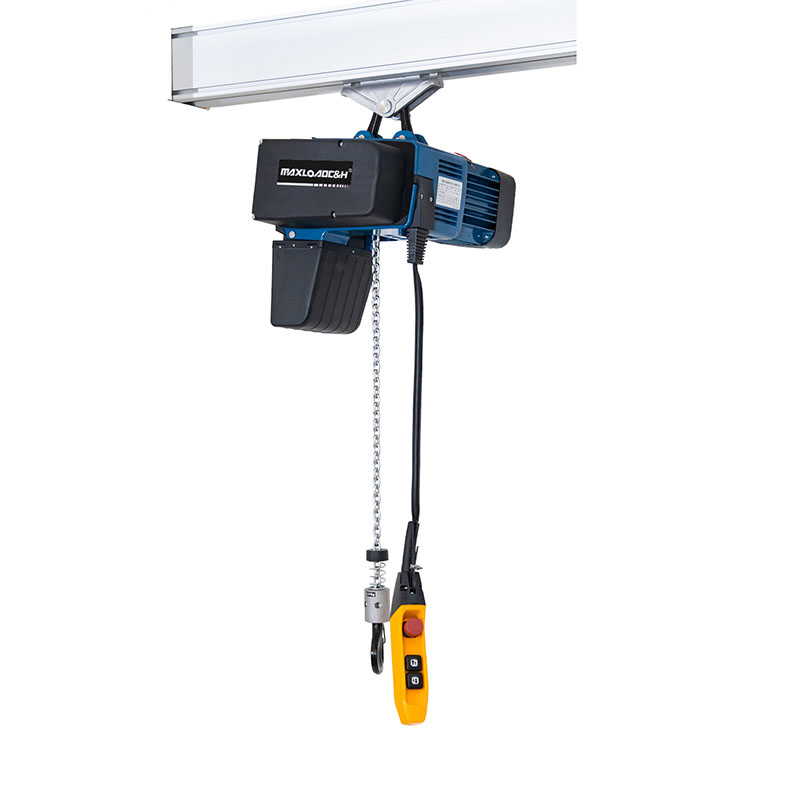
Chain or wire rope. Chain hoists are compact, friendly to limited lifting heights, and tolerant of slightly angled pulls—first choice for workstations under 1 ton. Wire rope hoists run smoother and suit higher lifting speeds and frequent duty cycles, but they consume more headroom, eating into your travel in low-clearance workshops.
Travel method. Trolleys running on the jib beam come in manual and powered versions. For frequent lifts or loads approaching the rated capacity, choose a powered trolley—pushing uphill along the beam is exhausting otherwise. For workstations lifting tools only occasionally, a manual trolley is actually the more economical choice.
The duty classification must match. This is the most commonly overlooked item. A mold-flipping station hoisting dozens of times a day and a tool-change station hoisting three to five times per shift have completely different duty requirements. Running a low-classification hoist on high-frequency work causes failure rates and chain-breakage risks to climb rapidly. When selecting, report "lifts per shift, load ratio per lift, and continuous operation duration" to the supplier and have them specify the configuration by classification—don't just give them the tonnage.
The Fine Print of Workstation Conditions
Power supply: The hoist needs 380V three-phase power, with a conductor bar or cable reel running along the beam; for wall-mounted units, reserve wall routing in advance. If variable-frequency control is required, verify power quality.
Obstructions: Are there traffic aisles, storage zones, pipes, or cable trays inside the slewing sector? Set the rotation limit angles according to the actual clearances—not as an afterthought once installed.
Multi-station coordination: If two adjacent jib cranes' slewing ranges overlap, either stagger the limit stops or define explicit dispatch rules—otherwise the hooks on both sides risk colliding in the air.
Floor conditions: In workshops with uneven floors, keep drop-off points away from areas of concentrated wheel pressure; on oily machining stations, consider anti-slip treatment for the column surface and the beam walkway.
A Few Common Pitfalls
First, rounding up the tonnage. The heaviest part is actually 450 kg, but the crane is sized at 1 ton. It looks safe, but the foundation, beam, and hoist are all needlessly upgraded. Applying a factor of "heaviest part × 1.25" covers ordinary conditions.
Second, looking only at arm length and ignoring the slewing dead zone—after installation, you discover the material rack sits right next to the column, out of the hook's reach.
Third, buying the hoist and jib separately with no matching between them: the hoist's self-weight and trolley dimensions exceed the beam's design margin, or the interface dimensions don't align. If sourcing from two suppliers, you must provide the hoist's self-weight, trolley gauge, and maximum wheel load to the jib crane designer.
Fourth, ignore future changes in the workpieces. After a product-line pivot, parts get heavier and longer, and the jib crane has no upgrade headroom. If there's an expansion plan within two years, cast the foundation and column one class higher and swap out the beam and hoist later—that's the most cost-effective approach.
Final Word
A jib crane plus electric hoist is a "fixed-point lifting system" built around the workstation. Its value lies in letting one worker complete material handling within the station without waiting for the overhead crane or pushing a pallet truck. The starting point of selection is always the workstation's physical conditions and usage frequency—get the radius, travel, foundation, and duty classification calculations right, and the equipment will drop straight into the production rhythm the moment it's installed.
 0086 156 1824 5535
 0086 156 1824 5535