The Pairing Logic of Jib Cranes and Electric Hoists
Jib cranes are increasingly common in all kinds of workshops, yet selection mistakes are common. Some factories discover after delivery that the boom length cannot reach the farthest workstation; some find the column wobbling noticeably after installation; others find the hoist lifts molds so fast that accurate positioning is impossible. Most of these problems are not quality defects — they stem from selecting equipment without starting from the actual workstation environment. A jib crane plus an electric hoist is a combined system: the two sets of parameters must interlock, and both must align with site conditions.
Survey the Site First, Then Talk Parameters
Before studying the workshop floor plan, walk the site yourself and focus on four things.
First, load-bearing conditions. A column-mounted jib crane requires an independent foundation or the use of a structural building column. The concrete grade of the foundation and the specifications of the anchor bolts must match the crane's dead weight and overturning moment — a point many buyers overlook. For a wall-mounted jib crane, the wall must be a load-bearing concrete structure of sufficient thickness; ordinary brick walls and lightweight steel-panel walls must never be used for mounting. If site conditions do not allow it, switch to a mobile-base solution or re-plan the installation location — there is no middle ground.
Second, clearance height. Measure the height from the underside of the beam to the floor at the installation point, then subtract the height of the hoist body plus the lifting attachment, and the maximum height the load needs to be raised. Keep at least 300 mm of residual margin. In many workshops, pipes and cables run along the beam underside, so the usable height is lower than the drawing indicates — this step must be measured on site.
Third, the slewing range. Within the area swept by the jib, are there machines, columns, crane aisles, or pedestrian walkways? If there are obstacles in the slewing direction, either specify slewing limit stops or shorten the boom. Never rely on the operator "being careful" to avoid collision risk.
Fourth, floor condition. Floor flatness and bearing capacity directly determine the stress state of the column base. In areas with settlement or cracking, consult a structural engineer before installation.
Three Core Parameters — None Can Be Compromised
Rated load capacity. The most common mistake is sizing the capacity by the nominal weight of the heaviest workpiece alone. The correct calculation: workpiece weight plus the weight of attachments such as lifting beams, cages, and magnets, then multiplied by a safety factor of about 1.25. For example, with a heaviest piece of 800 kg plus a 100 kg lifting beam and impact allowance, the crane should be selected at 1.25 t or above — not rounded down to 1 t.
Effective boom length. Boom length is not "the longer the better"; it must cover the entire horizontal projection from the pickup point to the drop-off point, with roughly half a meter of operating margin at each end. Also bear in mind: a jib crane's rated capacity derates as the boom length increases — full load at the boom tip and full load at the boom root are two entirely different things. Therefore, capacity and boom length must be confirmed to the supplier as bound parameters, not asked about separately.
Lifting height. This depends on whether the hoist is traveling or fixed. With a fixed hoist, the hook position on the jib does not move; the lifting height equals the distance from the jib's lower edge to the floor minus the hoist's own height. A traveling hoist runs along the jib's lower flange, covering a larger effective area, but it is equally constrained by clearance height.
How to Match the Electric Hoist — Let the Duty Cycle Decide
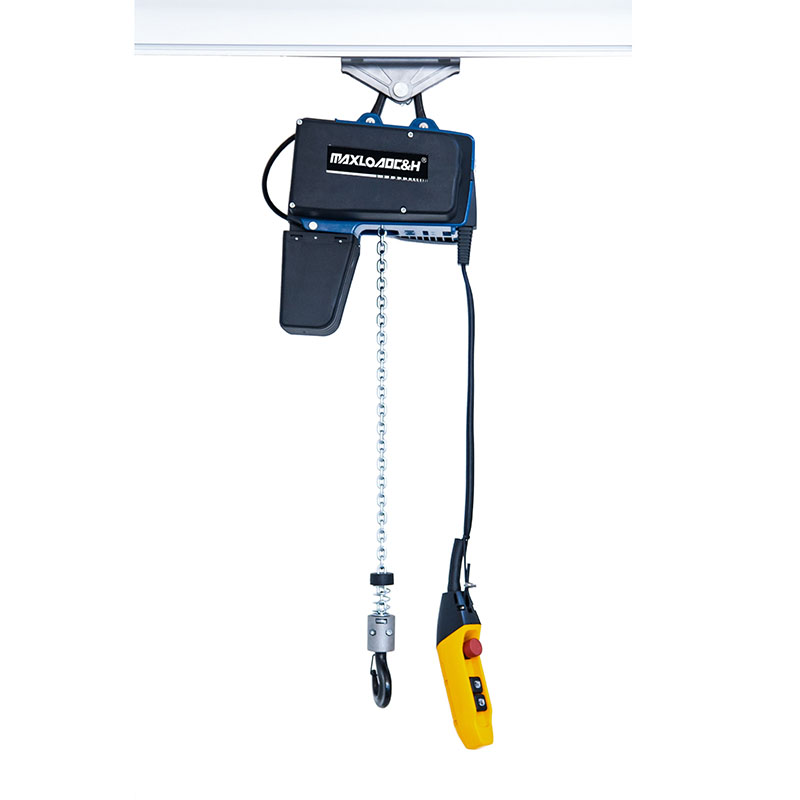
Traveling or fixed. A traveling hoist rides on a trolley along the jib beam, suitable for longer booms and non-fixed pickup/drop-off points, such as moving material across several workstations. A fixed hoist keeps the hook point stationary — simpler in structure and lower in cost — and suits fixed-point lifting, such as feeding a single machine tool.
Chain or wire rope. Chain hoists lift slowly but position precisely, and the chain tolerates vertical bending well — ideal for "stability-first" tasks like mold handling and assembly alignment. Wire rope hoists are fast and suited to long travel, making them more efficient for repetitive operations like machine loading/unloading and production-line feeding.
Duty classification is not just about tonnage. At the same rated capacity, ten lifts per day versus one lift every ten minutes impose completely different fatigue demands on the brake and structural components. Single-shift intermittent operation can use a lower duty classification; two-shift or near-continuous operation must use one class higher, or equipment life will suffer badly. State this explicitly in the technical requirements when requesting quotations.
Controls and safety features. 380 V / 50 Hz power supply is the basic precondition; self-locking braking on power loss is mandatory and must never be omitted under any circumstances; upper/lower limit switches and an overload limiter should be requested as standard; for workstations requiring precise positioning, confirm whether inching control or variable-frequency speed control is supported — especially important for assembly stations.
Validate Against Typical Scenarios
Machine tool loading/unloading: boom length only needs to cover the chuck or worktable position; usually no long boom is required. Choose a traveling wire rope hoist — fast with short travel — plus inching control for final positioning.
Mold shops: hook points are relatively fixed, so choose a fixed chain hoist. The low lifting speed ensures accuracy during mold closing, and the duty classification is calculated from the frequency of mold changes.
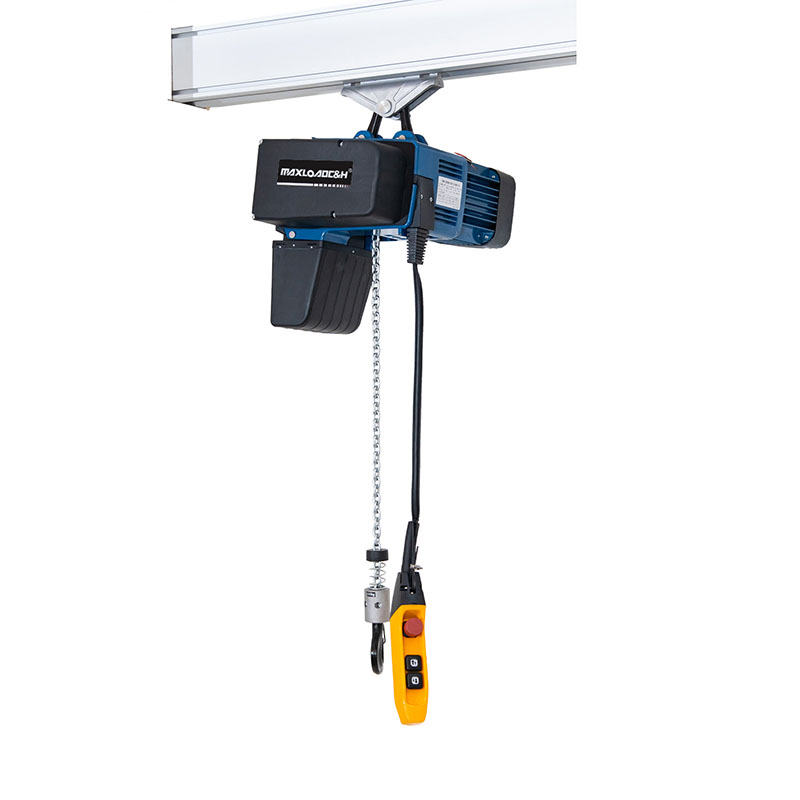
Assembly stations: emphasize positioning precision and micro-speed control — chain hoist with variable frequency or inching; boom length covers the transfer distance between adjacent workstations according to the takt time.
Space-constrained workshops: when no column can be erected and the walls cannot bear the load, consider a mobile jib crane with its own traveling base — sacrificing some capacity in exchange for layout flexibility.
Acceptance Determines Long-Term Safety
Equipment delivery is not the end of commissioning. Run no-load tests to confirm smooth slewing and effective limit stops, then perform a static load test at 1.25 times the rated load. The jib's deflection and brake performance must both stay within allowable limits. Fix and mark the positions of all obstacles within the slewing area, and ensure operators are trained in lifting, hand signaling, and the use of slings. Daily inspection should focus on three things: wear and lubrication of the chain or wire rope, the clearance and response of the brake, and the reliability of the limit switches.
In short, there is no shortcut in selecting a jib crane plus electric hoist combination: site conditions determine the mounting type, three core parameters determine the crane specification, the specific duty cycle determines the hoist configuration, and finally the whole scheme is validated against real scenarios. Get the sequence right, and you will never face the embarrassment of "great equipment that cannot be used on site."
 0086 156 1824 5535
 0086 156 1824 5535